Amazon Q Developer vs Tabnine vs Windsurf: Which Is Best for SEO and Content Strategy in 2026?Updated: October 04, 2026
Amazon Q Developer vs Tabnine vs Windsurf for SEO and content strategy—compare workflows, pricing, fit, and tradeoffs for marketers. Learn
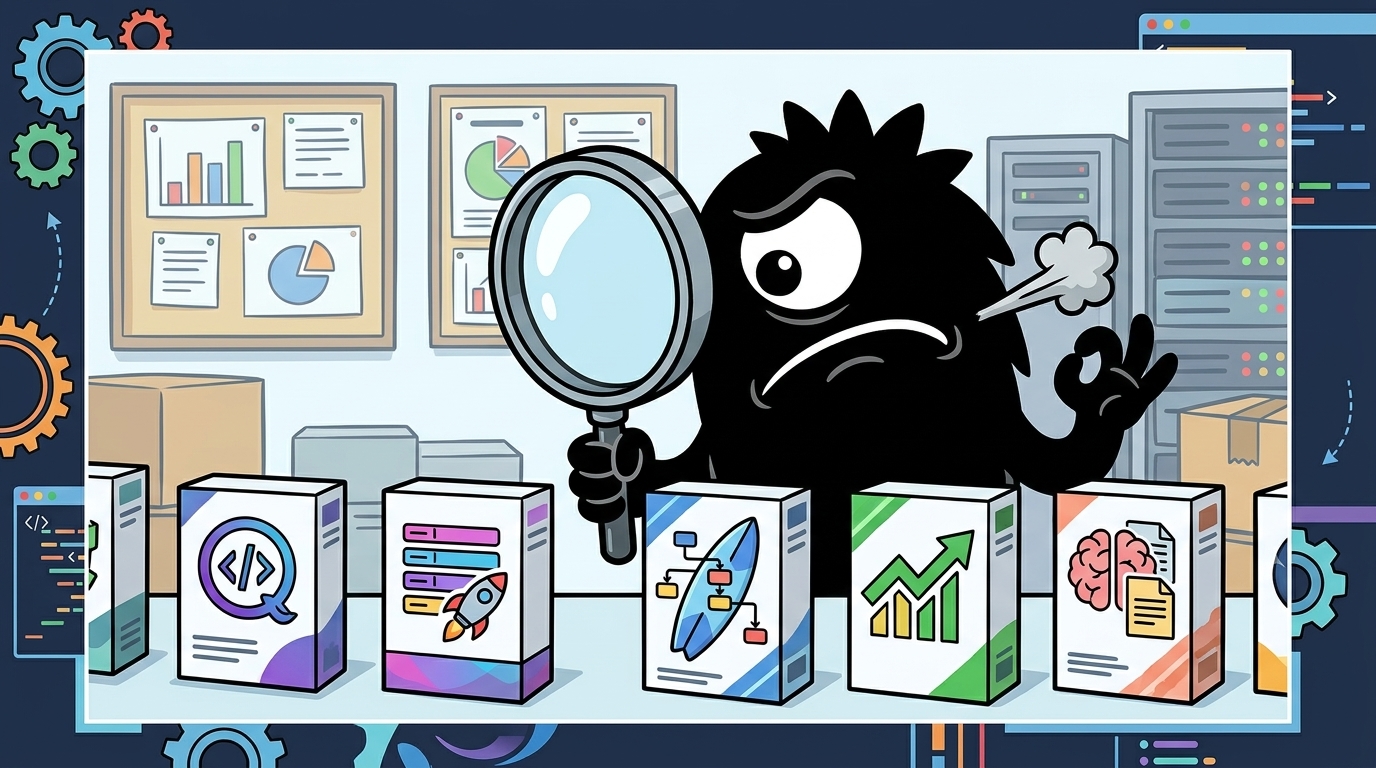
Why SEO Teams Are Even Comparing Developer AI Tools in the First Place
A year ago, this comparison would have sounded confused. Amazon Q Developer, Tabnine, and Windsurf are coding tools. SEO and content strategy live in a different software aisle.
That separation is breaking down fast.
Modern SEO execution increasingly involves lightweight development work: generating landing pages at scale, fixing structured data, automating keyword clustering, scripting CMS updates, wiring analytics events, scraping competitor pages, and building internal research tools. These are not “pure marketing” tasks anymore. They sit in the overlap between growth, content ops, and software implementation.
That’s why posts like this are no longer unusual:
My AI Agent Skills Collection of 125+ reusable skills for AI coding agents like Claude Code, ChatGPT, Cursor, Windsurf, etc. for WordPress development, UI/UX design, SEO, marketing, frontend engineering, and more. https://github.com/wpgaurav/WordPress-skills
View on XAnd it’s why Windsurf shows up in public build logs that explicitly include SEO, content, hosting, and analytics in the same workflow:
Progress ✅ using @windsurf_ai along with my 4 years of dev experience:
Landing Page ✅
SEO ✅
Content (pending)
Hosting, Domain, + Analytics ✅
Authentication (pending)
If you have any suggestions or improvements, please share!"
Let me know what are you suggestions ⬇️
Link ⬇️
The key framing: these tools are not substitutes for dedicated SEO platforms. They won’t replace rank tracking, content optimization scoring, or backlink intelligence on their own. What they can do is help teams build and execute SEO systems faster—especially when the bottleneck is implementation, not ideation.
So the real buyer question is not, “Which one is the best coding AI?” It’s: Which tool helps my team ship SEO and content work with less friction, fewer subscriptions, and more leverage?
That’s where this comparison gets useful. Amazon Q Developer brings cloud-native depth, Tabnine emphasizes predictable coding productivity and enterprise controls, and Windsurf is increasingly attractive for agentic workflow building and fast experimentation.[1][7]
First, Stop Treating Them as the Same Kind of Tool
The biggest mistake in this category is comparing all three as if they’re direct equivalents.
The mistake everyone makes: comparing tools that solve different problems. There are 4 categories in 2026: Autocomplete-First → Copilot, Tabnine Agent-First → Cursor, Windsurf, Claude Code, Cline Autonomous → Devin Vibe Coding → Lovable, https://bolt.new/ v0 Which category you need depends on who you are, not which tool is "best."
View on XThat post gets the taxonomy right. For SEO and content strategy teams, this distinction matters more than feature checklists.
Tabnine is primarily autocomplete-first. Its core value is helping you write code faster inside the flow you already have. If you’re making repetitive template edits, adding schema snippets, adjusting page components, or cleaning up frontend logic in an existing CMS, autocomplete can be exactly what you want. Less ceremony, less prompting, less behavioral change.
Windsurf is much more agent-first. That means it’s better suited to multi-step tasks where you want the system to explore, reason, edit several files, and increasingly interact with external context. That matters for things like building a keyword research pipeline, spinning up a content ops dashboard, or drafting a landing page system from a rough spec.
Amazon Q Developer sits in a more specific position: assistant-plus-agent, but heavily differentiated by AWS context. Amazon describes it as a generative AI assistant for software development that can help with coding, debugging, testing, upgrades, transformations, and AWS-related work.[2] In practice, that makes it strongest when your SEO or content infrastructure already lives on AWS.
The broader X conversation reflects this shift toward agents that do more than suggest lines of code:
2026年版AIコーディング支援ツールの比較記事が公開されたとのこと。Cursor、Claude Code、GitHub Copilot、Windsurf、Tabnine、Amazon Qの6つを価格・機能・使い勝手の面で横断的に比較した内容だそうです。2025〜2026年にかけてこの領域は急速に競争が激化しており、各ツールの差別化ポイントも変わってきているとのこと。コード補完にとどまらず、エージェント型のタスク実行や、ターミナル操作・ファイル編集まで自律的に行う機能が当たり前になりつつあるようです。 私自身はCursorとClaude Codeをメインに使っていますが、ツール選びの正解は「何を作るか・どう使うか」によってかなり変わってくる印象です。税務・会計の周辺業務で簡単なスクリプトやデータ加工ツールを作る程度であれば、高機能なものより使い慣れたもので十分な場面も多い。一方で、少し複雑な処理を組もうとするとエージェント機能の差が体感として出てきますね。年に一度くらいは主要ツールを見直しておくと、気づかないうちに自分の環境が陳腐化するのを防げるかも。 https://t.co/vvM04TCq97 #AI活用 #AIコーディング #生成AI
View on XIf you miss this category difference, you’ll evaluate the wrong thing. You’ll complain Tabnine isn’t autonomous enough, or fault Windsurf for being more exploratory than your team wants, or buy Amazon Q without having enough AWS footprint to justify it. That’s not a product problem. It’s a matching problem.[12]
How Each Tool Fits Core SEO and Content Strategy Jobs
For practitioners, the cleanest comparison is by job to be done.
1. Technical SEO fixes
Think metadata bugs, canonical issues, robots rules, redirect logic, schema markup, internal linking widgets, or site performance adjustments.
- Tabnine is strong when these fixes happen inside an existing codebase and follow recognizable patterns. It speeds up the implementation work.
- Windsurf is better when the issue requires broader investigation across files or mixed planning and implementation.
- Amazon Q Developer becomes compelling when technical SEO touches cloud services—serverless functions, deployment pipelines, logs, API layers, or AWS-hosted rendering systems.[1]
2. Landing page and template generation
This is now one of the biggest overlaps between growth and dev tooling.
Just cracked the code on content strategy for X algorithm
It's literally just building weird shit with AI tools and documenting the process.
That's the whole game.
My daily routine:
- Mess around with Cursor, Claude, Windsurf
- Build something experimental with prompt-to-code
- Document the workflow
- Share on X
5-7 hours daily of pure experimentation.
This tutorial marketing approach built my entire business this year.
Here's what bugs me though:
Too many founders treat content like it's optional. It's not. It's survival.
Organic content beats every paid channel. Period.
- Need to validate your idea? Content.
- Want your first 100 users? Content.
- Scaling to $10K MRR? Content.
- Pushing past $50K? Still content.
Skip content creation and watch your startup slowly die.
The founders who document their building process win.
The ones who build in silence lose.
Simple as that.
Now go build something weird and post about it.
If your team is producing SEO pages, programmatic landing pages, comparison pages, or campaign microsites:
- Windsurf is often the best fit for generating and iterating quickly.
- Tabnine helps if your design system and templates are already mature and you just need to move faster.
- Amazon Q Developer fits when page generation is tied to AWS infrastructure, deployment automation, or backend content services.
3. Keyword research automation and content ops tooling
This is where agentic capabilities matter more.
A practical example from X:
As promised, here's the update on my AI powered SEO keyword research workflow from The vibe Marketer
I've finished the final version and it works even better than expected.
The n8n workflow solves this:
- Input your topic and competitors
- Select audience and region
- Get a complete keyword strategy in minutes
The biggest change: I switched from Airtable to NocoDB. It's open-source, performs great, and works just like Airtable.
I also added Slack notifications so you know when your research starts and finishes (could be improved)
Want to try it yourself?
Check out my GitHub where I've shared
- the entire workflow json
- a full description of how it works
- example output of the 'Final Keyword Strategy'
Get everything here ⬇️⬇️⬇️
That workflow is not just “writing content.” It’s a system: inputs, enrichment, storage, notifications, and output formatting. This is the kind of work where Windsurf’s agentic approach is often more useful than plain code completion. You’re not just finishing functions; you’re orchestrating a process.
4. CMS scripting, analytics tagging, and maintenance work
For repetitive implementation tasks in WordPress, headless CMS setups, or analytics instrumentation:
- Tabnine is efficient and low-friction.
- Amazon Q is useful if tagging and reporting pipelines feed into AWS services.
- Windsurf can still help, but may be more tool than you need for straightforward edits.
5. Documentation and internal enablement
As teams build more AI-assisted SEO systems, documentation becomes part of the content strategy itself. Windsurf’s popularity among public builders comes partly from this build-and-document loop, while Amazon Q emphasizes documentation and internal-data-powered assistance in enterprise settings.[1]
Crazy weekend. Already ~100k uses of Windsurf's brand new web tools — letting the agent to use the internet to research and make changes.
Already shipped a few hot fixes the past couple days. Also recorded a full tutorial with tips & tricks get you up and running! ⬇️
That web research angle is especially relevant for competitive analysis, SERP pattern review, and fast iteration on content workflows.
Amazon Q Developer: Best When SEO and Content Work Lives Inside AWS
Amazon Q Developer is the easiest tool here to underrate if you’re not in its ideal environment.
So strange:
Practically no one outside of Amazon seems to know about Amazon Q Developer. It's Amazon's "version" of GH Copilot. All devs at Amazon use it (and like it AFAIK!) It excels working with anything AWS.
And it's a public product!
Like they were hiding it... but not!
And the reason is simple: Q’s differentiation is not general “AI for coding.” It’s AI for coding with AWS awareness.
Amazon positions Q Developer as an assistant that can help across the software lifecycle, including code generation, testing, debugging, upgrades, code transformation, and operations tied to AWS applications.[1][2] Documentation also highlights agentic workflows, application understanding, and support across IDEs and command line experiences.[2]
That maps cleanly to a certain class of SEO and content problems:
- Lambda functions for content enrichment
- Static-site generation and deployment pipelines
- API-backed content delivery
- Search and retrieval services hosted on AWS
- Log analysis for crawl or performance debugging
- Analytics and ETL workflows for SEO reporting
- Migration work when modernizing old content platforms
If your growth stack already depends on AWS, Q can reduce context-switching in a way generic assistants cannot. It has access to the concepts your team actually works with: IAM, Lambda, CloudFormation, deployment config, service interactions, and AWS-native operational patterns.[4]
amazon q developer is aws's answer to copilot. deep aws integration, code suggestions, and security scans. tested it on a real aws project. some things impressed me, some didn't: https://vibecoding.app/blog/amazon-q-developer-review?utm_source=twitter&utm_medium=social&utm_campaign=promote&utm_content=amazon-q-developer-review
View on XThe underappreciated upside is scale. SEO teams at larger companies often inherit ugly infrastructure problems: monoliths, content migrations, brittle publishing pipelines, fragmented APIs. In those scenarios, Q’s ability to assist with reviews, refactoring, and transformation work matters more than flashy demos. Amazon has also publicized large productivity gains in internal migration efforts, though those headline figures should be read as enterprise-scale evidence, not SMB expectations.[3]
Amazon on how their software development assistant Q saved them 4500 developer years and $260M on a large-scale code migration effort
View on XThere’s also a growing agent story here:
Amazon Q Developer Tips: No.20 Amazon Q Developer Agents - /review https://t.co/2qOpN966ws #webdesign #coder #seo
View on XBut here’s the blunt limitation: if you’re not materially invested in AWS, Amazon Q is harder to justify as your primary SEO/content build tool. A solo founder shipping landing pages, a small agency doing CMS tweaks, or a content team experimenting with keyword automation will often get faster time-to-value elsewhere.
Q is powerful. It is not universally practical.
Tabnine: The Safer, More Predictable Choice for Teams Focused on Productivity and Privacy
Tabnine’s reputation has been remarkably stable while the rest of the market has gotten louder.
Best Productivity AI tools👇🚀
1. Tabnine : AI Programming Tool.
➩ https://t.co/oJf8Z9EssW
2. Frase : AI Marketing Tool.
➩ https://t.co/90rguKIsIn
3. Creatext : AI Sales Tool.
➩ https://t.co/IXcZNgUssu
4. Landbot : AI Chatbot Tool.
➩ https://t.co/GeiifffHNM
5. Diagram : AI Design Tool.
➩ https://t.co/9PUMwayHfL
6. Notion AI: Daily Workplace Tool.
➩https://t.co/xf5Gqf0d7h
That’s not an accident. Tabnine has stayed associated with developer productivity, personalized completion, and enterprise-friendly deployment rather than trying to win the internet every week with maximum autonomy.
Its product positioning centers on AI code assistance, team context, and enterprise controls, including options designed for organizations that care about governance, privacy, and controlled adoption.[7][8][9] The docs and product materials emphasize integration into existing IDE workflows rather than forcing users into a new style of working.[7][8]
For SEO and content teams, that makes Tabnine strongest in environments like:
- In-house CMS development
- Repetitive frontend implementation
- Template creation for landing pages
- Component updates across many content pages
- Tagging, event tracking, and maintenance tasks
- Teams with strict security or procurement requirements
This is also where Tabnine’s personalization matters. When people say a tool “writes 80% of the code,” they usually mean it has learned the local patterns well enough to make the boring parts disappear.
Tabnine is one of my favorite VS Code extensions 🚀
AI algorithm analyzes your code patterns and gives you personalized suggestions based on your code.
Tabnine always writes 80% code for me.
Definitely check it out if you want to be more productive.
🔗 https://t.co/fc5TTfKuRO
That’s useful for technical SEO work because a lot of that work is boring by design. You do not need a wildly creative agent to add structured data consistently, refactor metadata handling, or clean up pagination logic. You need dependable acceleration.
The tradeoff is equally clear: Tabnine is less compelling for open-ended, multi-step workflow generation. If your project starts with “research the competitors, inspect the pages, build a prototype pipeline, wire storage, then help me iterate,” agent-first tools feel more natural. Tabnine can still contribute to implementation, but it is not the center of gravity for that style of work.
So Tabnine is not the “most exciting” choice here. For many teams, that is exactly the point.
Windsurf: The Best Fit for Agentic SEO Builds and Fast Experimentation
If Amazon Q is context-rich and Tabnine is workflow-stable, Windsurf is the one that best captures where a lot of growth-minded practitioners want coding AI to go.
Part of the appeal is that it spans both familiar autocomplete and stronger agentic behavior.
Excited to unveil Windsurf Tab to the world -- free and unlimited for all users.
Autocomplete was the first “magic moment” a lot of us developers had with LLMs. That experience inspired Douglas and I to pivot the company from Exafunction to Codeium in 2022, where we set out to build the world’s best code autocomplete. And we gave it away for free. I’m glad we can continue that tradition - enjoy.
That matters because SEO and content strategy are increasingly hybrid disciplines. You might start with a page template, then pivot into competitor analysis, then add a script, then generate docs, then refactor the workflow after seeing results. Agentic tools are better suited to that messiness.
Windsurf’s documentation emphasizes use cases around building, editing, navigating projects, and accelerating broader software workflows.[13][14] What’s different in practice is how often users reach for it outside conventional software engineering.
The strongest case for Windsurf in this comparison is experimental system-building:
- automated keyword research pipelines
- topical clustering tools
- internal content brief generators
- programmatic landing page builders
- scraping and page analysis helpers
- documentation-first marketing workflows
The web tools push that further.
Crazy weekend. Already ~100k uses of Windsurf's brand new web tools — letting the agent to use the internet to research and make changes.
Already shipped a few hot fixes the past couple days. Also recorded a full tutorial with tips & tricks get you up and running! ⬇️
For SEO practitioners, web-aware agent behavior is not a gimmick. Research is the job. SERP observation, competitor comparison, source gathering, validation, and iteration are all part of the workflow. A tool that can both inspect and modify becomes much more useful than one that only completes code locally.
That said, Windsurf has real tradeoffs. It invites exploration, which is great for builders and dangerous for undisciplined teams. You can absolutely lose hours chasing clever automations that never ship. It may also be a mismatch for tightly governed enterprise environments that prefer constrained, auditable workflows over improvisation.
Still, for solo operators, startup growth teams, and technical marketers who want to build weird useful things quickly, Windsurf is the most naturally aligned tool in this trio.
Pricing, ROI, and the Real Cost of Tool Sprawl
The market conversation is finally getting more honest about AI stack bloat.
Met a marketer who’s mastered Cursor, Claude, Windsurf, Notion AI, Gemini, Gumloop, Perplexity, Surfer SEO, ChatGPT, and Grok. Impressive stuff. I asked how much he made last month. Negative $700 after paying all the AI subscription fees and spending all his time fiddling with the AI tools instead of actually building something But his LinkedIn looks super impressive & tweets always go viral
View on XThat is the right warning for SEO and content buyers. The goal is not to collect the most impressive toolchain. The goal is to produce outcomes:
- more pages shipped
- faster fixes
- cleaner analytics
- better research throughput
- fewer implementation bottlenecks
- lower agency or engineering dependency
So evaluate cost using four lenses:
- Seat cost
- Ramp time
- Task coverage
- Replacement value — what other subscriptions or contractor hours does this reduce?
Tabnine tends to make the most sense where a team wants coding assistance without workflow upheaval, particularly in enterprise settings.[8][9] Amazon Q’s value is highly concentrated: if you are AWS-heavy, it can be excellent; if not, much less so.[1] Windsurf’s momentum is helped by lower-friction entry points and the perception that it can cover broader exploratory work.
10 Must-Try AI Tools in 2025.
1. Slide
— https://www.aippt.com/
2. Voice
— https://elevenlabs.io/?pscd=try.elevenlabs.io&ps_partner_key=M2E4NjYxMzU1MGM4&ps_xid=RBszQzsClB0U0g&gsxid=RBszQzsClB0U0g&gspk=M2E4NjYxMzU1MGM4
3. SEO
— https://wellows.com/kiva/?utm_source=linkedin&utm_medium=partner&utm_campaign=kiva_launch&utm_term=pradeeppandey
4. Excel
— https://numerous.ai/
5. Chatbot
— https://dante.ai/
6. Automation
— https://questflow.ai/
7. Coding
— Windsurf AI
8. Music
— https://t.co/23cDbQPGcU
9. Content
— https://t.co/HQTTTaKF9r
10. All in one tool
— https://t.co/fY9eEa3QMR
Follow for more
The practical rule: buy the tool that eliminates the most expensive bottleneck, not the one with the most viral demos.
Learning Curve: Which Tool Helps Beginners Fast, and Which Rewards Power Users?
Adoption friction matters more than benchmark arguments.
Tabnine is easiest for beginners and mixed-seniority teams because it asks for the least workflow change. Install it, code as usual, accept or reject suggestions. That’s a much lighter lift than teaching a team to structure multi-step agent interactions.
Amazon Q Developer has a steeper value curve. New users can get help quickly, but its best advantages show up when users understand their AWS environment and know how to prompt against real infrastructure and application context. AWS itself has published guidance on prompt quality, which tells you something important: outcomes depend heavily on how specifically you ask for help.[5]
1. Google Stitch & Figma for design 2. Copilot(mostly) & amazon Q developer for local development. 3. Claude for System Idealization and Architecture.
View on XWindsurf rewards power users the most. It can be productive for beginners, but the gap between casual use and expert use is wider. The better you are at scoping tasks, constraining the agent, reviewing outputs, and chaining workflows, the more value you get.
That’s also why “tool skill” is becoming its own competency.
Who Should Use Amazon Q Developer, Tabnine, or Windsurf for SEO and Content Strategy?
There is no universal winner here. There is a best fit for your operating model.
Software I use daily as a developer • vs code • GitHub • Figma • Brave • v0 • Bolt • Claude • CursorAI • Replit AI • ChatGPT • Windsurf • Copilot • Tabnine • DeepSeek • Lovable • Antigravity What’s yours ?
View on XChoose Amazon Q Developer if:
- your SEO/content systems run on AWS
- you maintain serverless pipelines, APIs, or cloud-heavy content infrastructure
- technical SEO work overlaps with deployment, observability, or migration work
- you want one assistant that understands your AWS environment deeply
Q is the best strategic choice for AWS-native growth engineering teams. It is not the default recommendation for everyone else.[1][2]
Choose Tabnine if:
- you want dependable coding acceleration with minimal workflow disruption
- your team does repetitive implementation in existing codebases
- privacy, governance, or enterprise deployment options matter
- you need productivity gains more than autonomous exploration
Tabnine is the best fit for process-driven teams that value predictability over novelty.[7][8]
Choose Windsurf if:
- you are building experimental SEO/content systems quickly
- keyword research, landing pages, automations, and internal tools blur together in your workflow
- you want agentic behavior and web-assisted iteration
- you are a founder, solo operator, or fast-moving growth team
Windsurf is the strongest option for agentic SEO builds and content-ops experimentation.
🚀 Today, we are thrilled to share that Amazon Q is now generally available.
◼Amazon Q is the most capable generative AI-powered assistant for accelerating software development and leveraging companies’ internal data. It eliminates tedious work for developers and employees across organizations.
◼Q helps to test, debug and write code, and has the highest reported code acceptance rates in the industry, for assistants that perform multi-line code suggestions. @BTGroup recently reported they accepted 37% of Q’s code suggestions and National Australia Bank reported a 50% acceptance rate.
◼Amazon Q Developer Agents can autonomously perform a range of tasks—everything from implementing features, documenting, and refactoring code, to performing software upgrades. Developers can ask Amazon Q to implement an application feature, and the agent will analyze their existing application code and generate a step-by-step implementation plan.
◼Amazon Q's capabilities extend beyond coding. It also allows employees to easily get insight from their company's internal data that is spread across multiple documents, systems, and applications. Q connects all these siloed sources and can answer questions, provide summaries, analyze trends, and generate content.
◼We're also introducing Q Apps, a powerful new way for anyone to create generative AI apps based on their organization's data—no prior coding experience required. Simply describe the app you need in natural language, and Q Apps will build it for you. This unlocks endless possibilities for teams to automate workflows and daily tasks.
Customers across industries are using Amazon Q to transform the way they work. I'm incredibly excited to see what Q can do for you.
A simple buyer checklist
Before choosing, answer five questions:
- Environment: Are you deeply on AWS, mostly in a local IDE, or bouncing across many tools?
- Task type: Is your work repetitive implementation or open-ended workflow building?
- Autonomy: Do you want suggestions, or a system that can plan and act?
- Governance: How much do privacy, control, and standardized workflows matter?
- Budget: Will this replace other tools or just become one more seat in a bloated stack?
If you’re AWS-native, pick Amazon Q Developer.
If you need safe, steady productivity, pick Tabnine.
If you want to build and iterate SEO systems fast, pick Windsurf.
That’s the real comparison—not which one is “best,” but which one helps your team ship useful work.
Sources
[1] Amazon Q Developer - Generative AI — https://aws.amazon.com/q/developer
[2] Amazon Q Developer — https://docs.aws.amazon.com/amazonq/latest/qdeveloper-ug/what-is.html
[3] AWS launches in-line Q Developer AI coding assistant to take on Microsoft's GitHub Copilot — https://venturebeat.com/ai/aws-launches-in-line-q-developer-ai-coding-assistant-to-take-on-microsofts-github-copilot
[4] Amazon CodeWhisperer is now called Q Developer and is expanding its functions — https://techcrunch.com/2024/04/30/amazon-codewhisperer-is-now-called-q-developer-and-is-expanding-its-functions
[5] Mastering Amazon Q Developer Part 1: Crafting Effective Prompts — https://aws.amazon.com/blogs/devops/mastering-amazon-q-developer-part-1-crafting-effective-prompts
[6] Overview | Tabnine Docs — https://docs.tabnine.com/main
[7] Tabnine AI Code Assistant | Smarter AI Coding Agents. Total ... — https://www.tabnine.com/
[8] Tabnine: The enterprise-grade AI code assistant — https://www.tabnine.com/blog/tabnine-the-enterprise-grade-ai-code-assistant
[9] How Tabnine delivers faster, safer AI-generated code at scale — https://www.cio.com/video/4116798/how-tabnine-delivers-faster-safer-ai-generated-code-at-scale.html
[10] Introducing the Tabnine Enterprise Context Engine — https://www.tabnine.com/blog/introducing-the-tabnine-enterprise-context-engine
[11] Windsurf Docs: Welcome to Windsurf — https://docs.windsurf.com/windsurf/getting-started
[12] Common Use Cases — https://docs.windsurf.com/best-practices/use-cases
[13] How Windsurf writes docs — https://www.mintlify.com/blog/how-windsurf-writes-docs
References (15 sources)
- Amazon Q Developer - Generative AI - aws.amazon.com
- Amazon Q Developer - docs.aws.amazon.com
- Amazon CodeWhisperer is now called Q Developer and is expanding its functions - techcrunch.com
- AWS launches in-line Q Developer AI coding assistant to take on Microsoft's GitHub Copilot - venturebeat.com
- Mastering Amazon Q Developer Part 1: Crafting Effective Prompts - aws.amazon.com
- aws/amazon-q-developer-cli - github.com
- Overview | Tabnine Docs - docs.tabnine.com
- Tabnine AI Code Assistant | Smarter AI Coding Agents. Total ... - tabnine.com
- Tabnine: The enterprise-grade AI code assistant - tabnine.com
- How Tabnine delivers faster, safer AI-generated code at scale - cio.com
- Tabnine - github.com
- Introducing the Tabnine Enterprise Context Engine - tabnine.com
- Windsurf Docs: Welcome to Windsurf - docs.windsurf.com
- Common Use Cases - docs.windsurf.com
- How Windsurf writes docs - mintlify.com
Related Guides
The Best AI Model Tools in 2026: What Polymarket's $2.4M Bet Reveals About Where AI Is Headed
21 min read
What Is Beehiiv? A Complete Guide for 2026
15 min read
The Best AI Coding Bets in 2026: What Polymarket's Coding Arena Odds Reveal
15 min read
The Best Open-Source AI Models in 2026: An Expert Comparison
22 min read