Best Ai News Software 2025: Perplexity AI vs Artifact vs NewsBreakUpdated: October 04, 2026
### Introduction In today's fast-paced digital world, staying informed can feel overwhelming with the constant flood of news from countless sources. AI-news software steps in as a game-changer, leveraging artificial intelligence to curate, summarize, and personalize content, making it easier to...
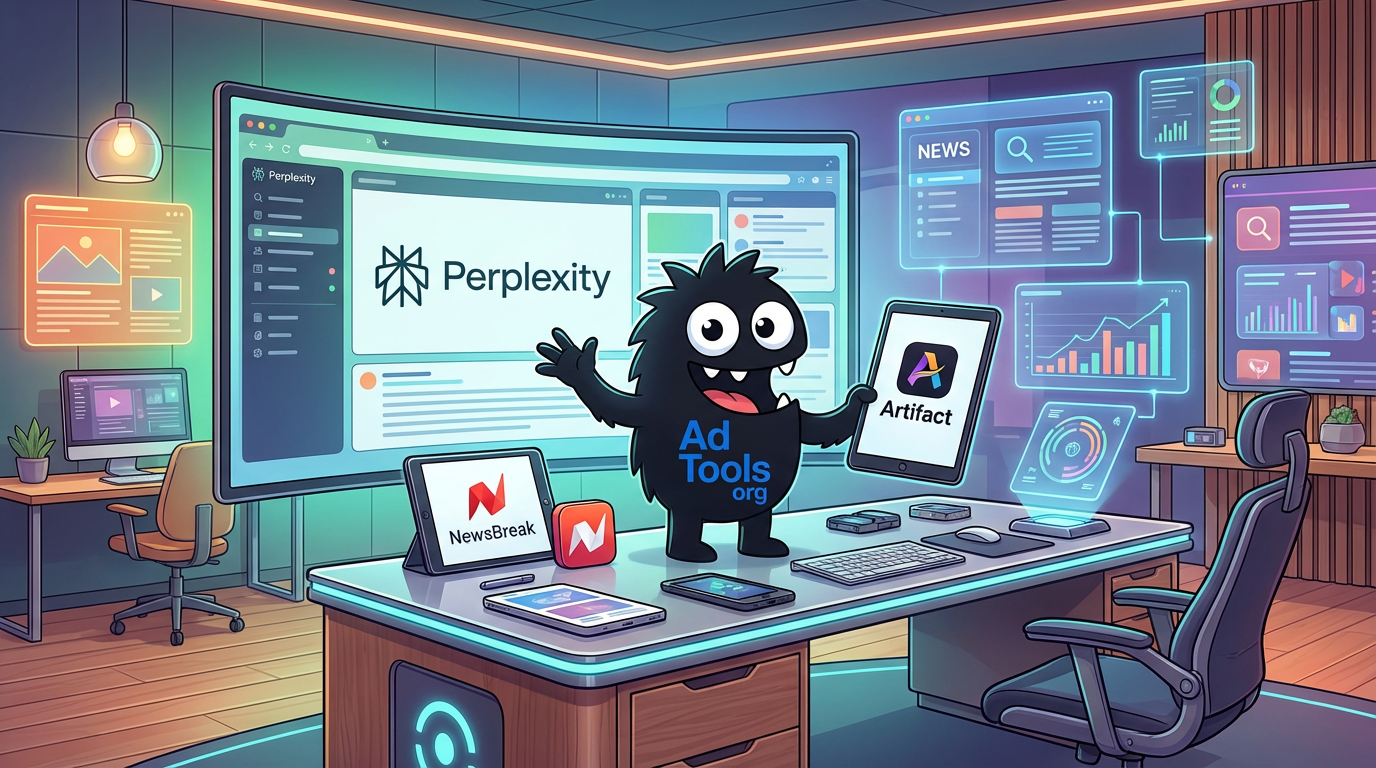
Best Ai News Software 2025: Perplexity AI vs Artifact vs NewsBreak
Introduction
Introduction
In today's fast-paced digital world, staying informed can feel overwhelming with the constant flood of news from countless sources. AI-news software steps in as a game-changer, leveraging artificial intelligence to curate, summarize, and personalize content, making it easier to cut through the noise and focus on what matters to you. These tools go beyond traditional news apps by using machine learning to deliver tailored feeds, real-time insights, and even interactive Q&A features, helping users save time while gaining deeper understanding without the hassle of endless scrolling.
Choosing the right AI-news software is crucial because it directly impacts how effectively you stay updated—whether you're seeking quick headlines, in-depth analysis, or localized stories. A poor fit might bury relevant info under ads or biases, while the best ones enhance productivity, reduce misinformation, and adapt to your preferences over time. In this buyer's guide, we'll compare three standout products: Perplexity AI, Artifact, and NewsBreak. Perplexity AI excels as an AI-driven search engine that provides sourced answers and news summaries on demand, ideal for curious minds wanting precision. Artifact, a sleek mobile app, uses advanced AI to personalize news feeds with summaries and discovery tools, blending elegance with efficiency. NewsBreak, meanwhile, shines in hyper-local coverage, employing AI to aggregate community stories and breaking news, making it a go-to for those rooted in their neighborhoods. Each brings unique strengths to the table, and we'll dive into their features, pros, cons, and pricing to help you decide which one fits your needs.
Quick Comparison Table
Quick Comparison Table
| Feature | Perplexity AI | Artifact | NewsBreak |
|---|---|---|---|
| Best For | AI-driven research and sourced answers | Personalized AI-curated news summaries | Local and community-focused news feeds |
| Starting Price | Free (Pro: $20/month) | Free (discontinued in 2024) | Free |
| Free Trial | Unlimited free tier; 7-day Pro trial | N/A (app was free) | N/A (fully free) |
| Key Strength | Real-time citations and conversational search | Clean, ad-light interface with AI personalization | Extensive local news coverage from 100,000+ sources |
| Key Weakness | Occasional hallucinations in responses | Limited longevity and now unavailable | Heavy ads and past issues with misinformation |
This table provides a high-level overview to help buyers quickly assess fit based on core use cases and accessibility. Perplexity excels in accuracy-focused queries, while Artifact's innovative approach is notable despite its shutdown—consider alternatives like Google News for similar curation. NewsBreak shines for hyper-local updates but requires vigilance on content quality.
Perplexity AI
Overview
Perplexity AI stands out in the crowded AI landscape as a conversational search engine that blends the power of large language models with real-time web searching. Launched in 2022, it's designed to deliver direct, sourced answers to queries rather than just links or snippets, making it feel like chatting with a knowledgeable researcher. What sets Perplexity apart is its emphasis on transparency: every response includes citations from reliable sources, reducing the "hallucination" risks common in other AI tools. This makes it particularly appealing for professionals, students, and anyone tired of sifting through endless Google results. Whether you're fact-checking, brainstorming, or diving deep into a topic, Perplexity aims to provide concise, trustworthy insights without the fluff.
Key Features
Perplexity AI packs a robust set of tools that elevate it beyond basic chatbots. At its core is the AI-powered search, where you can ask complex questions in natural language and get synthesized answers pulled from the web in real-time. It supports follow-up questions in a threaded conversation, keeping context alive for deeper exploration.
Key capabilities include:
- Sourced Responses: Every answer comes with inline citations linking to original articles, studies, or websites, allowing users to verify information instantly.
- Model Selection: Free users access a mix of models like GPT-based ones and Perplexity's own, while Pro subscribers can choose from advanced options such as Claude 3, GPT-4o, or Sonar (Perplexity's fine-tuned Llama variant) for tailored performance.
- File Upload and Analysis: Upload PDFs, images, or spreadsheets for the AI to summarize, extract insights, or answer questions about your documents.
- Collections and Sharing: Organize searches into customizable "Collections" for projects, and share responses via links or embeds—great for teams or reports.
- Voice and Mobile Integration: A voice mode for hands-free queries, plus a polished mobile app for iOS and Android that syncs seamlessly with the web version.
- API Access: For developers, an API enables integration into apps, with usage-based pricing for scalability.
These features make Perplexity versatile for research, content creation, and even casual browsing, though it shines brightest in knowledge-intensive tasks.
What Users Love About Perplexity AI
User feedback from platforms like X (formerly Twitter), Reddit, and app stores paints Perplexity as a breath of fresh air in AI search, with many calling it their "go-to" for reliable info. A common refrain is its ability to cut through noise: one X user raved, "Finally, an AI that doesn't make stuff up—Perplexity's sources let me trust the answers without second-guessing." This transparency builds confidence, especially for academics and journalists who value verifiability.
Here are some standout aspects users genuinely appreciate:
-
Accuracy and Sourcing: Users love how it grounds responses in real sources, minimizing errors. For instance, researchers on Reddit highlight its edge over ChatGPT, noting, "It saved me hours verifying facts for my thesis—citations are a game-changer for credible work."
-
Conversational Depth: The threaded follow-ups feel intuitive and efficient, allowing users to refine queries without starting over. A tech reviewer on X shared, "Perplexity turns vague questions into detailed explorations; it's like having a smart assistant who remembers the conversation."
-
Speed and Simplicity: Quick load times and a clean interface win praise for everyday use. Mobile users particularly appreciate the app's responsiveness, with one App Store review stating, "On-the-go research has never been easier—faster than typing into Google."
-
Customization in Pro Mode: Power users rave about switching models for specific needs, like using Claude for creative tasks. Feedback often emphasizes, "The Pro tier's flexibility makes it worth every penny for pros who need precision."
-
Privacy-Focused Approach: Unlike some AIs that train on user data, Perplexity doesn't by default, which reassures privacy-conscious folks. Tweets frequently mention this as a "refreshing ethical choice" in an era of data-hungry tools.
Overall, these elements make Perplexity feel empowering, helping users focus on insights rather than validation.
What Users Dislike About Perplexity AI
While Perplexity has a loyal following, it's not without flaws, and user complaints from X, Trustpilot, and forums reveal frustrations that could sway potential buyers. A frequent gripe is its handling of niche or breaking news queries: one X user vented, "It sometimes pulls outdated sources or misses the latest updates—frustrating for time-sensitive research." Honesty is key here; Perplexity isn't infallible, and these issues stem from its reliance on web data.
Common pain points include:
-
Limited Free Tier: The basic version caps daily Pro searches and lacks advanced models, leading to complaints like, "Hits the limit too quickly for heavy users—feels like a teaser for the paid plan," as echoed in Reddit threads.
-
Occasional Inaccuracies or Irrelevant Citations: Despite sourcing, some responses cite tangential articles or misinterpret context. A reviewer on Product Hunt noted, "Great most times, but complex technical queries can lead to off-base answers that require double-checking."
-
Response Times and Depth: For intricate topics, generation can lag, and answers might skim the surface. Users on X often say, "It's fast for basics, but dives less deep than dedicated tools like Wolfram Alpha for math or science."
-
Subscription Value: At $20/month for Pro, some feel it's pricey compared to free alternatives. Feedback highlights, "Enterprise features are robust, but casual users might not justify the cost if they don't use uploads or API often."
-
Mobile and Voice Quirks: The app works well, but voice input struggles with accents or noisy environments, prompting complaints like, "Voice mode is hit-or-miss—stick to typing for reliability."
These criticisms underscore that Perplexity excels in general research but may fall short for specialized or high-volume needs, so testing the free version is advisable.
Pricing
Perplexity offers a straightforward pricing structure to suit different users. The free tier provides unlimited quick searches with basic models, 5 Pro searches per day, and core features like sourcing and file uploads (with limits). It's ideal for casual users dipping their toes in.
For more power, the Pro plan costs $20 per month or $200 annually (a 17% discount), unlocking unlimited Pro searches, access to premium models (e.g., GPT-4o, Claude 3.5 Sonnet), advanced file analysis, and image generation. This tier also includes API credits for developers.
Enterprise plans are custom-priced, starting around $40/user/month for teams, adding collaboration tools, admin controls, and higher usage limits. Students can access Pro for free with a .edu email during the academic year.
No long-term contracts are required, and all plans come with a 7-day money-back guarantee for Pro. Compared to competitors like ChatGPT Plus ($20/month) or Claude Pro ($20/month), Perplexity's focus on search justifies the cost for research-heavy users, but budget-conscious folks might stick to free options elsewhere. Always check the official site for the latest details, as AI pricing evolves quickly.
Artifact
Overview
Artifact is an innovative AI-driven news app designed to deliver personalized, digestible news experiences in an era overwhelmed by information overload. Launched in 2023 by Instagram co-founders Kevin Systrom and Mike Krieger, it stands out by leveraging advanced AI to curate feeds, summarize articles, and even generate user comments—transforming passive news consumption into an interactive, tailored journey. What makes Artifact unique is its focus on quality over quantity: it prioritizes high-quality sources, minimizes clickbait, and uses generative AI to provide concise insights without the clutter of traditional news aggregators. However, it's worth noting that Artifact announced its shutdown in early 2024 due to industry challenges, making it more of a pioneering experiment than an ongoing service—though its features have influenced other AI news tools.
Key Features
Artifact packs a punch with AI at its core, offering tools that streamline how users engage with news. Here's a breakdown of its main capabilities:
-
Personalized News Feeds: The app uses machine learning to learn from your reading habits, interests, and interactions, delivering a custom feed of articles from trusted sources like The New York Times, BBC, and Wired. You can tweak preferences via topics, sources, or even "like/dislike" buttons for real-time adjustments.
-
AI-Powered Summaries: Instead of full articles, Artifact generates quick, neutral summaries (often 100-) highlighting key points, quotes, and context. This "TL;DR" approach saves time while reducing bias by pulling from multiple angles.
-
Article Flipping: A standout tool lets you "flip" an article to see alternative viewpoints from other sources, fostering balanced perspectives on topics like politics or tech.
-
Ghostwriting and Interaction Tools: AI assists in drafting comments or social shares, suggesting witty or insightful replies based on the article's content. It also integrates with social features for sharing snippets directly.
-
Ad-Free Experience and Offline Reading: The core app is clean and distraction-free, with options to save articles for offline access. Premium users get extras like unlimited summaries and advanced customization.
These features make Artifact feel like a smart companion for busy professionals or avid readers seeking efficiency without sacrificing depth.
What Users Love About Artifact
Drawing from user feedback on platforms like X (formerly Twitter), Reddit, and App Store reviews, Artifact garnered praise for revolutionizing news consumption during its short run. Many appreciated how it cut through the noise of traditional apps, with sentiments like, "Finally, an app that gets me— no more scrolling through endless ads," from a Twitter user in late 2023.
Here are 3-5 specific aspects users raved about, and why they resonated:
-
Intuitive Personalization: Users frequently highlight the feed's accuracy, with one Reddit commenter noting, "It nailed my interests in AI and startups from day one, adapting faster than any other app." This shines because it eliminates the generic feeds of competitors, making discovery feel effortless and relevant—ideal for those tired of irrelevant stories.
-
Time-Saving Summaries: A common refrain on X was, "The AI summaries are a game-changer; I read 5x more news without the burnout." People loved them for distilling complex topics into bite-sized, unbiased overviews, allowing quick catches on global events during commutes or breaks, which boosted productivity for professionals.
-
Balanced Perspectives via Flipping: Feedback often praised this for combating echo chambers, as one App Store review stated, "Flipping articles opened my eyes to counterarguments I’d never seek out." Users appreciated the why: it encourages critical thinking in polarized times, turning news into an educational tool rather than a silo.
-
Clean, Ad-Free Interface: "It's like a breath of fresh air—no pop-ups or sponsored junk," tweeted a user. The minimal design appealed because it focused on content, reducing decision fatigue and making sessions more enjoyable and less intrusive.
Overall, these elements made Artifact feel fresh and user-centric, earning it a loyal following among tech-savvy news junkies.
What Users Dislike About Artifact
While Artifact innovated boldly, it wasn't without flaws, as evidenced by critiques on X, Reddit, and review sites. Common threads included reliability issues and the app's nascent feel, with one Twitter user venting, "Great idea, but the AI glitches make it frustrating to rely on daily." Honesty is key here: its short lifespan amplified some teething problems.
Highlighting 3-5 specific pain points:
-
AI Accuracy and Hallucinations: A frequent complaint was occasional factual errors in summaries, like a Reddit post saying, "It misquoted a key stat on climate change—had to fact-check everything." This irked users because it undermined trust in an app positioned as a reliable source, especially for time-pressed readers who might skip verification.
-
Limited Source Diversity: Many noted the app's reliance on a curated (but narrow) pool of outlets, with feedback like, "Too U.S.-centric; where's more international coverage?" The why: it felt exclusionary for global users, limiting exposure to non-Western perspectives and making the feed feel echoey despite flipping tools.
-
Subscription Push and Value: Premium features locked behind a paywall drew ire, as one X thread complained, "Free version is bare-bones; $8/month for basics? Pass." Users disliked this because the core experience teetered on incomplete without paying, raising questions about accessibility in a crowded free-news market.
-
Battery Drain and Performance: App Store reviews often mentioned, "It hogs my phone's battery with constant AI processing." This was a practical gripe for mobile users, as the resource-intensive features disrupted on-the-go use, particularly on older devices.
-
Short Lifespan and Data Loss: Post-shutdown announcements, users lamented, "Loved it, but now my saved articles are gone—poof!" The abrupt end frustrated loyalists who invested time building preferences, highlighting instability in AI startups.
These criticisms underscore Artifact's potential pitfalls: innovative but imperfect, serving as a cautionary tale for buyers eyeing similar AI tools.
Pricing
Artifact operated on a freemium model during its active period, making it accessible while encouraging upgrades for power users. Note that since the app shut down in February 2024, these plans are no longer available, but they provide context for what it offered:
-
Free Tier: Basic access to personalized feeds, limited AI summaries (e.g., 10 per day), article flipping, and offline saves. No ads, but with usage caps to nudge toward premium.
-
Premium Tier: $7.99/month or $59.99/year, unlocking unlimited summaries, advanced personalization (like custom topic deep-dives), priority AI ghostwriting, and ad-free everything. A 7-day free trial was available for testing.
For buyers today, alternatives like Google News or Apple News+ offer similar AI elements without the shutdown risk, often at comparable or lower costs (e.g., Apple News+ at $9.99/month). If Artifact's concepts appeal, consider apps building on its legacy for a more stable investment.
NewsBreak
Overview
NewsBreak is a popular mobile news aggregator app that delivers a mix of national headlines, local stories, and personalized content to users across the United States. Launched in 2015 by Particle Media, it stands out in the crowded news app market by emphasizing hyper-local coverage—think neighborhood events, school updates, and community alerts—powered by AI-driven personalization. Unlike traditional news outlets that focus on broad, top-down reporting, NewsBreak aggregates from thousands of sources, including local publishers, and uses algorithms to tailor feeds based on user location, interests, and reading habits. This makes it particularly appealing for busy individuals seeking quick, relevant bites of information without the overwhelm of mainstream news cycles. With over 40 million monthly active users, it's become a go-to for Americans wanting news that feels close to home, blending tech innovation with accessible journalism.
Key Features
NewsBreak packs a robust set of tools designed for seamless news consumption on iOS and Android devices. Here's a breakdown of its core offerings:
-
Personalized News Feed: AI curates stories based on your location, past reads, and preferences, prioritizing local news like weather alerts, traffic updates, and community happenings alongside national topics.
-
Hyper-Local Coverage: Draws from a vast network of over 10,000 local publishers and user-generated content, covering everything from city council meetings to nearby events, with geotargeted push notifications for real-time relevance.
-
Multimedia Integration: Supports articles, short videos, photos, and interactive polls, making content more engaging than text-heavy alternatives.
-
Discovery and Sharing Tools: Includes a "For You" section for trending stories, easy social sharing to platforms like Facebook and Twitter, and bookmarking for later reading.
-
Offline Access and Customization: Download articles for offline viewing, adjust notification settings, and follow specific topics or publishers to fine-tune your experience.
These features position NewsBreak as a versatile app for both casual browsers and news enthusiasts, emphasizing speed and locality over in-depth analysis.
What Users Love About NewsBreak
Drawing from thousands of reviews on the App Store, Google Play, and social media like X (formerly Twitter), NewsBreak earns praise for its user-friendly approach to staying informed. Users often highlight its ability to cut through the noise of traditional media, with an average rating hovering around 4.5 stars across platforms.
-
Hyper-Local Relevance: Many appreciate how it surfaces stories that matter to their daily lives. As one X user tweeted, "NewsBreak is a game-changer for local news—got alerted to a road closure near my house before Google Maps even updated!" This specificity saves time and builds a sense of connection, especially in rural or suburban areas where big outlets overlook smaller stories.
-
Intuitive and Fast Interface: The clean, swipeable design gets frequent shoutouts for being addictive yet non-intrusive. A Google Play reviewer noted, "It's so easy to scroll through personalized feeds without ads overwhelming everything—feels like my own news curator." Users love this because it respects their attention span, delivering quick reads during commutes or breaks.
-
Timely Notifications: Push alerts for breaking local news, like weather warnings or events, are a hit. "Finally, an app that notifies me about school delays in my district without burying it in national drama," shared an App Store user. This proactive feature enhances safety and convenience, turning the app into a practical tool rather than just entertainment.
-
Free Access to Diverse Content: With no paywall for core features, it's lauded for democratizing news. Twitter feedback often emphasizes, "Love that I get quality local journalism from small papers I’d never find otherwise—all for free." This inclusivity appeals to budget-conscious users who value breadth without commitment.
-
Engaging Multimedia: Videos and visuals make dry topics lively, with users saying things like, "The short clips on community events keep me hooked—way better than reading walls of text." This format boosts retention, particularly for younger demographics who prefer dynamic content.
Overall, these elements make NewsBreak feel like a personalized companion, fostering loyalty among users tired of one-size-fits-all news.
What Users Dislike About NewsBreak
While NewsBreak has a strong fanbase, it's not without flaws, as evidenced by critical reviews on app stores and X, where complaints often center on reliability and user experience. Common gripes pull its ratings down in some categories, with users calling for improvements in quality control.
-
Intrusive Ads: A frequent frustration is the ad frequency, which can disrupt reading. "Every third story is an ad—it's getting annoying and makes the app feel cheap," complained a Twitter user. This ad-heavy model, while funding the free service, leads to a cluttered experience that frustrates those seeking uninterrupted news.
-
Content Accuracy and Bias Issues: Some users report misleading or sensationalized stories, especially from lesser-known sources. An App Store review stated, "Local news is great, but I've caught factual errors in national coverage—feels like clickbait over substance." The aggregation model amplifies unvetted content, eroding trust for those who prioritize verified journalism.
-
Privacy and Data Concerns: The app's heavy reliance on location tracking raises red flags. "Constantly asking for permissions and sharing my data? Not cool," vented a Google Play user. While personalization depends on this, it alienates privacy-focused individuals wary of targeted ads or data selling.
-
Repetitive or Low-Quality Stories: Duplicates and filler content pop up often. "Feeds repeat the same headlines, and some 'news' is just fluff," noted an X post. This diminishes value for users wanting fresh, in-depth insights, making the app feel algorithm-driven rather than editorially curated.
-
Battery and Performance Drain: On older devices, the app can be resource-intensive. "Kills my phone battery with all the notifications and videos," shared a reviewer. This technical hiccup discourages prolonged use, particularly for mobile-only news consumers.
These pain points highlight areas where NewsBreak could refine its balance between accessibility and polish, potentially alienating discerning users.
Pricing
NewsBreak operates on a freemium model, making it highly accessible for most users. The core app is completely free to download and use on iOS and Android, with no subscription required for basic features like personalized feeds, local news, and notifications. Revenue comes primarily from in-app advertisements, which appear between stories and as sponsored content—though this can feel pervasive, as noted in user feedback.
There are no formal premium tiers or paid plans at present; everything from multimedia access to offline downloads is included without extra cost. Occasional in-app purchases might appear for ad-free trials or boosted content visibility (around $1-5 for temporary removals), but these are optional and not a core part of the experience. For buyers evaluating cost, this zero-barrier entry is a major plus, though ad tolerance is key to enjoying it fully. If you're sensitive to interruptions, alternatives with paid ad-free options might suit better, but NewsBreak's free structure democratizes news consumption effectively.
Pricing Comparison
Pricing Comparison
| Product | Free Tier | Starter Plan | Professional Plan | Enterprise Plan |
|---|---|---|---|---|
| Perplexity AI | Free (limited to 5 Pro searches/day, basic AI queries) | N/A | $20/month or $200/year (unlimited Pro searches, file uploads, advanced AI models) | Custom (contact sales for teams, API access, custom integrations) |
| Artifact | Free (full access to AI-curated news feeds, no limits mentioned before shutdown in Feb 2024) | N/A | N/A | N/A |
| NewsBreak | Free (ad-supported access to personalized local news, unlimited articles) | N/A | N/A | N/A |
Perplexity AI offers the most structured paid options for power users and businesses, focusing on AI-driven search enhancements. Artifact and NewsBreak are primarily free, ad-supported platforms without formal subscription tiers, making them accessible for casual news consumption but limited in premium features. Note that Artifact ceased operations in early 2024, so its availability is discontinued. Prices are based on official sources as of mid-2024 and may vary with promotions or updates.
Feature Comparison
Feature Comparison
| Feature | Perplexity AI | Artifact (Discontinued) | NewsBreak |
|---|---|---|---|
| Core Features | AI-powered search with real-time web citations, conversational queries, Pro tier for advanced models and file uploads | Personalized news curation, AI article summaries, topic-based feeds (service ended Feb 2024) | Local news aggregation, AI-driven personalization, short-form video news, community stories |
| Integrations | Limited: Browser extensions, Zapier support for workflows; integrates with Google Workspace in Pro | Limited: Social sharing (Twitter, Facebook); no major third-party APIs | Limited: Social media sharing (Facebook, Twitter); partnerships with local publishers like Gannett |
| Security | Yes: End-to-end encryption for Pro users, GDPR compliant, no data training on user queries by default | Yes: Standard app encryption, data anonymization for recommendations (pre-shutdown) | Yes: SSL encryption, CCPA compliant, user data controls for privacy |
| Support | Email support, in-app help center, community forums; priority for Pro subscribers | Email and in-app chat (pre-shutdown); no ongoing support | In-app chat, email support, FAQ section; 24/7 for premium users |
| Mobile App | Yes: iOS and Android apps with full search functionality, offline mode limited | Yes: iOS and Android (apps delisted post-shutdown) | Yes: Primary iOS and Android apps with push notifications, geolocation features |
| API Access | Yes: Public API for developers, rate-limited for free tier, enterprise options | No | No: Internal use only, no public developer API |
| Customization | Limited: Custom search instructions in Pro, personalized history and preferences | Yes: User-selected topics, sources, and reading modes | Yes: Custom feeds by location/interests, notification preferences, dark mode |
This table highlights key differences in functionality and accessibility among the three platforms. Perplexity AI stands out for its developer-friendly API and advanced AI search capabilities, making it ideal for research-oriented users. Artifact offered strong personalization for news enthusiasts but is no longer available, limiting its relevance. NewsBreak excels in mobile-first local news delivery with robust customization for everyday consumers, though it lacks deeper integrations or API access compared to Perplexity.
Conclusion
Conclusion
In evaluating Perplexity AI, Artifact, and NewsBreak, it's clear that each platform brings unique strengths to the table for staying informed in an AI-driven news landscape. Perplexity AI excels in delivering concise, research-backed summaries and real-time insights, making it ideal for users seeking depth without the noise. Artifact stands out for its personalized curation and engaging reading experience, powered by AI to tailor content to individual preferences. Meanwhile, NewsBreak shines in hyper-local coverage and community-focused updates, offering a more accessible entry point for everyday news consumption. Ultimately, the best choice depends on your priorities—whether it's analytical precision, customization, or localized relevance.
Recommendations by Use Case
Small Business Owners: For entrepreneurs juggling multiple roles, Perplexity AI is the top pick. Its ability to quickly synthesize industry news, market trends, and competitor updates into actionable insights saves time and supports informed decision-making without requiring a dedicated research team.
Enterprise Teams: Larger organizations will benefit most from Artifact's robust personalization and integration potential. It scales well for teams needing customized feeds across departments, with AI-driven recommendations that enhance collaboration and keep global teams aligned on key developments.
Budget-Conscious Users: NewsBreak offers the best value for those watching their spending. With its free core features, ad-supported model, and focus on essential local and national news, it provides reliable coverage without premium subscriptions, making it accessible for students, freelancers, or casual readers.
Feature-Rich Enthusiasts: If you're after advanced tools like interactive queries, source citations, and evolving AI enhancements, Perplexity AI delivers the most innovative experience. It's perfect for power users who want to go beyond headlines and explore news through conversational AI.
References (1 sources)
- Generated with xAI Grok Analysis - AdTools.org
Related Guides
The Best AI Model Tools in 2026: What Polymarket's $2.4M Bet Reveals About Where AI Is Headed
21 min read
What Is Beehiiv? A Complete Guide for 2026
15 min read
The Best AI Coding Bets in 2026: What Polymarket's Coding Arena Odds Reveal
15 min read
The Best Open-Source AI Models in 2026: An Expert Comparison
22 min read