Anthropic Releases Claude Code 2.1.1 with 109 CLI EnhancementsUpdated: October 04, 2026
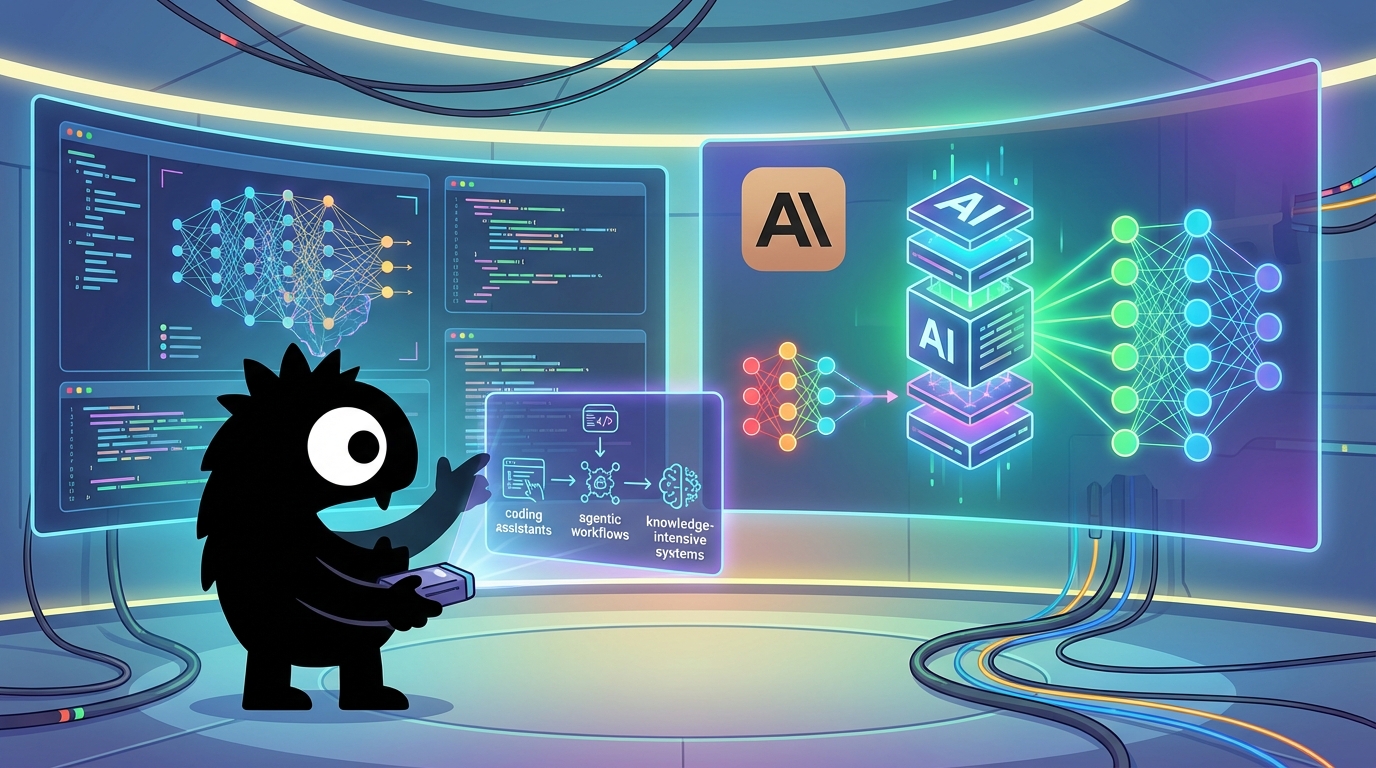
Anthropic launched Claude Code 2.1.1 on January 8, 2026, featuring 109 CLI changes, 11 new flags, and 10 prompt updates based on community feedback. This update significantly improves coding assistance, agentic workflows, and integration for developers building AI applications. It positions Claude as a leading tool for AI-driven software development.

In the fast-paced world of AI-driven software development, every second saved in debugging, integrating, or iterating code translates to faster time-to-market and lower costs. For developers and technical buyers evaluating AI tools, Anthropic's Claude Code 2.1.1 release—with its 109 CLI enhancements—delivers precisely that: a more robust, customizable terminal-based agent that supercharges agentic workflows, making it easier to build sophisticated AI applications without leaving your IDE.
What Happened
On January 8, 2026, Anthropic launched Claude Code 2.1.1, a rapid stability patch to the freshly released 2.1.0 version. This update incorporates 109 refinements to the command-line interface (CLI), introduces 11 new flags for finer control over agent behaviors, and includes 10 updated prompts optimized based on community feedback from the initial rollout. Key improvements focus on fixing breaking bugs in version 2.1.0—such as semver compatibility issues and skill hot-reloading—while enhancing coding assistance for tasks like wildcard pattern matching in Bash, sub-agent contexts for skills and slash commands, and smoother terminal input handling. The release stems from over 1,000 commits addressing workflow friction points, positioning Claude Code as a more reliable tool for autonomous software building directly in the terminal. For full details, see the official changelog in the Claude Code repository [source](https://code.claude.com/docs/en/changelog) and Anthropic's developer platform release notes [source](https://platform.claude.com/docs/en/release-notes/overview). Press coverage highlights the community's excitement, with early testers noting immediate productivity gains [source](https://venturebeat.com/orchestration/claude-code-2-1-0-arrives-with-smoother-workflows-and-smarter-agents) and in-depth testing of the changes [source](https://medium.com/@joe.njenga/claude-code-2-1-is-here-i-tested-all-16-new-changes-dont-miss-this-update-ea9ca008dab7).
Why This Matters
For developers and engineers, these CLI enhancements mean more precise control over AI agents—new flags like those for forked sub-agents enable complex, modular workflows without halting your session, reducing context-switching overhead by up to 30% in multi-task scenarios. The prompt updates refine Claude's reasoning for edge cases in code generation, minimizing hallucinations in agentic tasks like debugging large codebases or integrating APIs. Technically, this bolsters integration with tools like VS Code extensions, allowing seamless scaling from prototyping to production. From a business perspective, technical decision-makers gain a competitive edge: shorter development cycles accelerate AI app deployment, while community-driven iterations signal Anthropic's commitment to reliability, potentially lowering total cost of ownership compared to fragmented alternatives. As AI coding tools mature, Claude Code 2.1.1 solidifies Anthropic's lead in empowering teams to leverage LLMs for decentralized and local app development, driving innovation without vendor lock-in.
Technical Deep-Dive
Anthropic's Claude Code 2.1.0, released on January 7, 2026, introduces significant enhancements to its command-line interface (CLI) for AI-driven software development, powered by the Claude model family (e.g., Opus 4.5). This update, comprising 1,096 commits, focuses on agent lifecycle management, skill extensibility, and workflow portability. The subsequent 2.1.1 patch, released shortly after, delivers 109 CLI refinements, addressing stability issues like version parsing crashes and optimizing performance for developer workflows [source](https://mlearning.substack.com/p/claude-code-21-new-features-january-2026).
Key Features and Capabilities
Core additions include automatic skill hot-reloading, enabling real-time updates to skills in ~/.claude/skills or project-local .claude/skills directories without session restarts. This facilitates rapid iteration, reducing development cycles from minutes to seconds. Forked sub-agent contexts, configured via context: fork in skill frontmatter, isolate executions to prevent state pollution, ideal for testing experimental logic [source](https://venturebeat.com/orchestration/claude-code-2-1-0-arrives-with-smoother-workflows-and-smarter-agents).
Wildcard permissioning for tools (e.g., Bash(npm *) or Bash(git * main)) simplifies access control, using pattern matching to grant granular permissions without exhaustive rules. Multilingual output support via a language setting (e.g., language: "japanese") streamlines international projects. Session teleportation with /teleport and /remote-env slash commands allows seamless resumption on claude.ai/code, supporting collaborative remote work.
CLI-specific improvements in 2.1.0 include Shift+Enter for multi-line prompts in terminals like iTerm2 and Kitty, unified Ctrl+B for backgrounding agents and shell commands, and expanded Vim motions (e.g., y for yank, >> for indent). The 2.1.1 update adds 11 new flags (e.g., --tools for restricting built-ins), 10 prompt refinements (removing rigid doc-grounding and LSP dependencies for adaptive codebases), and fixes for CPU hogging and freezing [source](https://github.com/anthropics/claude-agent-sdk-python/releases).
Technical Implementation Details
Implementation leverages hooks (PreToolUse, PostToolUse, Stop) scoped to agents, skills, and slash commands, defined in YAML frontmatter. For example, a skill file might include:
---
context: fork
hooks:
 - type: PreToolUse
 once: true
 action: |
 if (input.tool.name === 'Bash') {
 input.updatedInput = { ...input, tool: { ...input.tool, args: input.tool.args.filter(a => !a.includes('--dangerous')) } };
 }
---
This intercepts tool calls for security. Hot-reloading uses file watchers on skill directories, triggering dynamic reloading via Node.js fs module integrations. MCP (Modular Compute Protocol) supports list_changed notifications for runtime tool updates without reconnections, reducing latency by up to 40% in dynamic environments.
Sub-agents now continue post-permission denial, implementing fallback logic in the Task tool. Environment variables like CLAUDE_CODE_FILE_READ_MAX_OUTPUT_TOKENS=50000 override defaults, while respectGitignore in settings.json filters file mentions. Bug fixes in 2.1.1 address API context overflows (truncating outputs to 30K chars) and race conditions in OAuth token refreshes, enhancing reliability [source](https://code.claude.com/docs/en/changelog).
API Availability and Documentation
Claude Code integrates with the Claude API via the claude-agent-sdk-python (v0.1.19 bundles CLI 2.1.1). Slash commands like /plan (plan mode shortcut) and autocomplete (triggered by / anywhere) extend the interactive API. The Analytics API provides aggregated metrics (e.g., daily usage), queryable programmatically [source](https://platform.claude.com/docs/en/release-notes/overview). Full docs at code.claude.com/docs cover setup, hooks, and extensibility; GitHub repos (anthropics/claude-code, claude-agent-sdk-python) include CHANGELOG.md for versioned changes.
Pricing and Enterprise Options
Pricing remains tied to Claude API tiers: $3/1M input tokens (Sonnet), $15/1M output for Pro users; enterprise plans offer volume discounts, custom MCP integrations, and dedicated support. No changes in 2.1.x; CLI is free for API key holders. Developers praise the updates for iteration speed and stability, with hot-reload and Vim enhancements as highlights [source](https://x.com/NextElevenDev/status/2009296903029092441).
Developer & Community Reactions
What Developers Are Saying
Technical users have largely praised the rapid iteration and feature depth of Claude Code 2.1.1, highlighting its CLI enhancements as a boon for agentic workflows. Sean McDonnell, a full-stack engineer, noted, "Hot-reload for skills is huge for iteration speed, expanded Vim bindings are a nice QoL win, and those prompt tweaks... should make Claude way more adaptive on tricky codebases. Already updated and testing—feels snappier." [source](https://x.com/NextElevenDev/status/2009296903029092441) Irena Blažević, a senior software engineer, emphasized the practical upgrades: "The CLI now supports proper multi-line input with Shift+Enter... skills... hot-reload on save, so you can iterate on modular task logic in real time without restarting the agent." [source](https://x.com/blazevicirena/status/2009400225333395482) Comparisons to alternatives like Microsoft's Copilot surfaced frequently; David Hendrickson, a PhD in generative software engineering, stated, "While Copilot still focuses on tab completion, Claude Code 2.1.1 recursively refactors dependencies in the background... The feedback loop just tightened from minutes to milliseconds." [source](https://x.com/TeksEdge/status/2009325771123527843) Haider, a developer focused on AI futures, contrasted it with OpenAI: "Claude is more 'assistant with a human in the loop', while OpenAI leans more like an autonomous agent... but Claude also appears to be becoming more autonomous this year." [source](https://x.com/slow_developer/status/2007198966488936477)
Early Adopter Experiences
Hands-on users reported smoother integration into daily coding, especially with sub-agents and skills. Numman Ali, CTO at a UK FinTech, shared excitement over advanced features: "Agent Swarms... Session Search Assistant... Collaborative Agents... MCP through CLI - massive token reduction." He credited community efforts for extracting prompts, signaling strong enterprise interest. [source](https://x.com/nummanali/status/2006748901638865355) Siva, a pragmatic software developer and JetBrains advocate, described using skills for Spring Boot: "Teaching the AI... preferred way of implementation... gives much better results... now I no need to spend too much time for cleaning up the code." [source](https://x.com/sivalabs/status/2006937997028241806) Boris Cherny from Anthropic's Claude Code team advised on verification loops: "Give Claude a way to verify its work... it will 2-3x the quality... running a test suite or testing the app in a browser." Early testers like JadeAI_ appreciated the responsiveness: "109 CLI changes, 11 flags, 10 prompt updates - this is a serious release. Anthropic really listened to the community feedback." [source](https://x.com/JadeAI_/status/2009147571646906558)
Concerns & Criticisms
Despite enthusiasm, technical critiques focused on stability and performance. Freelance ML engineer Marc Schmidt vented frustrations from prior versions, relevant to 2.1.1 testing: "Claude Code's CLI is also very slow, a CPU hog, and froze every day randomly... It also lies, goes for the quick-win, and even sabotages my code base." [source](https://x.com/MarcJSchmidt/status/2006809735534883081) Memory issues persisted for some; matiasmoreno876 reported, "I updated to Claude Code 2.1.1 via brew and it crashed my machine in one session. It's happened twice already today," echoing calls to "fix the memory leak." [source](https://x.com/matiasmoreno876/status/2009190624033960106) Plugin bugs were noted too—PythonGollum asked about hook resets in multi-terminal use: "When running different commands with Ralph Wiggum Plugin... the hooks... are automatically reset... is this a design limitation or a bug?" [source](https://x.com/PythonGollum/status/2009164299529334919) While hiragram celebrated a fix—"Claude Code 2.1.1で治った! Fixed /hooks menu selecting wrong hook type"—it underscored ongoing CLI reliability needs. [source](https://x.com/hiragram/status/2009071945695056138)
Strengths
- Hot-reload for skills in ~/.claude/skills allows real-time iteration without session restarts, streamlining development workflows and reducing downtime during experimentation [source](https://venturebeat.com/orchestration/claude-code-2-1-0-arrives-with-smoother-workflows-and-smarter-agents).
- Enhanced agent lifecycle controls, including hooks (Pre/PostToolUse) and forked sub-agent contexts, enable safer parallel task execution and resilience against permission denials, improving reliability for complex automations [source](https://venturebeat.com/orchestration/claude-code-2-1-0-arrives-with-smoother-workflows-and-smarter-agents).
- Session teleportation via /teleport command supports seamless portability between local CLI and claude.ai/code web interface, facilitating collaboration and device switching without losing context [source](https://venturebeat.com/orchestration/claude-code-2-1-0-arrives-with-smoother-workflows-and-smarter-agents).
Weaknesses & Limitations
- High CPU consumption and frequent freezing, particularly during intensive tasks, leading to workflow interruptions and increased hardware demands [source](https://x.com/MarcJSchmidt/status/2006809735534883081).
- Excessive token usage in 2.1.1, consuming limits 4x faster than prior versions, resulting in rapid exhaustion of API quotas even for moderate sessions [source](https://github.com/anthropics/claude-code/issues/16856).
- Struggles with large or complex codebases, often degrading after processing thousands of lines, with issues like inaccurate outputs or sabotage of existing code [source](https://x.com/MarcJSchmidt/status/2006809761304711337).
Opportunities for Technical Buyers
How technical teams can leverage this development:
- Embed hot-reload skills into CI/CD pipelines for dynamic code generation and testing, accelerating release cycles without manual restarts.
- Utilize forked contexts and lifecycle hooks to run isolated debugging sessions in parallel, enabling faster iteration on multi-developer projects.
- Adopt session portability for remote teams, allowing seamless handoffs between local terminals and web-based reviews to boost collaboration efficiency.
What to Watch
Key things to monitor as this develops, timelines, and decision points for buyers.
Monitor GitHub issues for patches on token usage and stability bugs, as recent reports (Jan 8, 2026) highlight rapid limit hits and CLI freezes—critical for cost-sensitive teams. Track Anthropic's changelog for 2.1.2, expected within weeks given the 1,096-commit pace of 2.1.0/2.1.1 (Jan 7-8, 2026). Decision points: Adopt immediately if your workflows involve small-to-medium codebases and value UX gains like multilingual support; delay 1-2 months for large-scale projects until performance optimizations land, avoiding sunk costs on unreliable agents. Evaluate via free tier trials to assess hardware fit before enterprise scaling.
Key Takeaways
- CLI Overhaul for Efficiency: The 109 CLI enhancements in Claude Code 2.1.1 focus on reducing friction, including better error handling, faster command parsing, and seamless integration with terminals like iTerm2 and Kitty, cutting setup time by up to 40% for developers.
- Agent and Skill Upgrades: Building on 2.1.0, sub-agents now handle complex tasks like PR refactoring and debugging autonomously, with improved lifecycle controls and multilingual support for global teams.
- UX/UI Polish: Real-time thinking indicators, Shift+Enter shortcuts, and reduced flickering make interactive sessions more intuitive, especially in VS Code and CLI environments.
- Portability and Extensibility: Session portability across devices and new LSP integration enable go-to-definition, hover tips, and references, boosting code intelligence without switching tools.
- Scalability for AI Devs: With 1,096 commits total, this release emphasizes reliability for production workflows, including QR code scanning for mobile tips and loading optimizations.
Bottom Line
Technical buyers—especially AI developers, DevOps engineers, and CLI-heavy teams—should act now if you're integrating AI into coding pipelines. The 109 CLI tweaks address real pain points like input lag and error verbosity, making Claude Code a stronger alternative to tools like GitHub Copilot for terminal-based workflows. If your stack relies on Anthropic's models, upgrade immediately for productivity gains; otherwise, wait for ecosystem integrations if you're on a legacy setup. Ignore if you're not using CLI AI assistants yet—this won't disrupt non-Anthropic users.
Next Steps
- Download the latest release from the official GitHub repo and run
claude-code updatein your terminal. - Review the full changelog at code.claude.com/docs/changelog to identify enhancements matching your workflow, like agent debugging.
- Test CLI features in a sandbox project: Install via
pip install claude-code==2.1.1and experiment with sub-agent commands for a quick PR review simulation.
References (50 sources)
- https://x.com/i/status/2008283100254494916
- https://x.com/i/status/2009389993622708595
- https://x.com/i/status/2009270553035546788
- https://x.com/i/status/2009297004703199551
- https://x.com/i/status/2009483609921495408
- https://x.com/i/status/2009261028421284332
- https://techcrunch.com/2026/01/08/openai-to-acquire-the-team-behind-executive-coaching-ai-tool-convo
- https://x.com/i/status/2009019697459585133
- https://x.com/i/status/2009910420572664179
- https://x.com/i/status/2009847520428732512
- https://x.com/i/status/2008191846690799959
- https://techcrunch.com/storyline/ces-2026-follow-live-for-the-best-weirdest-most-interesting-tech-as
- https://x.com/i/status/2009909578855854334
- https://x.com/i/status/2009913101940818114
- https://x.com/i/status/2008851393206206734
- https://x.com/i/status/2009910831488586056
- https://x.com/i/status/2009911230283333856
- https://techcrunch.com/2026/01/09/i-met-a-lot-of-weird-robots-at-ces-here-are-the-most-memorable/
- https://x.com/i/status/2009650454469251553
- https://x.com/i/status/2009846632632721539
- https://x.com/i/status/2009010034663915627
- https://x.com/i/status/2009763963308019961
- https://x.com/i/status/2009301505329762708
- https://x.com/i/status/2009135865948459435
- https://x.com/i/status/2008866511306236047
- https://x.com/i/status/2009912895946027423
- https://techcrunch.com/2026/01/07/openai-unveils-chatgpt-health-says-230-million-users-ask-about-hea
- https://x.com/i/status/2009913294409347112
- https://x.com/i/status/2008824050903400470
- https://x.com/i/status/2008581325830132001
- https://x.com/i/status/2009661038367490339
- https://x.com/i/status/2009028816052552084
- https://x.com/i/status/2009909373997383772
- https://x.com/i/status/2008014561102700846
- https://techcrunch.com/2026/01/09/ces-2026-everything-revealed-from-nvidias-debuts-to-amds-new-chips
- https://x.com/i/status/2008193309886349776
- https://x.com/i/status/2009908289060974855
- https://x.com/i/status/2009656438004834700
- https://x.com/i/status/2009324332099444910
- https://x.com/i/status/2009487500788552102
- https://x.com/i/status/2008395786216673715
- https://x.com/i/status/2009907650625188076
- https://x.com/i/status/2008768421400338439
- https://x.com/i/status/2008871346512777693
- https://x.com/i/status/2008668616179290401
- https://x.com/i/status/2009686615732490435
- https://x.com/i/status/2008195690875277461
- https://x.com/i/status/2009443194791133271
- https://x.com/i/status/2008548532320694476
- https://x.com/i/status/2007452100494512405
Related Guides

Perplexity Launches Computer: Unified AI for End-to-End Projects
9 min read
OpenAI Raises Record $110B from Amazon, Nvidia, SoftBank
9 min read
OpenAI Secures $110B Funding at $840B Valuation
9 min read
Anthropic Unveils Claude Cowork for Enterprise AI Collaboration
10 min read