Replicate vs Google Gemini vs Hugging Face: Which Is Best for Developer Productivity in 2026?
Replicate, Gemini, and Hugging Face compared for developer productivity: pricing, learning curve, multimodal agents, and deployment. Find out which fits your stack.
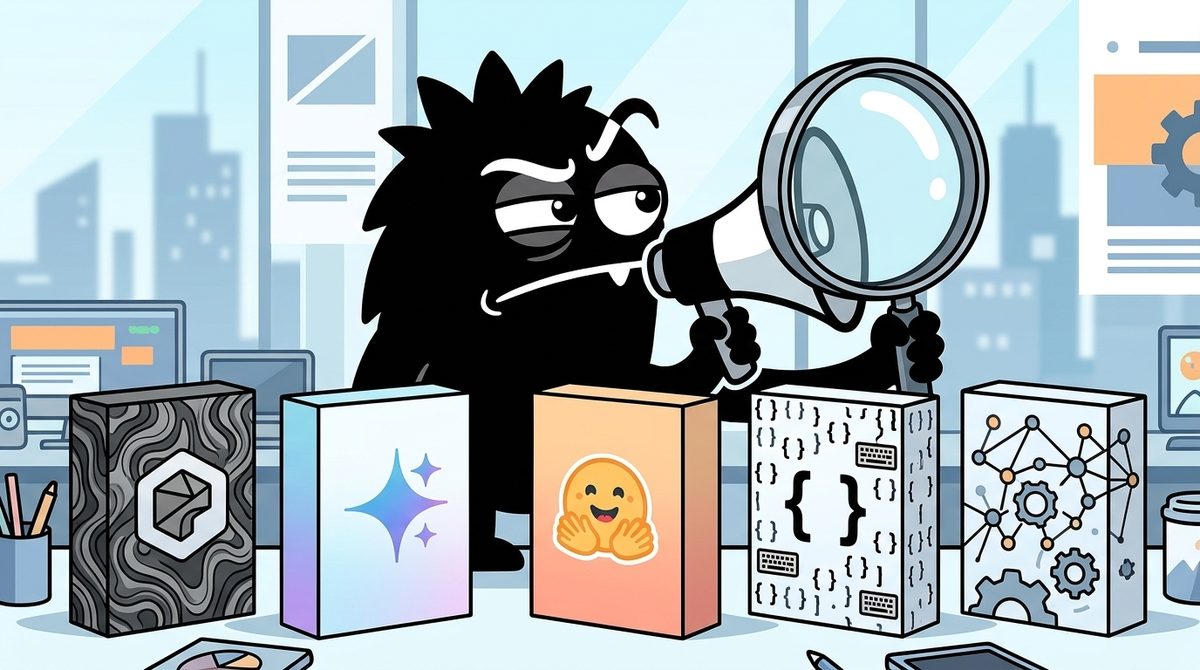
The real question is not “Which AI platform is best?” It is which platform removes the most work from your particular development loop—model selection, prototyping, agent construction, deployment, or infrastructure control.
As of 2026, Google Gemini is the strongest default for managed multimodal and agentic applications; Hugging Face is the best environment for open-weight discovery, experimentation, and reproducibility; and Replicate is the most direct route to running diverse community or custom models without operating GPUs yourself. Many production teams should not choose only one: they should put two or three behind a thin routing layer.
Bottom line
>
- Choose Gemini for coding agents, multimodal workflows, tool use, and the shortest path to Google’s newest model capabilities.
- Choose Hugging Face when open weights, model choice, reproducibility, fine-tuning, or future portability matter.
- Choose Replicate when you need API-based access to varied image, video, audio, or custom models with usage-based GPU execution.
- Combine them when model availability, reliability, and cost matter more than maintaining one perfectly uniform provider.
The real question: Is it rivalry, or is it routing?
Developers comparing Replicate, Google Gemini, and Hugging Face often begin with a procurement question: Which vendor should become our AI platform? The live developer conversation points toward a different architecture.
Arpit Saraswat’s OpenRouter-style backend, for example, sends requests across Gemini, Hugging Face, and Groq. The productive work is not merely calling models. It is normalizing messages versus inputs, mapping providers to valid models, tracking tokens, and preventing unsupported combinations from failing silently.
Built the api-backend for my OpenRouter-style project.
Right now it supports multiple providers:
- Groq (fast + reliable)
- Hugging Face (wide model access)
- Google Gemini API
Implemented:
- Unified API layer across providers
- Model routing (provider → model mapping)
- Request normalization (handling different formats like messages vs inputs)
- Token usage tracking
- Error handling for invalid models / provider mismatches
Also fixed tricky issues like:
- Incorrect model parsing (provider/model bugs)
- Hugging Face chat formatting inconsistencies
- Silent failures from unsupported providers
That project captures the direction of travel: the provider abstraction is becoming application infrastructure. A team may use Gemini for an agent that interprets screenshots, a Hugging Face model for an open-weight classification task, and Replicate for image or video generation.
This overlap is already visible at the platform level. Hugging Face’s Inference Providers system offers a unified client across external inference services,[7] and Replicate is one of its documented providers.[8] The nominal competitors are also integration partners.
That changes the comparison. Developer productivity has at least four distinct dimensions:
- How quickly can the team reach a working inference call?
- How much application logic does the platform provide beyond inference?
- How easily can the team inspect, modify, or move the model?
- How much production infrastructure must the team operate?
No platform wins all four. The right answer is “which tool for which job,” followed by a deliberate decision about whether multi-provider routing is worth its own complexity.
What are Replicate, Gemini, and Hugging Face actually built to do?
These products overlap at the API boundary, but they are fundamentally different animals.
Google Gemini is a managed model and agent platform
The Gemini API gives developers managed access to Google’s models through first-party SDKs and APIs. The attraction is vertical integration: text, images, audio, tool use, structured outputs, streaming, and agent-oriented behavior can sit within the same Google-managed environment. Google’s quickstart centers on installing an SDK, supplying an API key, and calling generateContent.[12]
That makes Gemini appropriate when the model itself is not the product differentiation. A small product team building a document assistant or screenshot-to-interface workflow usually gains more by shipping than by selecting GPU types or managing model servers.
The trade-off is straightforward: Gemini reduces infrastructure work by tying the application to Google’s model family and evolving API surface.
Hugging Face is the open-model control plane
Hugging Face is simultaneously a model hub, a software ecosystem, a collaboration layer, and an inference entry point. Its productivity advantage begins before deployment: developers can find model cards, weights, datasets, adapters, demos, and community artifacts in one ecosystem.
The transformers library is especially important. It gives developers a common software interface across a large and varied model landscape, while Hugging Face’s inference tooling can send work to hosted infrastructure or participating providers.[9]
The platform’s engineering culture is part of the product. One widely shared discussion of the Transformers codebase highlights deliberate duplication, model-local implementation details, readable code, and strict backward compatibility rather than abstraction for its own sake.
I left my plans for weekend to read this recent blog from HuggingFace 🤗 on how they maintain the most critical AI library: transformers.
→ 1M lines of Python,
→ 1.3M installations,
→ thousands of contributors,
→ a true engineering masterpiece,
Here's what I learned:
"good practices" can kill your codebase if you follow them blindly. HuggingFace supports 400+ models by breaking some of the rules.
> DRY (DO Repeat Yourself)
They have duplicate codes intentially to improve readability and hackability. The code for RoPE can be found in 70+ files. Why? To keep each model in one independant file with minimum prequisites. Duplication that helps developers understand beats abstraction that causes mental pain.
> Standardize, Don't Abstract
Model-specific behavior stays in the model file. Only infrastructure gets abstracted. If it's semantics, keep it visible. If it's infrastructure, abstract it. Do not hide what devs need to hack.
> Backwards Compatibility is Non-Negotiable
"Any artifact that once worked with transformers should work indefinitely."
This forces them to evolve the code by addition, not breaking changes. New features are introduced through config. Public APIs are forever. Add, don't modify. Your users' pipelines depend on stability.
> Code is the Product
Optimize for reading, diff-ing, and tweaking, our users are power users. Variables can be explicit, full words, even several words, readability is primordial. Code quality matters as much as functionality - optimize for human readers, not just computers.
The article explains simple tenets—with examples and benchmarks, that have kept a gigantic library constantly developed by thousands of developers to stay afloat.
The only way to make sense out of 1M lines of Python is by setting in a few effective principles, and they shape the whole developer experience of what you built.
You guys need to read this, at least for fun.
Read here: https://huggingface. co/spaces/transformers-community/Transformers-tenets
For teams that expect to inspect internals, reproduce results, fine-tune models, or eventually self-host, that hackability directly affects productivity.
Replicate is an API layer over GPU-backed model execution
Replicate focuses on making models runnable without forcing the developer to build the serving stack. Its catalog is particularly relevant to media workflows and community models: a developer selects a model, supplies its required inputs, and receives output through an API.
Its practical position lies between a closed managed API and self-hosting. It can run public, custom, and fine-tuned models while abstracting GPU provisioning and model serving. Comparisons of Replicate and Hugging Face therefore tend to distinguish deployment convenience from Hugging Face’s broader strength in model discovery and open-model development.[1][2]
Replicate is the fit when the team knows which model artifact it wants to execute but does not want Kubernetes, CUDA compatibility, autoscaling, or a permanent GPU fleet to become an internal project.
Which platform gets developers to the first working call fastest?
For a beginner, all three can produce a first result quickly. The difference appears during the second task: switching models, adding modalities, handling provider-specific payloads, or making behavior production-safe.
Gemini offers the most guided first-party path
Google documents Python and JavaScript SDK installation, API-key configuration, content generation, and streaming through a conventional quickstart.[12] Its official libraries cover the major application languages, reducing the need to hand-roll HTTP calls.[15]
If a developer wants “use a capable Google model in my application,” the conceptual path is short:
- Install the SDK.
- Configure credentials.
- Select a Gemini model.
- Call content generation.
- Add streaming, files, tools, or structured behavior as needed.
The main onboarding risk is not initial complexity but API evolution. Teams should isolate model names, tool declarations, and provider-specific response handling rather than scatter them throughout application code.
Hugging Face is easy at the API layer, broad underneath
Hugging Face’s InferenceClient provides a relatively consistent interface for inference tasks and can work with multiple providers.[9] That is productive for developers who want one client while retaining broad model choice.
The learning curve comes from the model landscape. Two models labeled for the same broad task may require different prompting, chat templates, hardware, licenses, or preprocessing. Hugging Face lowers the cost of accessing variety, but it cannot eliminate the engineering judgment needed to choose among that variety.
This is good complexity for ML-oriented teams and often unwanted complexity for a small application team that simply needs a strong default model.
Replicate makes model pages operational
Replicate’s core workflow turns a model listing into an API invocation. That is especially efficient when evaluating visual, audio, or specialized community models individually.
However, Replicate models do not all share one universal semantic contract. Inputs are shaped by the model: one may expect a prompt and aspect ratio; another may require an image URL, seed, scheduler, or LoRA reference. A routing layer must therefore normalize more than authentication—it must understand capabilities and schemas.
Onboarding verdict: Gemini usually wins for one managed application path. Replicate is fastest for running a specific hosted community model. Hugging Face is fastest for exploring a broad open-model field without prematurely choosing deployment infrastructure.
Which is best for multimodal apps, tool use, and coding agents?
This is where Gemini has the clearest productivity lead in 2026.
Google’s Interactions API is framed as one interface for Gemini models and agents. Its announced capabilities include isolated remote Linux sandboxes, asynchronous long-running interactions through background=True, multimodal tool combinations, image generation with Nano Banana, music with Lyria 3, and dedicated coding skills.
The Interactions API is now generally available. 🎉 The Interactions API is the simplest way to build with Gemini for humans and agents.
One API for Gemini models and agents.
Antigravity Agent with a isolated remote Linux sandbox.
Image gen with Nano Banana; music with Lyria 3, soon video with Omni.
`background=True` for async, long-running interactions.
Multimodal Tool Use & Combination.
Dedicated skills for coding agent.
Building something new inside Google isn't easy, but it's possible. We spent almost a year on this because we think developers and agents deserve an API that is intuitive, familiar and easy to learn and use and evolves with improving capabilities and new behaviors.
Give it a try. Feature requests, bugs, complaints all to me. 👇🏻
The important distinction is not simply that Gemini accepts multiple media types. Google is moving workflow primitives into the API. A team building an agent otherwise has to combine model calls with sandbox management, tool execution, state, background jobs, and artifact handling. Each managed primitive removes integration work.
A developer account of using Gemini 3.1 Pro High in Antigravity illustrates the intended loop: turn an image into an implementation plan, have the agent build the frontend, then use targeted screenshots to correct visual mismatches.
It took ~25 minutes to build this UI using AI
I used Gemini 3.1 Pro High in Antigravity
> I saved the image as design.jpg in a new directory
> I gave a prompt to analyze every pixel of the image and generate a full UI analysis and replication plan, then save it in a new .md file
> In another chat, I asked it to read the replication plan file and implement the UI (frontend only)
- At first, a few elements were not exact, so I took screenshots of them and asked it to fix them one by one
Then here it is:
That is anecdotal rather than a controlled benchmark, but it shows what “productivity” means in an agentic environment. The relevant unit is no longer tokens per second. It is iterations from specification to usable artifact.
Replicate’s multimodal advantage is different. It offers breadth across independently developed image, audio, and video models. That is valuable when an application needs a particular visual style, adapter, generation pipeline, or model unavailable through a first-party closed API. Replicate’s integration with Hugging Face has also supported running large numbers of Hugging Face-hosted LoRAs through Replicate infrastructure.[10]
Hugging Face supplies much of the open ecosystem beneath these workflows: base models, task-specific models, adapters, examples, and weights. But assembling an agent from those components generally leaves more orchestration to the developer.
The practical choice is:
- Choose Gemini when the agent and its tools are the product.
- Choose Replicate when model diversity or a specific generation model is the product.
- Choose Hugging Face when control over the model pipeline and artifacts is the product.
How should teams choose between open weights and managed convenience?
The deepest divide is not feature count. It is whether the team wants access to a model’s behavior or control over the model artifact.
Hugging Face aligns most strongly with control. Open-weight development allows teams—subject to each model’s license—to inspect configurations, preserve versions, run evaluations, fine-tune adapters, change serving providers, and potentially move workloads on-premises. It is also culturally associated with reproducibility, an issue researchers have argued traditional publishing venues have handled poorly.
the replicability crisis has been real for over a decade, but replicability still is nowhere near a publishing requirement in our field. even hugging face are ahead of our publishing venues in this and they're just.. 3? 4? years old (from here https://t.co/S9cM6O05gz)
View on XReproducibility is a developer-productivity feature, not merely an academic virtue. If an output changes, engineers need to determine whether the cause was the model revision, inference configuration, prompt, dependency, quantization method, or serving implementation. Versioned artifacts and visible configurations make that investigation possible.
Gemini sits at the opposite end. Developers gain managed capability but do not receive the model weights or freedom to deploy Gemini on arbitrary infrastructure. That is an acceptable bargain for teams whose competitive advantage lies in workflow, distribution, or proprietary data rather than model operations.
Replicate provides a middle path. Teams can deploy custom or fine-tuned models and retain control of their artifacts while outsourcing serving mechanics. Compared with a purely first-party model API, that improves portability. Compared with self-hosting, the team still depends on Replicate’s runtime, interfaces, availability, and economics.
A useful decision test is: What would be hardest to replace in 18 months?
- If it is prompts and a few API calls, managed Gemini lock-in may be tolerable.
- If it is a tuned model, evaluation pipeline, or regulated deployment process, preserve open artifacts.
- If it is GPU operations expertise the company does not want to build, Replicate or managed Hugging Face inference can be rational even when the weights are open.
How do per-second, per-token, and subscription pricing change the answer?
These platforms expose different billing units, so a simple price-table comparison can mislead.
Replicate rewards bursty compute—but idle and startup behavior matter
Replicate commonly charges GPU-backed models according to execution time, while some popular language-model offerings use token-based pricing. Public model-pricing trackers show that rates vary substantially by model and execution profile.[4]
Per-second billing fits workloads such as image generation, transcription, or occasional batch jobs because the customer need not reserve a GPU continuously. But cost per successful result depends on more than the displayed rate:
- Model startup and loading time
- Generation duration
- Input size and output settings
- Retries and failed predictions
- Concurrency
- Whether a dedicated deployment is required for predictable latency
A cheap second is not cheap if the workflow repeatedly waits for a large model to initialize.
Gemini makes language-model cost easier to map to product usage
Token billing is easier to connect to an application’s requests: input tokens, output tokens, request volume, and selected model. It suits chat, extraction, coding, and agent loops, although agents can multiply spending through repeated calls, large context windows, and tool-result ingestion.
Teams should measure tokens per completed user task, not tokens per individual call. An agent that plans, calls tools, critiques itself, and retries may turn one visible action into many billable interactions.
Hugging Face separates ecosystem access from inference economics
Hugging Face offers individual and team subscriptions alongside usage-based inference and dedicated deployment options. Third-party 2026 pricing summaries list Hugging Face PRO at $9 per month and Team at $20 per user per month, while inference consumption is charged separately according to service and usage.[5]
The crucial point is that a subscription is not equivalent to unlimited production inference. Teams must distinguish:
- Account or collaboration features
- Shared/provider-based serverless inference
- Dedicated endpoints
- External GPU infrastructure
- Self-hosted compute
Cost verdict: Gemini offers the cleanest mental model for token-centric applications. Replicate is attractive for bursty, heterogeneous GPU jobs. Hugging Face gives the most deployment choices, but that makes total cost more architecture-dependent. Multi-provider teams should normalize cost into dollars per accepted output or completed task.
What changes when a prototype reaches production?
The fastest prototype path is not automatically the most reliable production path.
With Replicate, serverless GPU execution can be efficient for variable demand, but cold starts and model loading can hurt interactive latency. Dedicated capacity may improve predictability at the expense of paying for availability rather than only active work. The choice depends on whether users tolerate queueing and whether traffic can be batched.[11]
Hugging Face presents a similar spectrum. InferenceClient simplifies calling hosted inference, while dedicated endpoints or self-controlled deployments offer stronger isolation and more predictable resource configuration.[9] Open weights also create an exit path if economics or compliance requirements later favor another environment.
Gemini removes most serving decisions and now supports background execution for long-running interactions through its agent-oriented APIs.[13] That can simplify durable coding or research tasks, but application teams still own timeout policies, idempotency, state reconciliation, safety checks, and handling when tools partially succeed.
A multi-provider layer introduces its own production burden. Teams need:
- A canonical request and response schema
- A capability registry, not just a list of model names
- Provider-specific retry and timeout policies
- Token and compute accounting
- Evaluation thresholds for fallback models
- Logging that records provider, model version, latency, and cost
- Clear rules for data residency and sensitive inputs
Fallback is also harder than “try the next model.” A Gemini tool-using agent cannot necessarily be replaced transparently by an open text model. Routing should occur between models proven equivalent for a particular task, not between superficially similar chat endpoints.
Who should choose Replicate, Gemini, or Hugging Face in 2026?
| Developer or team | Best starting point | Why |
|---|---|---|
| Solo developer building an AI feature quickly | **Gemini** | Strong managed defaults and minimal infrastructure |
| Startup building coding or multimodal agents | **Gemini** | Integrated tools, media handling, sandboxed workflows, and asynchronous interactions |
| Creative-media product testing many generation models | **Replicate** | Broad model execution without maintaining GPU serving |
| ML team comparing or fine-tuning open models | **Hugging Face** | Model discovery, open artifacts, libraries, adapters, and reproducibility |
| Enterprise requiring model portability | **Hugging Face plus dedicated infrastructure** | Greater control over weights, versions, and deployment location |
| Team with custom models but no GPU-operations function | **Replicate** | Custom-model flexibility with managed execution |
| Mature AI product optimizing cost and resilience | **A routed combination** | Match each task to the appropriate capability, price, and reliability profile |
The opinionated recommendation is simple:
- Start with Gemini if your biggest risk is failing to ship. It offers the most cohesive path for managed agents, coding assistance, tool use, and multimodal product features.
- Start with Hugging Face if your biggest risk is losing control. It is the strongest foundation for understanding, evaluating, modifying, and preserving open-model systems.
- Start with Replicate if your biggest risk is infrastructure distraction. It makes heterogeneous or custom GPU models accessible without first building a serving platform.
- Add routing only after tasks are measurable. A unified layer is valuable when you have real reasons to route—cost, capability, latency, availability, or governance. Before that point, it can become an abstraction tax.
The best platform for developer productivity in 2026 is therefore not a universal winner. Gemini compresses the application-building loop, Hugging Face expands control and choice, and Replicate compresses the model-deployment loop. Productive teams will choose the form of leverage that addresses their current bottleneck—and preserve enough architectural separation to change that choice later.
Sources
[1] Replicate vs Hugging Face at a glance
[2] Hugging Face vs Replicate: From Model Discovery to Deployment
[4] Replicate AI models — pricing & benchmarks
[5] Hugging Face Inference API Tokens & Pricing 2026
[7] Hugging Face Inference Providers
[9] Run Inference on servers · Hugging Face
[10] Run 30,000+ LoRAs on Hugging Face with Replicate
[11] Hugging Face vs Replicate: AI Model Hosting and Inference in 2026
[12] Gemini API quickstart — generateContent API
[13] Gemini API — Interactions API
[15] Gemini API libraries
References (15 sources)
- Replicate · Hugging Face - huggingface.co
- Replicate vs Hugging Face at a glance - scratchdb.com
- Hugging Face vs Replicate: From Model Discovery to Deployment - digitalocean.com
- Gemini API vs Replicate: Managed API or GPU Marketplace - markaicode.com
- Replicate AI models — pricing & benchmarks - cloudprice.net
- Hugging Face Inference API Tokens & Pricing 2026 - apirank.vip
- Replicate vs Hugging Face (2026): Which is Best? [Tested] - aicentralresources.com
- Inference Providers - huggingface.co
- Run Inference on servers · Hugging Face - huggingface.co
- Run 30,000+ LoRAs on Hugging Face with Replicate – Replicate blog - replicate.com
- Hugging Face vs Replicate: AI Model Hosting and Inference in 2026 — Contra Collective - contracollective.com
- Gemini API quickstart - generateContent API | Google AI for Developers - ai.google.dev
- Gemini API - Interactions API | Google AI for Developers - ai.google.dev
- Gemini API Cookbook | Google AI for Developers - ai.google.dev
- Gemini API libraries | Google AI for Developers - ai.google.dev
Related Guides
The Best AI Model Tools in 2026: What Polymarket's $2.4M Bet Reveals About Where AI Is Headed
21 min read
What Is Beehiiv? A Complete Guide for 2026
15 min read
The Best AI Coding Bets in 2026: What Polymarket's Coding Arena Odds Reveal
15 min read
The Best Open-Source AI Models in 2026: An Expert Comparison
22 min read