What Is LangChain? A Complete Guide for 2026
LangChain in 2026: learn how LangGraph, LangSmith, and Deep Agents power production LLM apps, the code-first debate, and real enterprise wins. Discover more.
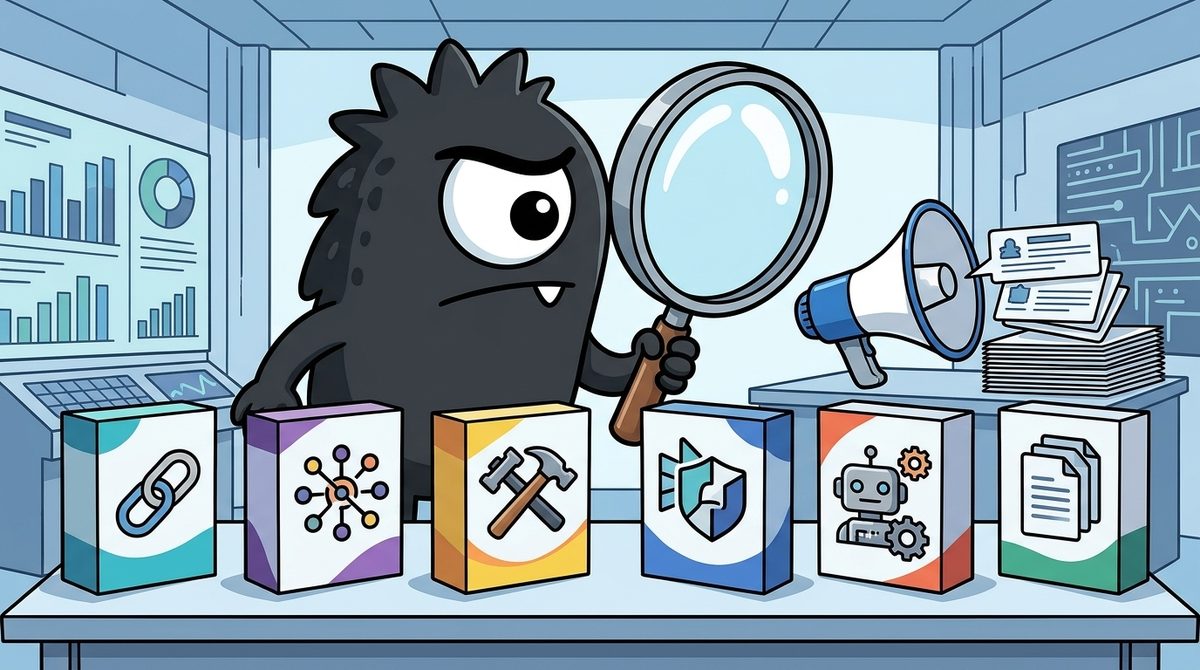
LangChain in 2026 is no longer a single library. It is a three-part stack for building, running, and supervising AI agents. If you're deciding whether to adopt it, the useful questions are which parts you actually need and whether you're comfortable with the trade-offs around observability lock-in, cost, and abstraction overhead.
The short answer: LangChain now bills itself as "the agent engineering platform"[2]. It combines three things:
- An open-source core library for models, tools, and agents.
- LangGraph, for stateful orchestration.
- LangSmith, a commercial platform for tracing, evals, deployment, and governance.
Enterprise teams use it to ship agents on a standardized "paved road." Critics argue that open-standard alternatives like Pydantic AI with OpenTelemetry offer more rigor and less lock-in. Both camps have real evidence.
Bottom line (as of late 2026):
- LangChain (core): model, tool, and agent abstractions, including a
create_agentharness for getting an agent running quickly[1].- LangGraph: graph-based orchestration for long-running, stateful agents that can pause for human approval and resume[14].
- LangSmith: tracing, evals, sandboxes, memory/context, deployment, and governance[12][13].
- Pick it if you need statefulness, human-in-the-loop workflows, and enterprise governance in one integrated stack.
- Look elsewhere (or mix stacks) if you prioritize OpenTelemetry-native observability, strict type safety, or heavy document-ingestion pipelines.
Why LangChain Exists: From Prompt Glue to Agent Engineering Platform
The original problem was plumbing. Every LLM app needed the same pieces:
- Calls to a model provider.
- Prompt templates.
- Retrieval from a vector store.
- Some form of memory.
- Increasingly, tool calls.
Wiring these together by hand meant writing the same boilerplate over and over. LangChain offered composable abstractions so you could swap a model, a retriever, or a tool without rewriting the app.
Those abstractions earned the library a reputation for being heavy and over-layered. Early criticism was loud, and much of it was fair. What's less discussed is why many of those critics stayed. Hamel Husain, one of the more respected voices in applied LLM evaluation, put it this way:
A little bit of a personal story:
I was frustrated using LC too in the beginning. Then I started working with people in industry and discovered **everyone** was using langchain. After some time I understood why: they listen to users maniacally. Anytime there was an issue they would fix it. Also extreme humility and openness - you could criticize or share what wasn't working and they would listen. They also go out of their way to help people.
I literally made a public tool called “langfree”to pull data out of langsmith and guess what? @hwchase17 celebrated it on the blog and promoted it. Who does that? They are so open and helpful
They go above and beyond to help people including matching people to opportunities even when that might be slightly competitive!
As a result, they have cultivated a kind of love that goes beyond “how beautiful is your abstraction” by creating real human connections and trust
There is A LOT that goes beyond “the code” which the below tweet is completely blind to
His point is that adoption followed responsiveness more than abstraction elegance. That still explains a lot of LangChain's staying power in 2026.
The project has also changed shape. The official overview now centers on getting an agent running in a few lines through a prebuilt agent harness, create_agent. It is built on LangGraph underneath, so you get durable execution and streaming without designing a graph yourself[1]. The GitHub repository describes the project as "the agent engineering platform"[2], not a chaining library.
The ecosystem has split into three pillars:
| Layer | Role |
|---|---|
| LangChain | The developer-facing abstractions |
| LangGraph | The orchestration runtime |
| LangSmith | The operational platform where agents are traced, evaluated, deployed, and governed |
How the Modern LangChain Stack Works: Core, LangGraph, and LangSmith
The most common confusion in the community is what lives where. Here's the clean mental model.
LangChain core: the building blocks
The core library gives you:
- Standardized model interfaces across providers.
- Tool definitions.
- Structured output.
- LCEL (LangChain Expression Language), a pipe-style syntax for composing prompts, models, and parsers into chains.
- The
create_agentharness, the fast path to a working tool-calling agent[1].
If your app is "call a model, maybe retrieve some documents, maybe call a tool," this layer may be all you need.
LangGraph: orchestration for stateful agents
LangGraph models an agent as a graph. Nodes are steps such as LLM calls, tool executions, or validation. Edges, including conditional edges and loops, define control flow. A shared state object moves through the graph.
The repository's tagline is "Build resilient agents"[14]. The emphasis is on cycles, persistence, and recovery, which linear chains handle poorly.
LangSmith: the operational layer
LangSmith started as a tracing and evaluation tool. LangChain has since described rebuilding it "around the agent"[13]. At its Interrupt events in NYC and London (covered in the October 2026 newsletter), the company announced additions across deployment, sandboxes, and agent infrastructure[12].
Harrison Chase, LangChain's CEO, has been explicit about where this is heading:
this is the summary slide that describes how all agents in the future will look
very much aligns with our vision for managed deepagents https://docs.langchain.com/langsmith/python/managed-deep-agents-overview
durable workflows: builds on LangGraph/LSD https://docs.langchain.com/langsmith/deploy-overview
can use a computer: uses Langsmith Sandboxes https://t.co/oKZ3n6dhtK
memory and skills: langsmith context hub https://t.co/rgD1p31nCb
Triggers and scheduled jobs: schedules https://t.co/w6r7Cfr8Xx
connectors and auth https://t.co/kTfxQbm7al
text and voice channels https://t.co/G2iy7jMeKB
payments and identity - only one missing!
evals https://t.co/mcNsaWhTt4
observability: massively, through langsmith
Read that post as a product map. The agent blueprint is:
- Durable workflows: LangGraph plus deployment.
- Computer use: LangSmith Sandboxes.
- Memory and skills: the context hub.
- Triggers and schedules.
- Connectors and auth.
- Text and voice channels.
- Evals and observability.
By his own accounting, only payments and identity were missing. The strategic takeaway is that LangChain wants to be the full managed runtime for agents, not just a library you import. That shift matters a lot for the lock-in discussion later.
The Code-First Debate: Typed Graphs vs Low-Code Agent Builders
One of the liveliest architectural debates is whether agents should be built as code or assembled in visual, low-code builders. LangChain's most-cited enterprise case study takes a clear side:
⚡ Building enterprise agents at Coinbase with LangSmith ⚡
Coinbase went from zero to production AI agents in six weeks, then cut future build time from 12 weeks to under a week.
Their Enterprise AI Tiger Team built a "paved road" so any team could ship agents the same way they ship code.
What made this work:
→ Code-first graphs with LangGraph & LangChain over low-code tools. Typed interfaces and unit-testable nodes beat prompt engineering for the use cases they wanted to scale.
→ Observability as a requirement. Every tool call and decision gets traced using LangSmith, our agent engineering platform.
→ Auditability by design. Immutable records of data used, reasoning followed, and approvals given.
Result: Two agents in production saving 25+ hours per week. Four more completed. Half a dozen engineers now self-serve on the patterns.
Agents are a software discipline. When you host them properly, make them observable end-to-end, and test what's deterministic, you get speed where it helps and rigor where it matters.
Coinbase's reasoning is worth unpacking because it applies well beyond crypto. "Typed interfaces and unit-testable nodes beat prompt engineering" captures a real shift. Once an agent is a graph of discrete nodes with defined inputs and outputs, you can:
- Unit test deterministic nodes (parsing, validation, routing) like normal functions.
- Version control the whole agent and review changes in PRs.
- Run CI so a change to one node doesn't silently break another.
- Standardize patterns so other teams can self-serve. That is the "paved road."
The claimed results are two agents in production saving 25+ hours per week, and build time cut from 12 weeks to under one. Those numbers reflect a platform investment, not a framework feature. The framework made the platform possible, but the paved road is what scaled.
Code-first doesn't mean no visuals. When LangGraph Studio launched in 2024, Harrison Chase described it this way:
This is my favorite thing we've launched in a while. Been using it for a week and has already changed how I build LLM apps
Build your agent in code, then point LangGraph Studio at it. We'll visualize the agent, let you interact with it, and let you modify the state directly
All while watching the underlying code files for any code changes and reloading the graph as needed
I think building LLM apps will remain pretty code heavy, but there absolutely is a visual component to it. It's also a very iterative process
Shout out to @__dqbd for all the work on this!
That remains a sensible position. You write the agent in code, and a visual layer lets you inspect graph structure, step through runs, and edit state directly while iterating. The learning docs walk through this kind of iterative build-and-inspect workflow[6].
When low-code still makes sense:
- Fast prototypes to validate an idea.
- Internal tools owned by non-engineering teams.
- Workflows simple enough that testability isn't the bottleneck.
The security-operations field report discussed later shows a common path. Teams start in workflow tools like Coze or Dify and move to LangGraph when agent loops get complex.
Statefulness, Memory, and Human-in-the-Loop: The New Agent Primitives
The feature that tends to convert developers to LangGraph is persistent, resumable state. Matt Westaway's reaction is typical:
Learned tonight about LangGraph's ability to compile the graph so it can run like an application, and then save a copy in memory so you can intervene for human-in-the-loop and continue from where the state left off. This is how you truly make LLMs stateful
View on XThe mechanics work like this:
- Compile a LangGraph graph with a checkpointer.
- The checkpointer persists state after each step.
- Execution can pause at an interrupt, for example "a human must approve this refund."
- The run resumes later from exactly that point, even in a different process.
This is what turns a stateless model call into a workflow that can wait hours for a manager's approval, recover from a crash, or let an operator correct the agent's state mid-run. The Real Python tutorial traces this progression from prompts through RAG to agents[7]. Statefulness is the point where tutorials stop and real systems start.
Memory is a separate and harder problem. Short-term state, meaning what's happening in this run, is largely solved by checkpointing. Long-term memory across sessions is not. Maryam Miradi's survey of the ecosystem names the hard parts:
🛠️🧭 I went down the AI Agent memory rabbit hole.
If you are building AI Agents that need to remember users, past actions, preferences or changing facts across sessions, you also have to deal with:
short-term state, long-term memory, memory retrieval, stale facts, conflicting memories, scope and forgetting.
So I went through the open-source ecosystem and pulled together the tools I would actually look at.
Here are 20 AI Agent memory tools worth knowing in 2026:
》𝗗𝗲𝗱𝗶𝗰𝗮𝘁𝗲𝗱 𝗠𝗲𝗺𝗼𝗿𝘆
✸ Mem0 → persistent agent memory + personalized context
✸ Letta → stateful agents + editable memory blocks
✸ Cognee → graph + vector long-term memory
✸ Graphiti → temporal knowledge graphs + changing facts
→ Best when memory needs to live beyond one agent session.
》𝗙𝗿𝗮𝗺𝗲𝘄𝗼𝗿𝗸 𝗠𝗲𝗺𝗼𝗿𝘆
✸ LangGraph → short-term state + cross-session memory
✸ LlamaIndex → short-term + long-term memory blocks
✸ CrewAI → semantic + recency + importance recall
✸ Agno → persistent agent state + memory
→ Best when you already use the framework and want memory built into the agent stack.
"Stale facts, conflicting memories, scope and forgetting" is the honest list. LangGraph covers short-term state plus cross-session memory stores. LangSmith's context hub is LangChain's managed answer for memory and skills[13]. Dedicated tools like Mem0, Letta, or Graphiti may still fit better in some cases:
- Memory needs to outlive a single agent or framework.
- You need temporal reasoning about changing facts.
Decision rule: use framework memory when one agent owns the memory. Use a dedicated memory layer when several agents or products share it.
What Breaks in Production: Quality, Latency, Cost, and the Eval Gap
Getting a demo working is easy. Getting an agent to behave consistently under real traffic is where most projects stall. Ayaz Altay summarized LangChain's own 2026 survey findings:
LangChain 2026: quality 32% and latency 20% top production barriers. Context loops inflate both. Platforms already hold page history, cart, errors. Failure is at the agent boundary.
View on XQuality at 32% and latency at 20% are the top barriers. His diagnosis, "failure is at the agent boundary," is sharp. The data an agent needs usually already exists in the platform. Agents fail in how they loop over context, and those loops inflate both latency and error rates.
The fix is engineering discipline more than a better model. A widely shared LLMOps interview checklist reads like a production readiness review:
90% of LLMOps interviews in 2026 come down to these 7 points:
1) Evals and regression gates
Golden set + slice metrics (language, intent, doc type) wired into CI so prompt/model changes can’t silently degrade.
2) RAG design that survives prod
Chunking, metadata filters, hybrid search, reranking, and freshness; explain the latency/quality tradeoff and failure modes.
3) Caching + cost control
Token spend budgets, response caching, embedding cache, and when caching is unsafe (user-specific, tool results, policy changes).
4) Reliability basics for LLM calls
Timeouts, retries, idempotency, circuit breakers, and fallbacks (smaller model, partial answer, queue); know p95/p99 impacts.
5) Observability for AI systems
Traces across tool calls, token/latency dashboards, prompt+model versioning, and audit logs for what the model saw and did.
6) Security and data boundaries
PII handling, redaction, tenant isolation, prompt injection defenses, allowlists for tools, and how to stop data from training leaks.
7) Deployment and rollouts
Canaries, shadow traffic, A/B tests, rollback strategy, and how you migrate prompts/embeddings when the schema changes.
[generated using my AI agent, hope you learnt something]
The items that map most directly onto the LangChain stack:
- Evals and regression gates. Build a golden dataset with slice metrics and run it in CI so a prompt or model swap can't silently degrade quality.
- Observability across tool calls. Tracing every step, prompt version, and model version is what LangSmith was built for.
- Caching and cost control. Set token budgets and caches, and know when caching is unsafe, such as with user-specific data or tool results.
- Reliability. Use timeouts, retries, fallbacks to smaller models, and track the p95/p99 impact.
LangSmith addresses the eval-and-trace half directly. Its newer direction is mining trace data to generate evals and reports rather than just displaying them[12][13]. It is far from the only option, though. Miradi's companion survey lists twenty evaluation tools, from DeepEval to Ragas to Inspect AI:
🛠️🧭 I went down the AI Agent evaluation rabbit hole.
If you are building AI Agents for production, you have to evaluate much more than the final answer:
tool calls, retrieval quality, reasoning paths, failed steps, latency, cost, safety and regressions.
So I went through the open-source ecosystem and pulled together the tools I would actually look at.
Here are 20 AI Agent evaluation tools worth knowing in 2026:
》𝗘𝘃𝗮𝗹 𝗙𝗿𝗮𝗺𝗲𝘄𝗼𝗿𝗸𝘀
✸ DeepEval → agent evals + trajectories
✸ Inspect AI → multi-turn + tool-use evals
✸ AutoEvals → LLM-as-judge + heuristics
✸ Evidently → evals + production monitoring
→ Best when you need a repeatable evaluation layer around the whole system.
》𝗥𝗔𝗚 + 𝗥𝗲𝘀𝗽𝗼𝗻𝘀𝗲 𝗘𝘃𝗮𝗹𝘀
✸ Ragas → retrieval + faithfulness
✸ TruLens → retrieval + generation + traces
✸ LlamaIndex Evals → RAG + agent evaluation
✸ LangChain Evals → LangChain/LangGraph evals
→ Best when retrieval quality is part of the agent’s answer.
If you want independent evidence on how LangSmith compares, Spencer Clark ran identical cases, graders, and judges through eight eval frameworks, including a detailed LangSmith setup:
In the final part of my eval series, I ran the same cases, graders and judges from parts 1 to 3 through 8 well know eval frameworks.
I show the setup for LangSmith (from @LangChain) in detail and compare the results across all 8 and my own harness. https://x.com/i/article/2124654337721024512
That kind of side-by-side work is more useful than any vendor claim when you're choosing an eval stack.
Enterprise Scale: Governance, Security, and Shipping Agents in Weeks
For enterprises, the question shifts from "does it work?" to "can we prove what it did, and who saw what?" Viv (Vivek Trivedy), who builds on LangSmith, frames governance as foundational:
the goated self-improving factory of the future will continuously generate evals/environments from real world experience, safely, securely, and transparently for humans that oversee this process
a few core primitives in LangSmith help here:
1. be very efficient data-capture + storage engine (powered by a tailored database architecture with SmithDB)
2. Governance & Security are core building blocks which matter A LOT at company scale, ie. manage & control who accesses what data
3. Continuously mine data... but efficiently. Use Decision Models & carefully chosen LLMs to power AI Search & Engine that turns GBs/TBs of trace data into PRs, reports, evals that can be hil-climbed
it's a lot of careful & evolving decision making on efficient storage primitives + compute allocation to turn data into useful output
Three ideas in that thread are worth noting:
- Efficient trace storage at scale. Viv points to SmithDB.
- Access control over who sees which data.
- Continuous mining of production traces to generate evals, the "self-improving factory" idea.
The compliance side is concrete. LangChain has written about achieving ISO/IEC 42001, the international standard for AI management systems, using LangSmith as part of its own governance tooling[4]. For regulated teams, that's a meaningful signal. The traceability and auditability that Coinbase called "auditability by design" can support a formal certification, not just engineering convenience.
The most useful enterprise evidence often comes from outside LangChain's marketing. This field report on AI-driven security operations traces a real evolution:
This article is a highly practical, chronologically clear, and technically complete field report on AI-driven security operations.
https://www.yuque.com/0cat/wclcea/wik5rnd33ilkcdse
Against the backdrop of real enterprise security scenarios, the author meticulously records the full evolution, from early single-model alert triage (DeepSeek + HIDS), to workflow orchestration (Coze/Dify), to agent loops (LangGraph), and finally to a production multi-agent AI-Native security operations platform featuring collaborative agents, externalized task state, and human-AI cooperation.
It stresses building on solid existing security foundations, treating model capability as the ceiling, and judging everything solely by business effectiveness, with almost no conceptual hype—only actionable engineering experience and lessons learned.
The stages it describes:
- Single-model alert triage (DeepSeek plus HIDS, a host-based intrusion detection system).
- Workflow orchestration in Coze or Dify.
- LangGraph agent loops.
- A multi-agent platform with externalized task state and human-AI collaboration.
The lesson isn't "use LangGraph from day one." It's that LangGraph tends to become the right tool once you need loops, durable state, and human oversight. The report also treats model capability as the ceiling, which keeps expectations realistic.
Trade-offs and Alternatives: LangChain vs Pydantic AI, LlamaIndex, and Open Standards
The sharpest critique of LangChain comes from Samuel Colvin, creator of Pydantic. He posted it after one of LangChain's funding announcements:
Congratulations to LangChain. The less you think of their tech, the more impressive this raise is!
But maybe this is a good time to remind everyone that there is a better alternative built on open standards and engineering rigor, that won't cost you more than your inference.
Here's how to compare the LangChain and @pydantic Stacks:
* if you want to use a proprietary tracing protocol, choose LangGraph and LangSmith; if you want to use OpenTelemetry, choose Pydantic AI and Logfire
* if you want separate observability platforms for engineering and AI, choose LangSmith + Datadog; if you think AI IS engineering and you want one platform, choose Logfire
* if you want to pay $500 per million traces (or $4,500 per million traces for increased retention), choose LangSmith; if you want to pay $2 per million spans, choose Logfire (yup, you read those numbers right)
* If you think type safety is an annoying irrelevance, choose LangGraph; if you think type safety is extremely useful for human developers and table stakes for AI developers, choose Pydantic AI
* If you know you're agent run will never take longer than ~10s and never need to survive a host restart, choose LangGraph; if you want to full durable execution with multiple backends, choose Pydantic AI
* If you think evals should be deeply integrated with the platform you view them on, choose LangSmith; if you think your evals harness should be open source and standalone, then emit OTel, choose pydantic-evals and Logfire
(This is a snarky post, but my congratulations are genuine. The LangChain team are clearly very effective at raising money, and marketing, and those are real skills. 🙌)
Strip away the admitted snark and his post contains real decision criteria:
- Tracing protocol. LangSmith uses its own protocol. Pydantic AI and Logfire are built on OpenTelemetry, the vendor-neutral standard most infrastructure teams already run.
- One platform vs two. He argues AI observability shouldn't sit apart from your general engineering observability, such as Datadog.
- Cost. His figures were $500 per million LangSmith traces versus $2 per million Logfire spans. These are his numbers, and traces and spans aren't equivalent units, so check current pricing pages yourself.
- Type safety and durable execution. He claims Pydantic AI leads on both. LangChain's documentation now explicitly advertises durable execution via LangGraph[1], so some of these gaps may have narrowed since his post. Check recent release notes[3] before relying on either side's characterization.
LlamaIndex is the other major alternative. Its strength has long been document ingestion and RAG ETL (extract, transform, load) rather than agent orchestration:
Today we’re launching a repo that lets you setup a production ETL pipeline for your RAG/LLM app 💫
Index thousands of documents in seconds ⚡️ (and orders of magnitude faster than running on your laptop).
It’s a full architecture which bundles LlamaIndex with other popular backend services:
✅ Deploy @huggingface text embedding inference server for fast embedding inference
✅ Deploy @RabbitMQ to process massive volumes of incoming data + distribute to consumer workers
✅ Deploy @llama_index ingestion workers to ETL data into @weaviate_io
✅ Deploy on AWS EKS clusters with replicas and load balancing ⚖️
✅ Get an API endpoint via AWS lambda
Results: Get 4x speedup times vs. running on your laptop.
We are fully open-sourcing this project. As your RAG app moves from notebook to production, this will be a great resource (especially if you’re using AWS!)
Full credits to @LoganMarkewich for driving this idea.
Check out our blog: https://t.co/jwPg77bDZy
Repo:
Its recent document-parsing work goes further. One summary of a new release reports an 8.1M-parameter CPU pipeline for OCR and layout parsing:
LlamaIndex shrank a 4B document VLM into an 8.1M-param CPU pipeline
→ Beats Marker & Indra on ParseBench-2 (59.2)
→ 27.8 pages/sec on 16 vCPUs
→ Tables, layout, Arabic, CJK
→ Runs in the browser via WASM
OCR without a GPU just got real
When to mix stacks: this is often the most pragmatic choice. Common combinations:
- LlamaIndex for ingestion and retrieval, with LangGraph for orchestration.
- LangGraph, emitting traces into an OpenTelemetry pipeline.
LangChain's integration-heavy design makes mixing feasible. You don't have to go all-in.
Getting Started: A Practical Learning Path for 2026
The best learning advice in the current conversation skips certificates entirely:
If I had 6 months to become an Agentic AI Engineer, I wouldn't waste time collecting certificates. I'd learn how to build agents that actually work.
First, master the foundations. Learn state machines, LangGraph, Temporal, tool calling, MCP, computer-use automation, and advanced memory. Understand how agents think, access tools, manage context, and coordinate with each other.
Then learn what separates demos from production systems. Build sandboxed execution, security guardrails, human approval workflows, self-correction loops, trajectory evaluations, and reliable fallback mechanisms. Agents must survive failures, control costs, and operate safely.
Finally, publish real projects with architecture diagrams, benchmarks, latency data, and cost breakdowns. Don't just show what you built. Prove why it works. Tutorials teach you the vocabulary. Shipping systems gets you hired.
Mapped onto the LangChain stack, a sensible path looks like this:
- Foundations (weeks 1–3). Learn model interfaces, prompt templates, LCEL chains, tool calling, and structured output. JetBrains' 2026 Python tutorial[11] and TechLogHub's guide[8] cover agents, tools, LCEL, and RAG with current APIs.
- First agent with tracing on (weeks 3–5). Build a RAG agent using
create_agent. Collabnix's quickstart is a good on-ramp[9]. Turn on LangSmith tracing from day one so you build the habit of reading traces before you need it. - Graduate to LangGraph (weeks 5–10). Rebuild the agent as an explicit graph. Add a checkpointer, a human-approval interrupt, and a retry loop. The official learning docs cover these patterns[6], and Real Python's tutorial bridges the conceptual gap[7].
- Cross the demo-to-production gap (weeks 10+). Add a golden eval set, a CI regression gate, sandboxed tool execution, cost budgets, and fallbacks. Then publish the project with latency and cost data, as Bobo Lin suggests.
Bobo Lin also lists Temporal and MCP (Model Context Protocol, a standard for connecting agents to tools and data). Learning them alongside LangGraph is useful because it shows you which problems are LangChain-specific and which are general agent-engineering problems.
Verdict: Who Should Use LangChain in 2026, and Who Shouldn't
Cut through the funding headlines and the snark, and the decision comes down to three questions:
- How stateful are your agents?
- How deeply do you need integrated evals and governance?
- How much vendor lock-in can you tolerate?
Choose the full LangChain + LangGraph + LangSmith stack if:
- You're an enterprise building a shared "paved road" for many teams, as Coinbase did.
- Your agents need human approvals, durable state, and auditable traces.
- You want governance and compliance support (ISO/IEC 42001-style controls[4]) without assembling it yourself.
Use LangChain/LangGraph open source and bring your own observability if:
- You want the orchestration model without committing to LangSmith pricing.
- Your platform team already standardizes on OpenTelemetry.
Evaluate Pydantic AI + Logfire if:
- Type safety, OpenTelemetry-native tracing, and a single observability platform are non-negotiable.
- You're cost-sensitive at high trace volumes.
Add or prefer LlamaIndex if:
- Your workload is dominated by document ingestion, parsing, and retrieval rather than multi-step agent control flow.
Stay lightweight (direct SDK calls or core LangChain only) if:
- Your app is a single model call with retrieval. A graph runtime would be overhead you don't need.
The pragmatic bottom line is that LangChain has won the default position, partly through the responsiveness Hamel Husain describes and partly through an increasingly complete managed-agent platform. "Default" isn't the same as "right for you." Test your own eval cases on two stacks before committing, as Spencer Clark did. Let statefulness, eval depth, and lock-in tolerance decide.
Sources
[1] LangChain overview - Docs by LangChain — https://docs.langchain.com/oss/python/langchain/overview
[2] GitHub - langchain-ai/langchain: The agent engineering platform. — https://github.com/langchain-ai/langchain
[3] LangChain Release Notes & Changelog · November 2026 — Release Notes Index — https://releases.sh/langchain
[4] How We Achieved ISO 42001 with LangSmith — https://www.langchain.com/blog/ai-governance-iso-iec-42001-langsmith
[6] Learn - Docs by LangChain — https://docs.langchain.com/oss/python/learn
[7] LangChain Tutorial: From Prompts to RAG and AI Agents – Real Python — https://realpython.com/langchain-tutorial/
[8] LangChain Tutorial (2026): Agents, Tools, LCEL and RAG in Python | TechLogHub — https://techloghub.com/tutorials/langchain-tutorial
[9] LangChain Quickstart: Build Your First AI Agent (Tutorial) - Collabnix — https://collabnix.com/langchain-quickstart-build-your-first-ai-agent-tutorial/
[11] LangChain Python Tutorial: A Complete Guide for 2026 - The JetBrains Blog — https://blog.jetbrains.com/pycharm/2026/02/langchain-tutorial-2026/
[12] October 2026 LangChain Newsletter: Everything we shipped at Interrupt NYC & London — https://www.langchain.com/blog/october-2026-langchain-newsletter
[13] Why we rebuilt LangSmith around the agent — https://www.langchain.com/blog/we-rebuilt-langsmith-around-the-agent
[14] GitHub - langchain-ai/langgraph: Build resilient agents. — https://github.com/langchain-ai/langgraph
References (15 sources)
- LangChain overview - Docs by LangChain - docs.langchain.com
- GitHub - langchain-ai/langchain: The agent engineering platform. - github.com
- LangChain Release Notes & Changelog · November 2026 — Release Notes Index - releases.sh
- How We Achieved ISO 42001 with LangSmith - langchain.com
- GitHub - langchain-ai/docs: Unified LangChain documentation. - github.com
- Learn - Docs by LangChain - docs.langchain.com
- LangChain Tutorial: From Prompts to RAG and AI Agents – Real Python - realpython.com
- LangChain Tutorial (2026): Agents, Tools, LCEL and RAG in Python | TechLogHub - techloghub.com
- LangChain Quickstart: Build Your First AI Agent (Tutorial) - Collabnix - collabnix.com
- LangChain, Step by Step: Build Your First AI Application | by Vimal Mishra | Nov, 2026 | Medium - medium.com
- LangChain Python Tutorial: A Complete Guide for 2026 - The JetBrains Blog - blog.jetbrains.com
- October 2026 LangChain Newsletter: Everything we shipped at Interrupt NYC & London - langchain.com
- Why we rebuilt LangSmith around the agent - langchain.com
- GitHub - langchain-ai/langgraph: Build resilient agents. - github.com
- LangChain Changelog (November 2026) - gradually.ai
Related Guides
The $5M Bet on AI's Frontier: What Polymarket's 78% Google Odds Reveal About Where AI and SaaS Are Heading in 2026
17 min read
Aider vs Gemini Code Assist: Which Is Best for Rapid Prototyping in 2026?
16 min read
The Best AI Bubble Signals in 2026: An Expert Reading of Polymarket's 39% Burst Odds
23 min read
AgentOps vs Vertex AI Agents vs CrewAI: Which Is Best for AI Content Creation in 2026?
20 min read