Moz vs ConvertKit vs Kit: Which Is Best for Code Review and Debugging in 2026?Updated: September 27, 2026
Moz vs ConvertKit for code review and debugging: compare fit, APIs, workflows, and limits so developers pick the right tool fast. Compare
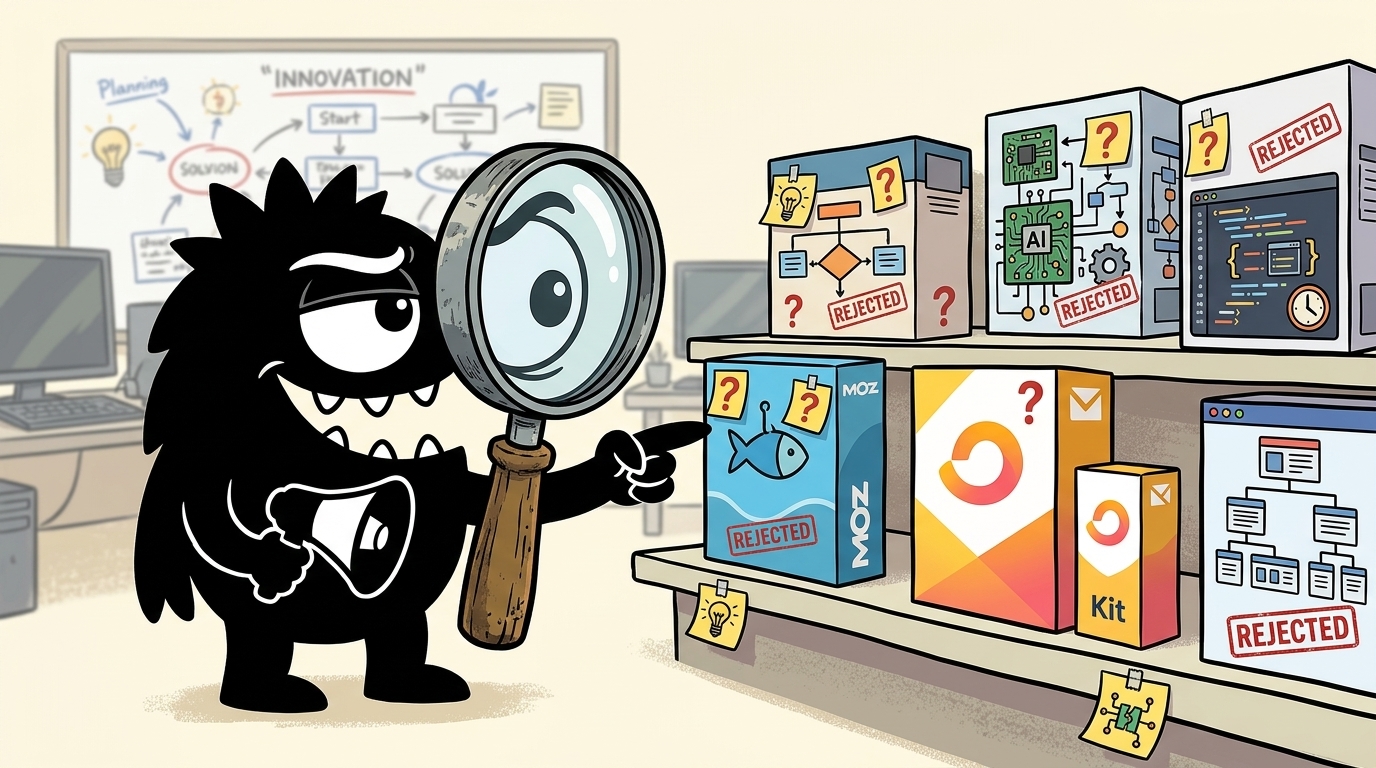
Why “Moz vs ConvertKit for Code Review and Debugging” Is the Wrong Question — and Still Worth Answering
Let’s be blunt: if you are trying to choose a primary tool for code review or software debugging, neither Moz nor ConvertKit—now Kit—belongs on your shortlist.
That sounds like the kind of answer that should end the article. It doesn’t, because the comparison is still useful once you understand why people are asking it. The confusion is coming from a category collision:
- Developers on X are talking about AI-assisted code review, PR workflow ergonomics, and faster reviewer feedback loops
- Moz is showing up in discussions around technical SEO diagnosis, JavaScript rendering issues, and site audit data
- ConvertKit/Kit is appearing in conversations about API access, automations, broadcasts, forms, and workflow integrations
Those are all legitimate technical workflows. They’re just not the same workflow.
PR review workflows feel smoother: converted comments now disappear from the feedback widget, and sessions can track multiple code reviews for the same version. https://github.com/microsoft/vscode/commit/70bc868 https://github.com/microsoft/vscode/commit/86e6dd0
View on XThat post captures the baseline many engineers now have in mind when they hear “code review”: comments integrated into the editor, review state tracked over time, and friction being shaved off at the PR layer. That’s the real reference point in 2026. Not email automation. Not SEO dashboards.
And the bar keeps rising because AI has compressed expectations even further.
We are about to see 10x faster code reviews. [description of Ellipsis tool for code review and debugging]
View on XTry out CodeRabbit for assisted code reviews in your project and let me know how it goes:
https://www.coderabbit.ai/?utm_source=oss&utm_medium=community&utm_campaign=coderabbit_mswjs&utm_term=mswjs&dub_id=W5Lk42yrQ4V3Mo6X
So when someone asks, “Moz vs ConvertKit: which is better for code review and debugging?”, the right interpretation is usually one of these:
- I need a tool that helps my technical team investigate problems
- I need better automation around engineering-adjacent workflows
- I’m mixing up code debugging with website debugging or growth-system debugging
- I’m comparing tools already in my stack and wondering whether either can cover more ground
That last point matters. Real teams often don’t buy tools in neat Gartner-style categories. They inherit them. Marketing already has Moz. The founder already uses Kit. The engineering team is being asked whether either can help with review, bug triage, release comms, SEO regressions, or internal alerts.
The answer, structurally, is:
- Moz can be useful for debugging website discoverability, crawlability, rendering, and search visibility
- Kit can be useful for automating notifications, lifecycle messaging, and form/API-driven workflows
- Neither is a direct substitute for GitHub review, editor-native review flows, test tooling, browser DevTools, tracing, profiling, or runtime inspection
Kit’s naming transition adds another layer of avoidable confusion. ConvertKit officially rebranded to Kit in 2024, and the company’s developer documentation now lives under Kit branding.[7][9]
For readers trying to reconcile old documentation, old community references, and new branding, the rebrand is real:
Allow us to reintroduce ourselves:
ConvertKit is now Kit
https://kit.com/resources/blog/convertkit-is-now-kit
So the practical comparison is not “Which one has better code review features?” because the answer is neither has meaningful native code review features.
The useful comparison is this:
- Direct code review capability: essentially none for both
- Debugging relevance: Moz for SEO/site diagnosis; Kit for workflow/communications automation, not code diagnosis
- API usefulness: both have APIs, but for very different jobs[1][7]
- Automation value: Kit is much stronger for event-driven messaging and operational workflows[7][8]
- Team fit: Moz fits SEO, web ops, content, and growth teams investigating search problems; Kit fits marketing, creator, lifecycle, and ops teams building communication systems
- Engineering adjacency: Moz can feed investigations; Kit can coordinate people and messages around them
That’s why this comparison is wrong in category terms—but worth answering in workflow terms. If your world spans product, web performance, growth, and engineering, you don’t need a fake head-to-head. You need to know where each tool actually helps, where it doesn’t, and what to buy if your real goal is code quality.
What Developers Mean by Code Review in 2026
To compare Moz and Kit honestly, you first have to define what developers now mean by code review.
In 2026, code review is not just “someone leaves comments on a pull request.” It’s a broader practice that usually includes:
- PR-native collaboration
- Asynchronous review across multiple sessions
- Context preservation
- Suggested fixes
- Automated detection of obvious issues
- AI assistance for summarization, pattern spotting, and reviewer acceleration
- Teaching and mentorship, not just gatekeeping
That cultural shift matters because a lot of tooling conversations on X are no longer about whether review exists—they’re about how good the review experience feels.
Code reviews are about building, learning, and teaching. Not blaming. Here’s what the modern code review workflow looks like: [detailed workflow description] Try free AI code reviews in VS Code: https://t.co/qIIP7RY0aR
View on XThat’s a useful definition because it rejects the oldest, worst version of code review: a blame ritual where senior engineers nitpick style and block progress. Good review in modern teams is supposed to do three things at once:
- Catch risk
- Transfer knowledge
- Keep velocity high
AI is changing all three. It can pre-review diffs, summarize changes, identify likely bug patterns, and reduce low-value reviewer fatigue. It does not eliminate human judgment, but it absolutely changes the threshold for what counts as a serious review tool.
Confession: I thought "vibe coding" was a dumb X thing until I did it today with Claude Code and shipped an amazing refactor with it. [detailed experience with code review using AI]
View on XThat’s the important benchmark for this article. Against that standard:
- Moz is not a code review tool
- Kit is not a code review tool
- Neither participates natively in the pull request loop in the way GitHub-integrated or editor-integrated review systems do
This doesn’t make them irrelevant to software teams. It just changes the frame.
For example, code review in a product company increasingly spills beyond code itself:
- Did the deployment break crawlability?
- Did JavaScript rendering changes affect indexability?
- Did a release create an onboarding drop-off that should trigger user comms?
- Do we need automated notifications when a technical SEO audit crosses a threshold?
- Should post-incident follow-ups push into an email or CRM workflow?
Those are real downstream review and debugging consequences. They’re just not source-level review.
So the fairest way to place Moz and Kit in the 2026 stack is as adjacent workflow tools:
- Moz helps you inspect signals about how a site behaves in search-facing environments
- Kit helps you automate communication and lifecycle actions around users, audiences, and events
If you keep that distinction sharp, the rest of the comparison becomes much cleaner. If you blur it, you end up pretending that an SEO API or an email automation platform somehow competes with the actual review systems engineers use every day. It doesn’t.
Where Moz Actually Helps: Technical SEO Audits, JavaScript SEO, and Web Debugging
Moz matters for debugging—but in a very specific sense.
If your problem is:
- “Google stopped indexing key pages”
- “Traffic fell after a site migration”
- “Rendered content isn’t being seen correctly”
- “Internal linking signals look broken”
- “Our new frontend architecture may have caused crawl problems”
- “We need API-accessible SEO data for large-scale auditing”
then Moz can absolutely be part of the answer.
If your problem is:
- “Why is this function returning nil?”
- “Which commit introduced this race condition?”
- “Why is the test suite flaky?”
- “Where is memory leaking in this service?”
then Moz is the wrong tool.
That line is obvious to SEO specialists, but not always to founders, growth engineers, or full-stack teams who increasingly blur app logic, frontend delivery, analytics, and discoverability into one operational surface. In many organizations, website debugging and code debugging overlap in the same sprint, even though they require different instruments.
Moz’s own public positioning makes its strengths clear. The Moz API is built around accessing SEO data programmatically, including metrics and capabilities intended for reporting, integration, and analysis workflows.[1][2] Moz also provides onboarding guidance for using the API and sample implementations that show how teams can incorporate its data into scripts and systems.[3][4]
And the product conversation around Moz is not subtle. It is very explicitly about technical SEO diagnosis.
An 8-Point Checklist for Debugging Strange Technical SEO Problems https://t.co/QGAbfVqMCg By @dom_woodman
View on XJavaScript SEO can be hard at first, but expert @TomekRudzki—Ultimate Guide to JavaScript SEO author—shows you the easy way to audit:
How to Diagnose and Solve JavaScript SEO Issues in 6 Steps
https://t.co/2TYu4CAjWZ
Those posts are useful because they anchor the term “debugging” in the context where Moz actually belongs: technical SEO debugging.
What Moz is good at for developer-adjacent teams
For technical teams, Moz is best understood as an input layer for site health and search visibility analysis. That can include:
- Backlink and authority metrics for investigating search performance shifts[2]
- API-driven reporting for large properties or multi-site environments[1]
- Audit support when paired with crawl tools and Search Console data
- Trend monitoring around domain or page-level signals
- Evidence gathering during redesigns, migrations, and JavaScript-heavy architecture changes
That last category is especially relevant. Modern web stacks routinely introduce SEO regressions through rendering behavior, routing, hydration, edge delivery, or metadata failures. The code may pass tests and deploy cleanly while still creating serious discoverability problems.
Moz won’t tell you which React component caused the issue. But it can help surface that a problem exists at the search visibility layer.
JavaScript SEO is where the confusion gets understandable
If there’s one area where software debugging and SEO debugging most convincingly collide, it’s JavaScript SEO.
A frontend team can ship a “working” application that:
- Requires client-side rendering for critical content
- Delays key DOM output
- Breaks canonical tags or metadata hydration
- Introduces route states that crawlers mishandle
- Obscures internal links behind JS behaviors
- Causes content to render inconsistently for bots and users
From the product team’s perspective, the app works. From search’s perspective, it may be damaged.
That’s why Moz’s JavaScript SEO guidance remains relevant: not because it debugs code line by line, but because it helps teams investigate the outcome of frontend implementation decisions in search environments.
For engineering leaders, this is a useful mental model:
- Application debugging asks: what is the software doing?
- Technical SEO debugging asks: what is the site exposing to crawlers and search systems?
- Moz helps much more with the second than the first
Moz as a data source, not a review surface
The API angle matters because practitioners increasingly care less about dashboards in isolation and more about how data fits into custom workflows.
Moz’s API documentation explicitly supports programmatic access, and its getting-started materials position the platform for custom integrations and use inside broader systems.[1][3] That means developers can:
- Pull SEO metrics into internal dashboards
- Join Moz data with crawl data, analytics, or release metadata
- Set thresholds for anomaly detection
- Generate scheduled reports
- Correlate site changes with ranking or authority signal movement
That’s valuable engineering-adjacent functionality. It is not code review, but it is highly operational.
And this is exactly how practitioners are talking about it:
My technical SEO auditing workflow that uses:
🐸 Screaming Frog
📊 Google Search Console API
🔗 Moz API
🤖 Claude Cowork
Massive unlock for auditing large websites.
That workflow is the real story. Not “Moz versus a developer tool,” but Moz as one component in a technical auditing stack. Notice the combination:
- Screaming Frog for crawling
- Google Search Console API for search telemetry
- Moz API for SEO metrics
- Claude for synthesis
That’s a modern pattern. Experts do not expect one tool to do everything. They expect composability.
Where Moz breaks down for debugging
This is where we should be opinionated: Moz is not a debugging environment. It does not replace:
- Browser DevTools
- Logging and tracing
- Error monitoring
- Profilers
- Test runners
- Static analysis
- Pull request review
- Runtime inspection
If an engineer says “I need to debug a production issue,” Moz may be relevant only if the production issue manifests as:
- search traffic loss,
- crawl anomalies,
- rendering/indexability regressions,
- or discoverability failures after deployment.
Even then, Moz is usually one source among several. Search Console, server logs, page rendering comparisons, and crawler simulations will often matter more in root-cause work.
Who gets the most value from Moz in this comparison
Moz is strongest here for:
- Technical SEOs
- Growth engineers
- Web platform teams
- Agencies auditing many sites
- Teams managing migrations, CMS transitions, or JS-heavy frontend changes
- Organizations wanting API-accessible SEO metrics for reporting or investigation
Moz Pro itself is positioned as an all-in-one SEO toolkit, and the company continues to frame product evolution around SEO analysis and search-focused workflows—not engineering code review.[5]
So if your “debugging” question is really about why the site is underperforming in organic search, why JavaScript-delivered content isn’t surfacing properly, or how to automate SEO diagnostics at scale, Moz is relevant.
If your question is about reviewing code quality, identifying logic errors, or stepping through application behavior, Moz is support infrastructure at best—not the main instrument.
Where ConvertKit—Now Kit—Actually Helps: APIs, Notifications, and Workflow Automation
Kit has the opposite problem from Moz in this comparison.
Moz at least has a plausible claim to the word “debugging,” if you mean technical SEO debugging. Kit does not really have a plausible claim to either code review or debugging in the software sense.
But Kit does have real value for developers, especially the ones building internal operations, lifecycle systems, productized marketing workflows, or creator-facing platforms.
First, the naming issue. ConvertKit is now Kit, and both the company announcement and external coverage confirm the rebrand.[8][9] The developer docs are now under Kit branding, while years of community content, tutorials, and API references may still mention ConvertKit.[7]
That means when someone says “ConvertKit vs Moz,” they’re often already comparing:
- one SEO platform
- to one email/creator automation platform
- under a transitional naming regime
Here’s the rebrand in the company’s own shorthand:
Use the ConvertKit API from Make:
https://t.co/fF0UCh8pgT
Workflow:
Native Webflow form submit --> Make --> ConvertKit
Userflow:
Visitor adds email --> visitor receives PDF in email
I believe both Make and ConvertKit's free tiers will get you what you need.
And here’s the original announcement that most users saw:
Would be happy to chat if you’re thinking through workflow automation. (Airtable, webhooks/API’s etc.)
Been enjoying using the @convertkit broadcast API!
What Kit actually is for technical users
Kit’s developer documentation makes the platform positioning clear: it offers developer-facing capabilities for integrating with forms, subscribers, sequences, broadcasts, and related workflow surfaces.[7] The Help Center and GitHub presence reinforce that Kit supports integrations, implementation guidance, and developer tooling around its platform.[8][12]
For practitioners, that translates into a few concrete categories:
- Subscriber and audience management via API
- Form and landing page integrations
- Broadcast and sequence automation
- Webhook/event-driven workflows
- Integration glue between product actions and messaging actions
- Operational notifications and follow-up communications
That is useful. It is just not review tooling.
Where Kit helps in engineering-adjacent workflows
This is the part people often underestimate. While Kit cannot analyze pull requests, it can still be helpful around the workflows that surround engineering work:
- Send internal or external notifications after releases
- Trigger onboarding or remediation emails after product events
- Route signup flows from web apps into lifecycle systems
- Coordinate incident follow-up communications
- Automate campaign or customer communications tied to product usage
- Connect frontend forms to backend automations without building a custom messaging layer
If you run a SaaS, media product, course platform, or creator tool, these are not side issues. They’re operationally central.
And X conversations around ConvertKit/Kit reflect exactly that kind of API-first utility:
Use the ConvertKit API from Make:
https://t.co/fF0UCh8pgT
Workflow:
Native Webflow form submit --> Make --> ConvertKit
Userflow:
Visitor adds email --> visitor receives PDF in email
I believe both Make and ConvertKit's free tiers will get you what you need.
Would be happy to chat if you’re thinking through workflow automation. (Airtable, webhooks/API’s etc.)
Been enjoying using the @convertkit broadcast API!
That’s the right frame: people are talking about workflow automation, webhooks, APIs, and broadcast functionality, not code analysis.
The best developer use cases for Kit
Kit is a pragmatic choice when the job is to connect user events to communication flows.
For example:
- Lead capture and resource delivery
- Web form submission
- Pass payload to automation platform
- Add subscriber
- Trigger delivery email
- Release communication
- Internal system marks feature flag as launched
- Webhook or integration posts to Kit
- Segment users
- Send announcement or onboarding sequence
- Incident remediation
- Product bug affects a customer cohort
- Query impacted users
- Push them into a tagged sequence
- Send updates or compensation notices
- Lifecycle orchestration
- Trial started
- No activation after X days
- Trigger educational email or human outreach flow
None of that is code review. But all of it can be part of the same product organization where engineering decisions and customer operations are intertwined.
Why Kit is not a debugging tool
Let’s draw the hard line.
Kit does not:
- inspect stack traces
- step through runtime behavior
- diff code intelligently
- review PRs
- profile performance bottlenecks
- inspect browser execution
- run tests
- deobfuscate JavaScript
- trace service dependencies
If an application is broken, Kit may help you communicate about the breakage. It may help you trigger flows when breakage impacts users. It may even help you build internal operational glue around support and incident management.
But it does not diagnose the code.
The rebrand matters more than it seems
The ConvertKit-to-Kit rename is not just cosmetic in practical evaluation. It changes how buyers and implementers search for:
- documentation
- pricing
- integrations
- tutorials
- community answers
- API references
BusinessWire confirms the official rebrand positioning and strategic framing,[9] while reporting around the domain transition underscores that Kit is the operative brand going forward.[10]
This matters because if you’re comparing tools in 2026, you may find:
- old blog posts saying ConvertKit
- current docs saying Kit
- GitHub resources using newer branding
- third-party setup guides using older terminology[11]
That naming mismatch is one more reason the comparison gets messy. Readers may think they’re comparing three tools—Moz, ConvertKit, and Kit—when they’re really comparing two categories and one renamed product.
So where does Kit fit in this article’s decision frame?
If your real need is:
- automating notifications,
- connecting product events to email workflows,
- handling API-driven audience operations,
- or reducing operational glue work around messaging,
then Kit is a real contender.
If your real need is:
- code review,
- bug diagnosis,
- runtime debugging,
- reverse engineering,
- or PR quality control,
then Kit is not a contender at all.
That is not a knock on the product. It’s a category truth.
For Real Debugging Work, Neither Tool Replaces Browser DevTools, Reverse-Engineering Techniques, or Code-Centric Analysis
The easiest way to see the limits of both Moz and Kit is to look at what practitioners actually share when they talk about debugging.
They don’t share “email sequence tricks” or “domain authority workflows.” They share techniques for inspecting behavior, breaking on execution, making unreadable code legible, and tracing symptoms back to causes.
If you've spent any time reading JS, you'll understand the pain of dealing with minified, packed and obscure code.
So here's a list of resources, tools and tips for deobfuscating, and depacking any kind of JS you might encounter:
https://gist.github.com/0xdevalias/d8b743efb82c0e9406fc69da0d6c6581#deobfuscating--unminifying-obfuscated-web-app-code
Small tip for the JavaScript reverse engineers out there, Chrome has a `debug()` function which triggers a breakpoint whenever its first argument is called. It even works on built-in methods, no more wrapping stuff in proxies :D
debug(DOMParser.prototype.parseFromString)
Debugging Like a Pro: Tips for Efficient Web Dev Troubleshooting! 🛠️🐞 [list of tips including Code Review]
View on XThat is debugging.
Not metaphorically. Not adjacent operationally. Literally debugging.
What real debugging usually involves
For web and application engineers, real debugging often includes:
- Reading stack traces
- Setting breakpoints
- Stepping through execution
- Inspecting variables at runtime
- Tracing network requests
- Profiling CPU and memory
- Comparing environment-specific behavior
- Reviewing logs and telemetry
- Deobfuscating minified or packed JavaScript
- Reproducing production failures locally or in staging
- Correlating code changes with regressions
That’s why this comparison needs strong boundaries. Without them, “debugging” becomes so broad that any tool involved in any problem-solving workflow could claim relevance.
Moz helps with symptom visibility, not code-path diagnosis
Moz can tell you something valuable at the system edge: pages are losing visibility, rankings are shifting, link signals changed, or SEO health needs investigation. That is useful evidence.
But when you need to answer:
- Which code path dropped the canonical tag?
- Did hydration fail before metadata output?
- Which deploy introduced the rendering regression?
- Why does only one browser/environment fail?
Moz cannot take you there.
It can point to where to look, especially if the issue has SEO consequences. It cannot inspect the application’s runtime internals.
Kit helps with workflow response, not technical diagnosis
Kit can support what happens after you identify a problem:
- segment affected users
- notify them
- send recovery guidance
- automate internal follow-up
- coordinate customer lifecycle messaging
That’s real operational value. It just sits downstream of debugging, not inside it.
If your team confuses “we need better bug response workflows” with “we need better debugging tools,” Kit may appear in the conversation. But once the issue is framed correctly, the distinction is obvious:
- debugging tools help locate and understand the fault
- workflow tools help orchestrate actions around the fault
Kit is in the second group.
Why reverse engineering examples are useful here
The posts about deobfuscation and Chrome’s debug() trick are more than clever tips. They demonstrate what serious debugging cultures value:
- direct access to execution behavior
- tactical techniques for hostile or opaque code
- low-latency feedback
- control over inspection granularity
Neither Moz nor Kit offers that core capability set. So if the reader’s genuine goal is technical debugging, this is the section where the false comparison should die.
The practical stack for debugging web software still centers on things like:
- browser DevTools
- source maps
- log aggregation
- error monitoring
- APM/tracing
- test runners
- PR review tools
- static analysis
- CI checks
- local reproduction environments
Moz may inform one kind of web issue investigation. Kit may automate some follow-up workflows. Neither replaces code-centric analysis.
Moz vs ConvertKit/Kit Side by Side: Which Is Better for the Job You Actually Need Done?
Now for the part most comparison articles get wrong: the side-by-side should be organized by job to be done, not by whichever marketing categories the vendors happen to inhabit.
Because if you compare Moz and Kit line by line as though they are peers in the same class, you produce nonsense. They aren’t.
This is what practitioners are actually asking when they compare tools in adjacent ecosystems:
Really excited for the Bento setup! What prompted the switch from Convertkit, and how do you think it'll impact your workflow?
View on XHere's my decision-making is this:
I initially started on substack for ease/simplicity of getting up and running (NOT monetization). (Also, free.)
But their lack of API and RSS integration actually complicated my workflow.
4. Grammarly → to check your writing
5. Hemingway → to simplify writing
6. ConvertKit → to build your email list
7. Moz Keyword Explorer → to look for keywords
Notice the themes:
- what prompted a switch
- how workflow changes
- whether APIs and integrations reduce friction
- which tool is good for which operational purpose
That’s exactly how this comparison should be handled.
Quick verdict matrix
| Job to be done | Moz | ConvertKit/Kit | Verdict |
|---|---|---|---|
| **Primary code review** | No native capability | No native capability | **Neither** |
| **Source-level debugging** | No | No | **Neither** |
| **Technical SEO debugging** | Strong fit | Weak/no fit | **Moz** |
| **JavaScript SEO investigation** | Useful | No fit | **Moz** |
| **API-driven SEO reporting/auditing** | Strong fit via Moz API[^1][^2] | No fit | **Moz** |
| **Email/lifecycle automation** | No fit | Strong fit via Kit APIs and automation surfaces[^7][^8] | **Kit** |
| **Broadcasts and messaging workflows** | No fit | Strong fit | **Kit** |
| **Developer workflow glue via webhooks/API** | Moderate, SEO-specific | Strong, messaging-specific | **Depends on the workflow** |
| **Incident/user communication** | Minimal | Strong | **Kit** |
| **Search visibility monitoring input** | Strong | No fit | **Moz** |
| **Internal dashboards for search metrics** | Strong | No fit | **Moz** |
| **Marketing/growth stack integration** | Strong for SEO | Strong for email/creator lifecycle | **Depends on channel** |
If your goal is code review
Winner: Neither
This should not be controversial. Moz has no native pull request review workflow. Kit has no native pull request review workflow. Neither is competing with GitHub, GitLab, editor-native review tooling, or AI review assistants.
If code quality, reviewer throughput, and PR hygiene are your buying criteria, leave this comparison immediately and buy a real review tool.
If your goal is application debugging
Winner: Neither
Same story. Neither tool is built for:
- breakpoints
- stack traces
- exception analysis
- profiling
- tracing
- log inspection
- runtime inspection
Moz may help identify that a deploy hurt search-facing output. Kit may help automate communication after the problem is known. Neither debugs the app itself.
If your goal is technical SEO debugging
Winner: Moz
This is where Moz stops being a category mismatch and starts being appropriately valuable.
Moz’s public API and product positioning support SEO analysis, reporting, and investigation workflows.[1][2][5] If your debugging problem exists at the layer of:
- crawlability,
- page authority,
- discoverability,
- JavaScript rendering effects on search,
- or large-scale audit reporting,
Moz is useful.
Kit is effectively irrelevant here except in edge cases where you’re sending reports or stakeholder notifications through email automation.
If your goal is API scripting and workflow automation
Winner: Depends on what you’re automating
This is where the two tools are most fairly comparable, because both expose developer-oriented surfaces—just for different domains.
Choose Moz if you need to automate:
- SEO metric collection
- search health dashboards
- authority/link reporting
- technical audit enrichment
Choose Kit if you need to automate:
- subscriber management
- broadcasts
- forms
- onboarding sequences
- trigger-based messaging workflows[7]
The principle is simple:
- Moz automates search intelligence workflows
- Kit automates audience and communication workflows
If your goal is alerts and notifications
Winner: Kit
This is one of the few broad categories where Kit clearly outperforms Moz for engineering-adjacent operations.
If your team wants to:
- notify users about releases
- send post-incident updates
- manage customer cohorts
- trigger lifecycle emails after product events
- automate communications from internal systems
Kit is designed for that kind of work.[7][8]
Moz can generate data worth reporting on, but it is not an alerting and messaging platform in the way Kit is.
If your goal is large-site auditing and reporting
Winner: Moz
For organizations auditing many URLs, domains, or search-facing properties, Moz’s API and related ecosystem make it useful in structured workflows.[1][2][4] It is especially helpful when combined with other sources such as Search Console and crawl data.
Kit does not address this use case.
If your goal is growth-team collaboration with engineering
Winner: Split decision
This depends on what the team actually needs:
- Need better understanding of discoverability regressions after site changes? Moz
- Need better automation between product usage and customer messaging? Kit
- Need both? Use both, but don’t confuse their roles
The honest scoring
If we force a score for code review and debugging, it looks like this:
Code review
- Moz: 1/10
- Kit: 1/10
Software debugging
- Moz: 2/10 if the issue manifests as SEO/site symptoms; otherwise 1/10
- Kit: 1/10
Technical SEO debugging
- Moz: 8/10
- Kit: 1/10
Workflow automation
- Moz: 5/10 in SEO-specific automation
- Kit: 8/10 in messaging/lifecycle automation
Developer API usefulness
- Moz: 7/10 for SEO data applications
- Kit: 7/10 for product-to-email workflow integration
These numbers are directional, but the conclusion is firm: for the headline question as written, both tools are poor fits. For adjacent workflows, each has a clear lane.
Pricing, Learning Curve, and Implementation Reality
When tools are adjacent rather than core, pricing and setup friction matter even more. You’re not buying the center of your engineering stack—you’re buying something that needs to justify itself by reducing toil or unlocking visibility.
Moz: higher interpretation burden, higher specialist value
Moz generally asks more of the user.
Not necessarily in raw UI complexity, but in interpretation complexity. SEO data is only valuable if someone can translate it into action. The API documentation and product materials make clear that Moz is built for SEO-centric analysis and integrations, not generic engineering observability.[1][2] That means the learning curve is less “how do I click this?” and more:
- Which metrics matter?
- What counts as a meaningful anomaly?
- How do we correlate search impact with releases?
- What should trigger investigation versus routine monitoring?
For teams with technical SEO literacy, that’s fine. For pure engineering teams without search context, Moz can become shelfware.
Kit: easier operational wins, especially for non-engineers
Kit is usually easier to put to work quickly if your goals involve:
- forms,
- broadcasts,
- subscriber flows,
- basic automations,
- and API-connected messaging processes.[7][8]
That’s one reason it shows up so often in workflow discussions and setup conversations. Many organizations can get value from it without deep developer involvement, and developers can extend it when needed.
Even third-party setup guidance frames ConvertKit/Kit as something users can get running relatively quickly for practical email and automation use cases.[11]
And the community conversation reflects this emphasis on getting workflows live without huge overhead:
ConvertKit recently rebranded to Kit and launched their new website. How does the new design do from a web performance perspective? We take a look in this new article 🚀 https://www.debugbear.com/blog/convertkit-rebrand-web-vitals
View on XThat post is nominally about performance, but it also highlights something operationally important: when a platform rebrands and relaunches, practitioners don’t just judge messaging. They judge implementation quality, especially on the web. Technical teams care about the real-world consequences of platform changes.
For engineering teams, adjacency value is the real buying test
The right question is not “How hard is this tool?” It’s:
- What burden does it remove?
- What signal does it add that we can’t easily get elsewhere?
- How much maintenance does the integration create?
Use that test and the answer becomes simple:
- Buy Moz if search-facing diagnostics or API-driven SEO reporting materially affect revenue or product discoverability
- Buy Kit if communication workflows, lifecycle automations, or product-event-triggered messaging are operationally important
- Buy neither if you are hoping to improve PR quality or debug code faster
Who Should Use Moz, Who Should Use Kit, and What to Pick If You Truly Need Code Review and Debugging
The final verdict is straightforward.
Choose Moz if your debugging problem is really a search and site-health problem
Moz is the better tool if your investigation centers on:
- crawlability,
- rankings,
- JavaScript SEO,
- site migrations,
- search visibility regressions,
- API-driven SEO reporting,
- or large-scale technical auditing.[1][2][5]
It is particularly useful for:
- technical SEO teams
- growth engineers
- web platform teams
- agencies and large-site operators
Choose Kit if your problem is automation, messaging, and workflow coordination
Kit is the better tool if you need:
- email and audience workflows,
- broadcast APIs,
- webhook-based automation,
- subscriber/form integration,
- product-to-email lifecycle orchestration,
- or incident/release communication systems.[7][8][9]
It is particularly useful for:
- creator and media businesses
- SaaS lifecycle teams
- ops-heavy marketing teams
- product teams needing communication automation
Choose neither if you truly need code review and debugging
This is the real answer to the title question.
If your primary goal is:
- reviewing code,
- accelerating PR throughput,
- reducing reviewer fatigue,
- tracing runtime faults,
- inspecting JavaScript execution,
- reverse engineering client behavior,
- or diagnosing production bugs,
then Moz and Kit are both the wrong primary choice.
Use dedicated review and debugging tools for the core work. Then add:
- Moz if search-facing web diagnostics matter
- Kit if communication and automation matter
That’s how modern teams should think about tool fit: by workflow reality, not by forcing an artificial winner.
And that is probably the healthiest takeaway from the broader conversation: the best stack is assembled from tools that each do a specific job well.
Allow us to reintroduce ourselves: ConvertKit is now Kit https://kit.com/resources/blog/convertkit-is-now-kit
View on XThe rename may have changed the branding. It didn’t change the category. Kit remains what it is: a creator/email automation platform with developer surfaces. Moz remains what it is: an SEO platform with useful technical audit and API capabilities. Neither has suddenly become your 2026 code review engine.
Sources
[1] Moz public API Documentation - Welcome — https://moz.com/api/docs
[2] Moz API | SEO API Tool — https://moz.com/products/api
[3] Moz public API Documentation - Getting started — https://moz.com/api/docs/guides/getting-started
[4] seomoz/SEOmozAPISamples: Mozscape API sample code - GitHub — https://github.com/seomoz/SEOmozAPISamples
[5] The Latest & Greatest in Moz Product Releases — https://moz.com/whats-new/archive
[6] avamia/moz-api: A lightweight javascript API wrapper for ... - GitHub — https://github.com/avamia/moz-api
[7] Kit Developer Documentation — https://developers.kit.com/welcome
[8] Home | Kit Help Center — https://help.kit.com/en
[9] ConvertKit Rebrands to Kit, Pioneering a New Era for the Creator Economy and Email — https://www.businesswire.com/news/home/20241001564521/en/ConvertKit-Rebrands-to-Kit-Pioneering-a-New-Era-for-the-Creator-Economy-and-Email
[10] ConvertKit officially becomes Kit at Kit.com — https://domainnamewire.com/2024/10/01/converkit-officially-becomes-kit-at-kit-com
[11] How to Setup ConvertKit: The Ultimate Guide — https://www.thehousewifemodern.com/blog/how-to-setup-convertkit
[12] Kit (formerly ConvertKit) - GitHub — https://github.com/kit
[13] Moz Pro: All-in-One SEO Toolkit — https://moz.com/products/pro
[14] Discover Moz Pro Features and Solutions — https://moz.com/products/pro/solutions
[15] Moz Review (2025) — Features, Pricing and Key Pros and Cons — https://www.stylefactoryproductions.com/blog/moz-review
References (15 sources)
- The Latest & Greatest in Moz Product Releases - moz.com
- Moz public API Documentation - Welcome - moz.com
- Moz API | SEO API Tool - moz.com
- Moz public API Documentation - Getting started - moz.com
- seomoz/SEOmozAPISamples: Mozscape API sample code - GitHub - github.com
- avamia/moz-api: A lightweight javascript API wrapper for ... - GitHub - github.com
- Kit Developer Documentation - developers.kit.com
- Home | Kit Help Center - help.kit.com
- ConvertKit Rebrands to Kit, Pioneering a New Era for the Creator Economy and Email - businesswire.com
- ConvertKit officially becomes Kit at Kit.com - domainnamewire.com
- How to Setup ConvertKit: The Ultimate Guide - thehousewifemodern.com
- Kit (formerly ConvertKit) - GitHub - github.com
- Moz Pro: All-in-One SEO Toolkit - moz.com
- Discover Moz Pro Features and Solutions - moz.com
- Moz Review (2025) — Features, Pricing and Key Pros and Cons - stylefactoryproductions.com
Related Guides

The Best AI Agents in 2026: What Polymarket's 98% Anthropic Bet Reveals About Where SaaS Is Heading
24 min read
Framer vs Railway vs Figma: Which Is Best for Code Review and Debugging in 2026?
15 min read
The Best AI Model in 2026: What Polymarket's $4M Bet Reveals About Where AI Is Heading
17 min read
Aider vs Cline: Which Is Best for AI Pair Programming in 2026?
15 min read