What Is Beehiiv? A Complete Guide for 2026Updated: September 27, 2026
Beehiiv review for 2026: pricing, growth tools, monetization, support limits, and trade-offs vs rivals so you can decide with confidence. Learn
Why Beehiiv Is Even in the Conversation
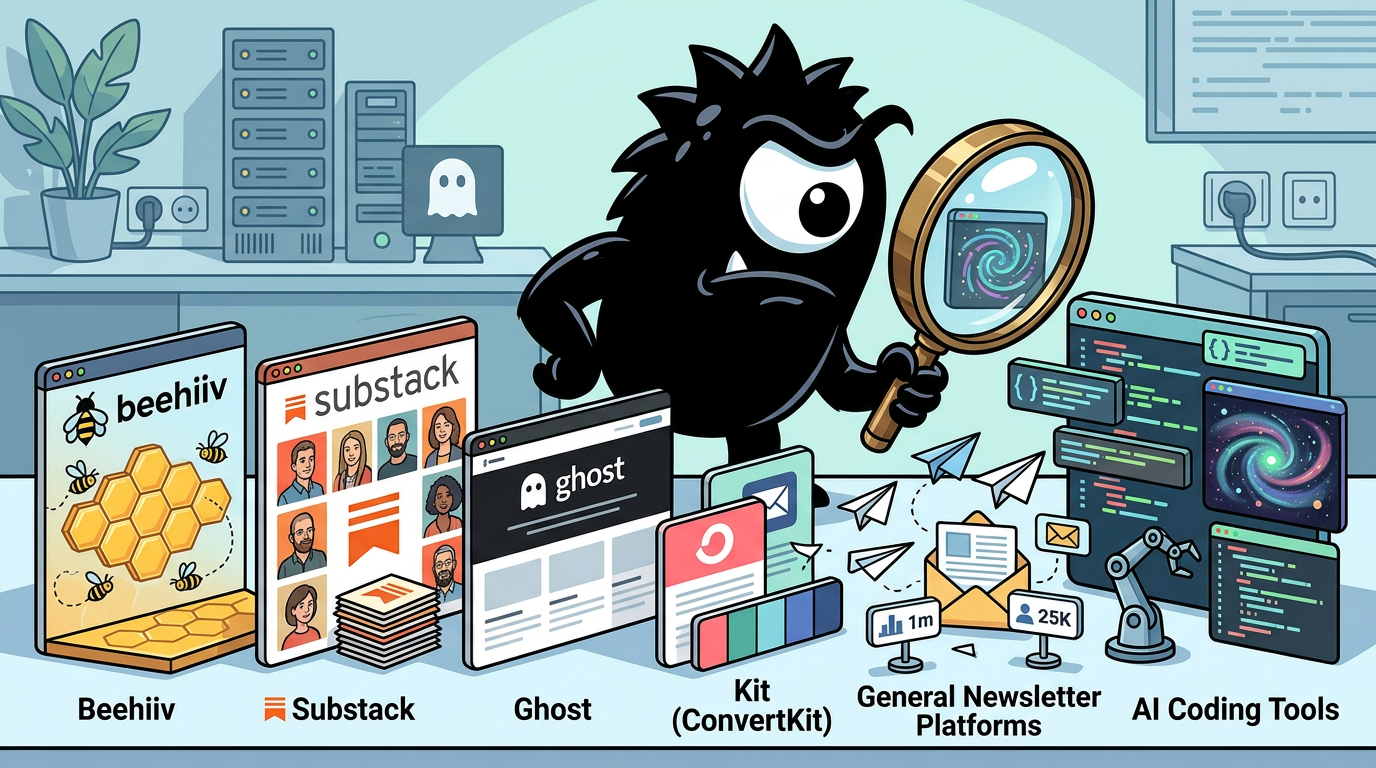
If you spend any time around creators, operators, indie media founders, or B2B marketers on X, you’ll notice the same pattern: when people talk seriously about launching a newsletter business, the shortlist gets narrow fast. It usually comes down to Substack, Ghost, and Beehiiv.
That alone tells you something important. Beehiiv is no longer an upstart curiosity. It has become one of the default platforms people evaluate when the goal is not simply “send emails,” but build an audience-centered business.
We collected 30 of our favorite newsletters at @evernomic.
They all run on either @Substack, @beehiiv, or @Ghost.
We've also written a full comparison of all three platforms (see below)
Substack --
Gergely Orosz (@GergelyOrosz), The Pragmatic Engineer
Lenny Rachitsky (@lennysan), Lenny’s Newsletter
Alex Xu (@alexxubyte), ByteByteGo (@bytebytego)
Packy McCormick (@packyM), Not Boring (@notboringco)
@chamath, Chamath Palihapitiya
Mario Gabriele (@mariogabriele), @thegeneralistco (my personal favorite)
@SahilBloom, The Curiosity Chronicle
Rubén Domínguez, @vc_corner
Rex Woodbury, Digital Native
Justin Welsh (@thejustinwelsh), Unsubscribe
beehiiv --
Rowan Cheung (@rowancheung), The Rundown AI (@TheRundownAI)
Zain Kahn (@heykahn), Superhuman AI (@superhuman_ai)
Pete Huang and Noah Edelman, The Neuron (@theneurondaily)
@louiscorneloup, TechEspresso (@techpresso_en)
Shaan Puri and Ben Levy, Milk Road (@MilkRoad)
Alex Garcia, Marketing Examined
Greg Isenberg (@gregisenberg), Startup Ideas Newsletter
Dave Lavinsky, Growing Your Empire
Jack Appleby (@jappleby), Future Social
Michael Houck, Houck's Newsletter
Ghost --
Isaac Saul, @TangleNews
David Sirota, @LeverNews
@CaseyNewton and @ZoeSchiffer, @Platformer
The Flash Report
Robert Cottrell, @TheBrowser
Jay Clouse, Creator Science
Byrne Hobart, The Diff
Kai Brach, @DenseDiscovery
@simonowens, The Business of Content
Jason Koebler (@jason_koebler), @404mediaco
P.S. we gathered the data based off what was publicly available. If something seems off, I'd love to hear!
That comparison set matters because each tool represents a different philosophy.
- Substack is the easiest to understand culturally: publish, build an audience, lean into subscriptions, and benefit from a built-in reader network.
- Ghost feels more like a serious publishing stack: website, membership, editorial control, and open-platform flexibility.
- Beehiiv is something else: a product designed around the idea that a newsletter is not just editorial output, but a growth asset.
That distinction is why Beehiiv keeps surfacing in practitioner conversations. Independent media has matured. A few years ago, many writers were choosing between “start a blog” and “send an email.” In 2026, that decision is much more strategic. You are choosing:
- How you publish
- How you acquire subscribers
- How you monetize attention
- How much control you want over your audience and economics
- How much technical work you’re willing to do
Beehiiv’s pitch lands squarely in that new reality. It is not trying to be the most writer-romantic product or the most developer-pure publishing system. It is trying to be the platform for people who want to turn a newsletter into a media property with growth loops.
That’s why comparisons that stay at the “which editor feels nicer?” level miss the point. As one X user put it, the real value in comparing these platforms is understanding where each one is genuinely stronger, not pretending they’re interchangeable.
I've used @Substack, @beehiiv and @Ghost to run several newsletters.
I was recently looking for a proper comparison between the three and couldn't really find anything that went beyond surface level, so I decided to write one myself.
Each platform genuinely gets some things right that the others don't. This piece is my thoughts on all three.
Hats off to all platforms regardless for pushing for independent media.
Would love to hear from anyone else who's used more than one of these.
Beehiiv has been especially successful because it built for a real gap in the market. A lot of creators liked Substack’s ease, but didn’t love the revenue-share model or its heavier tilt toward paid subscriptions and platform-native discovery. Others liked Ghost’s ownership and flexibility, but found it more operationally demanding. Beehiiv moved into that gap with a clear promise: creator-friendly setup, more built-in growth machinery, and direct monetization options without taking the same kind of cut on subscription revenue.[6]
This is also why calling Beehiiv an “email marketing tool” is too reductive. Yes, it sends newsletters. But the more accurate framing is that Beehiiv is a newsletter operating system for people whose product is audience.
That phrase sounds grandiose until you look at what modern newsletter businesses actually need:
- landing pages
- sign-up forms and popups
- segmentation
- referral loops
- recommendations
- ad inventory and sponsorship workflows
- web publishing and SEO
- analytics that go beyond opens and clicks
- paid subscription infrastructure
If you are a solo creator, Beehiiv packages many of those into one environment. If you are a small media team, it reduces stack sprawl. If you are a growth-minded operator, it tries to make newsletter expansion feel less like duct-taping together five SaaS tools.
That’s the core reason Beehiiv is “in the conversation.” It isn’t there because it copies Substack or because it out-Ghosts Ghost. It’s there because a large swath of the market now wants a platform optimized for audience growth and monetization from day one. Even mainstream software roundups increasingly place it among the top newsletter platforms for exactly those reasons.[9]
So the real question for 2026 isn’t “What is Beehiiv?” in the abstract. It’s this:
If your goal is to build a newsletter that grows, earns, and becomes a durable business asset, does Beehiiv actually justify its price and reputation?
That’s where the conversation gets interesting.
How Beehiiv Works: Pricing, Plans, and the Core Product
To evaluate whether Beehiiv is worth it, you need to understand what you’re actually buying. This is where a lot of discourse gets sloppy. People either say “it’s expensive” or “it’s a no-brainer,” without looking at how newsletter economics actually work.
Beehiiv’s pricing structure is easier to understand if you stop thinking like a casual email sender and start thinking like a publisher.
At a high level, Beehiiv offers a free plan plus paid tiers that unlock more serious publishing, automation, growth, and monetization capabilities.[1] The exact plan names and details can evolve, but the important distinction is this:
- Free tier: enough to validate an idea, learn the interface, and start collecting subscribers
- Paid tiers: where Beehiiv becomes the product people on X are actually praising
That praise is often tied to the value packed into the paid plans:
for just $99 on @beehiiv you get..
• 100,000 subscribers (unlimited sends)
• referral program
• automated sequences
• Boosts (acquisition marketplace)
• 3D analytics (advanced cohort data)
• ad network
• premium subscriptions (0% take rate)
• custom landing pages
• SEO optimized website
• survey forms (ie surveymonkey)
• advanced audience segmentation
• popups and on-site email collection
• Recommendation network
• the best editor in email
• A/B testing subject lines
• audience polls
• comment section
• API access
• magic links
• 2FA
oh and we’re dropping 3 more massive features in june ✨
And more casually:
My favorite newsletter platform by far is @beehiiv
Sign up below and you can get 20% off for the next 3 months. It's simple to setup, easy to use, and well worth the time exploring it if you haven't yet.
https://www.beehiiv.com?via=soulheart
The reason these posts resonate is simple: Beehiiv’s paid value proposition is bundled. Instead of paying separately for a newsletter sender, a landing page builder, a referral tool, a recommendation engine, audience forms, and monetization infrastructure, Beehiiv tries to combine them. According to its pricing documentation, paid plans expand subscriber capacity and include features such as automations, audience segmentation, referral programs, API access, and monetization tooling.[1] Third-party reviews also consistently note that Beehiiv’s appeal is strongest once you compare its all-in-one package against what similar capabilities would cost across multiple products.[3][4]
The free plan: good for testing, limited for operating
Beehiiv’s free tier is useful, but it should be understood for what it is: a launchpad, not a forever home.
If you’re a beginner, that’s actually a good thing. You can:
- set up a publication
- start publishing issues
- build a landing page
- collect your first subscribers
- get a feel for the editor and workflow
That’s enough for validating a niche, testing your writing cadence, and figuring out whether you can attract any audience at all.
But if you are trying to run a newsletter as a business, the free plan will eventually feel tight. The main limitations tend to show up in the exact places operators care about most:
- deeper automations
- more advanced segmentation
- higher subscriber scale
- stronger support
- full monetization and growth systems
That is not unusual in SaaS. What matters is whether the upgrade unlocks meaningful leverage. With Beehiiv, in many cases it does.
Why pricing feels different than Substack
A lot of readers instinctively compare Beehiiv pricing to “free” options like Substack. But that comparison can be misleading because the business model is different.
With Substack, you can get started with little upfront software cost, but the platform takes a percentage of paid subscription revenue. With Beehiiv, the more important tradeoff is often fixed software spend versus downstream revenue share. Beehiiv has promoted 0% platform fees on paid subscriptions in contrast to rev-share models.[1][6]
That means pricing hits differently depending on your stage:
- If you are a hobbyist with no revenue, any monthly fee feels expensive.
- If you are an operator with real subscription or sponsorship ambition, fixed-cost software can be far cheaper than long-term revenue sharing.
- If you are in the middle — not yet monetizing materially, but planning to — the value depends on whether Beehiiv helps you get there faster.
This is why “worth it” is inseparable from use case. For some creators, Beehiiv’s monthly cost is not the cost of email software. It’s the cost of having growth and monetization infrastructure prebuilt.
What the core product includes
Beehiiv’s core product is best understood in five layers.
1. Publishing
At the base level, Beehiiv gives you the tools to write and publish email newsletters with a web-hosted version attached. The editor is generally regarded as clean and creator-friendly, which matters more than it sounds. If your weekly workflow is annoying, your consistency suffers. And for most newsletters, consistency matters more than a long feature list.
Key publishing capabilities include:
- newsletter editor
- web versions of posts
- branded publication pages
- custom domains on higher plans
- basic audience engagement tools like polls and comments on eligible tiers[1][4]
2. Audience capture
Beehiiv is not just built for sending to an existing list. It is built to help you collect subscribers.
That means features like:
- signup forms
- popups
- landing pages
- SEO-friendly website pages
- recommendation paths after subscription[1]
For creators, this reduces setup complexity. For technical teams, it can still serve as a default acquisition layer before adding custom front-end experiences.
3. Growth loops
This is where Beehiiv becomes distinct. Instead of requiring you to integrate external growth tools, it offers native mechanisms intended to compound list growth:
- referral programs
- recommendation networks
- Boosts / paid recommendations
- subscriber sharing and upgrade flows
- audience incentives[1][4]
These are not universally useful for every business, but they are central to Beehiiv’s thesis.
4. Monetization
Beehiiv includes several monetization paths inside the product:
- paid subscriptions
- ad network access
- sponsorship workflows
- recommendation-based revenue opportunities
- audience monetization infrastructure[1][2]
Again, possibility is not the same as guaranteed income. But the fact that monetization is operationally close to publishing matters. It shortens the distance between “I have an audience” and “I can try making money from it.”
5. Operator features
As a newsletter becomes more than a side project, operators care about:
- segmentation
- automations
- analytics
- experiments
- APIs and integrations
- team workflows
Beehiiv has steadily expanded this layer.[1][10] It is not a perfect replacement for enterprise-grade marketing automation, but it is far more than a blogging tool with email attached.
What changes once you go paid
The biggest shift when upgrading is not cosmetic. It is a change in how you can run the publication.
On paid plans, Beehiiv becomes much more viable for operators who need to do things like:
- segment readers by behavior or source
- build onboarding or nurture sequences
- run referral mechanics
- monetize more systematically
- use stronger analytics to understand subscriber quality
- work with larger audiences without feeling boxed in[1][3]
This is where many users decide whether Beehiiv is “worth it.” If you upgrade and still use it like a basic weekly send tool, it can absolutely feel overpriced. If you use the paid feature set as a mini media-business stack, it can feel underpriced relative to cobbling together alternatives.
That’s why X posts describing it as “feature-rich for the money” aren’t really about abundance. They’re about stack compression. Beehiiv can replace multiple adjacent tools for the right operator.
And that leads directly to Beehiiv’s strongest argument: not just that it has features, but that it can help you grow faster.
The Growth Engine: Where Beehiiv Actually Stands Out
If you strip away the hype, Beehiiv’s core bet is straightforward:
A newsletter should not behave like a static email list. It should behave like a media product with built-in audience acquisition loops.
That is the reason Beehiiv has become so attractive to growth-minded creators. Not because it magically creates demand, but because it gives operators more top-of-funnel machinery than most newsletter platforms include by default.
This is the sentiment you see constantly on X:
If you’re serious about building an audience, Beehiiv is one of the best tools out there.
It makes it ridiculously easy to write, publish, grow, and monetise a newsletter without the usual technical mess.
Great writing experience.
Clean design.
Built-in growth tools.
Made for creators who actually want to scale.
I use it for my newsletter and would recommend it to anyone building a personal brand, media business, or niche community.
https://t.co/ZmLbWMrhFY
That post is promotional in tone, but it lands because it reflects how many people actually use Beehiiv: not just to publish, but to scale distribution.
Beehiiv’s growth philosophy
Most traditional email tools start from CRM logic: import contacts, segment lists, send campaigns. Beehiiv starts from audience logic: how do I get more relevant subscribers without assembling a separate stack?
That changes product design.
Instead of assuming you already have traffic and leads, Beehiiv invests in:
- native referral mechanics
- recommendation pathways
- subscription-focused landing pages
- web pages optimized for discoverability
- built-in signup capture
- acquisition-oriented marketplace features like Boosts[1][5]
That doesn’t mean Beehiiv is better for every kind of email business. It means it is optimized for a specific motion: content-led audience acquisition.
Recommendations: low-friction network effects
One of Beehiiv’s more interesting growth mechanisms is recommendations — the ability to surface other newsletters to new subscribers and receive reciprocal exposure. This matters because newsletter growth is often constrained not by content quality, but by discovery. Recommendations create a semi-native distribution layer inside the ecosystem.
In practical terms, recommendations can help with:
- cross-promotion between adjacent publications
- faster subscriber acquisition for newer newsletters
- retention via “follow-on” subscriptions that deepen reader engagement
- ecosystem-level discovery without relying entirely on social platforms
This is one of the reasons Beehiiv feels structurally different from a generic email service provider. It treats the act of subscribing as a moment where further audience routing can happen.
Referrals: turning readers into acquisition channels
Referral systems are not new, but they have often been painful to set up. Historically, newsletter operators used custom tools or hacked-together rewards logic. Beehiiv brought referrals much closer to default workflow.
That matters because referrals are one of the few genuinely scalable growth loops in newsletters:
- A reader trusts your product enough to share it
- A new subscriber arrives with higher-than-average intent
- The acquisition cost can be dramatically lower than paid social or search
- The loop strengthens brand affinity for the original reader
When referrals are easy to launch, more creators actually use them. That is a recurring theme in Beehiiv’s product design: not inventing unheard-of tactics, but making proven tactics operationally accessible.
Boosts: monetization and acquisition in one mechanism
Boosts are especially important because they blur the line between growth and monetization. Depending on which side of the system you’re on, you can either:
- pay to acquire subscribers, or
- earn money by recommending other newsletters
That’s clever product design. It creates a marketplace dynamic around newsletter growth, which is exactly the kind of thing audience businesses want but rarely have the engineering time to build themselves.
Of course, not every subscriber acquired this way is equal. Quality depends heavily on niche alignment, source intent, creative presentation, and follow-up retention. A cheaply acquired subscriber who never opens is not a growth win. But as a built-in mechanism, Boosts are a meaningful differentiator.[1][5]
SEO pages, websites, and discoverability
A major weakness of many newsletters is that they disappear into inboxes. Beehiiv tries to solve that by making every publication also function as a web property. Hosted posts, landing pages, and SEO-conscious site features allow newsletters to capture search traffic and shared-link traffic more effectively.[1]
That matters if your content has evergreen value.
For example:
- an AI roundup newsletter can rank for recurring topic clusters
- an industry analyst can build compounding search traffic from archived essays
- a local media newsletter can capture geo-specific intent
- a professional niche publication can create authority pages that attract future subscribers
This is where Beehiiv can outperform tools that are excellent for sending emails but weaker as audience discovery surfaces.
Popups and on-site capture
If you already have a website or audience elsewhere, native popups and forms are less glamorous but highly practical. They reduce implementation friction for:
- personal websites
- simple publication sites
- creator landing pages
- lightweight content hubs
Again, the theme is stack reduction. Beehiiv wants to eliminate the excuse that growth tooling is “something I’ll set up later.”
Speed matters more than people admit
One of the underrated reasons Beehiiv performs well with creators is that it lowers setup and launch friction.
I built the whole thing in one day.
• Newsletter name ✓
• Logo on Canva ✓
• Beehiiv set up free ✓
• First issue written and live ✓
• First real subscriber — day 1 ✓
$0 spent. Zero experience needed.
This kind of post matters because it points to a truth most experts already know: many newsletter projects fail before strategy becomes the bottleneck. They fail because creators get stuck in setup, branding, tooling, migration anxiety, or vague perfectionism.
A platform that lets someone go from zero to first issue in a day has real economic value. Not because setup speed is the ultimate moat, but because speed increases the odds that the publication actually exists long enough to learn anything.
But growth features only matter if you use them
This is the key tension in the Beehiiv conversation, and it’s where a lot of honest reviews should be more blunt.
If you buy Beehiiv and only send one weekly essay to a static list, you are not buying the right thing for your behavior.
The platform’s growth value is realized when you actively use:
- referrals
- recommendation placements
- subscriber capture assets
- experimentation
- web discoverability
- monetization-adjacent growth loops
If you don’t, the premium can feel unjustified.
That’s also why Beehiiv is not automatically the best fit for lifecycle-heavy email businesses. One of the more concise takes on X gets this exactly right:
For B2B SaaS, Kit (ConvertKit) generally wins on deliverability and segmentation. Beehiiv is stronger for audience growth via recommendations. If your leads are already warm, Kit. If you need top-of-funnel reach, Beehiiv. What stage is your funnel?
View on XThat is a useful frame. Beehiiv shines when the core challenge is top-of-funnel audience growth. If your biggest challenge is managing already-warm leads through deep CRM logic, that’s a different problem class.
The practical verdict on growth
So, does Beehiiv deserve its reputation as a growth-first newsletter platform?
Mostly, yes.
Its growth stack is not magic. It will not rescue weak positioning, bad writing, poor retention, or nonexistent distribution. But it does something meaningful: it gives creators and media operators a set of native tools that make good growth behavior easier to implement.
That matters.
Because in newsletters, the difference between “has growth strategy” and “does growth strategy every week” is often just product friction.
Beehiiv’s strongest argument is that it reduces that friction better than most alternatives in its class.[5][11]
Monetization: Can Beehiiv Help You Earn Early, or Is That Overhyped?
Beehiiv’s second major selling point — after growth — is monetization.
This is where enthusiasm on X gets especially intense. You see stories from tiny newsletters earning their first dollars almost immediately, often framed as proof that Beehiiv is uniquely creator-friendly.
For example:
If you want to make a few bucks online, seriously look at @beehiiv .
I started a newsletter last week and already made a few bucks with about 5 subscribers at that time.
The monetization system is ridiculously simple and transparent.
You can earn through ads, paid subs, and even recommending other newsletters.
And the funny part?
Beehiiv actually liked and commented on one of my posts.
Can you imagine 𝕏 doing that?
Yeah… me neither.
And the broader logic behind those stories is also common:
You don’t need 10k subscribers to make money.
Let’s do the math 👇
1000 subscribers
$10 product
10% conversion
That’s $1,000.
Email converts better than social because trust is higher.
@beehiiv makes monetization accessible early.
Audience size matters less than relationship depth.
The important thing is to separate what Beehiiv enables from what Beehiiv guarantees.
Beehiiv does make monetization more accessible earlier than many platforms. But early monetization is not the same as easy monetization, and it is definitely not the same as meaningful or durable revenue.
The main monetization paths on Beehiiv
Beehiiv supports several ways to earn from a newsletter, either directly or indirectly.[1][2]
1. Paid subscriptions
This is the most obvious model. You publish free content, reserve premium content for paying members, and use subscription revenue as the business engine.
Compared with Substack, the big economic talking point is that Beehiiv has marketed 0% platform fees on paid subscriptions, which matters for operators planning to scale recurring reader revenue.[1][6] Over time, keeping more of subscription income can be materially better than rev-share platforms — especially for high-ARPU niche publications.
This model works best when:
- your content is genuinely scarce or high-value
- your readers have professional or financial reason to pay
- your voice or access is differentiated
- you can sustain a cadence that justifies recurring fees
It works less well when your publication is broad, replaceable, or mostly entertainment without a strong fan relationship.
2. Ad network and sponsorship workflows
Beehiiv’s ad infrastructure is one of its biggest practical advantages for creators who do not want to sell every sponsorship manually. The existence of an ad network lowers the barrier between “I have a list” and “I can start testing sponsorship revenue.”[1][13]
This matters especially in the messy middle of newsletter growth, when a publication is too real to remain a hobby but too small to command premium direct deals consistently.
An ad network can help:
- fill unsold inventory
- create first-dollar validation
- give operators a sense of RPM potential
- provide monetization before they build a sales process
But here is the honest caveat: network monetization is rarely the endgame. It is usually the starting point.
The newsletters that build serious ad businesses eventually care about:
- category exclusivity
- direct sponsor relationships
- custom placements
- premium CPMs
- multi-issue packages
- deeper attribution narratives
Beehiiv can support parts of that journey, but simply having an ad network does not mean every newsletter becomes a profitable media business.
3. Boosts and paid recommendations
This is where Beehiiv gets especially interesting. A publisher can earn money when subscribers opt into other newsletters through recommendation flows. In theory, that means a newsletter can monetize even before it has a massive audience.
That is why so many “I made money with just a few subscribers” posts emerge. They are often referring to recommendation-based monetization or low-friction ad opportunities, not necessarily a large direct reader-revenue business.
This is real value. Early dollars matter psychologically and strategically. They prove the publication can produce revenue, which can motivate consistency. But practitioners should stay clear-eyed:
- first dollars are not a business model
- recommendation revenue can fluctuate
- low-volume monetization stories do not always extrapolate
Early monetization is best understood as proof of monetization infrastructure, not proof of sustainable economics.
4. Audience commerce and product sales
Beehiiv can also work well for operators selling something beyond the newsletter itself:
- consulting
- digital products
- cohorts
- memberships
- events
- niche services
- premium research
In many cases, the newsletter is less the product than the trust channel. Beehiiv’s value here is not only in payment-adjacent features, but in making subscriber capture and engagement easier. Email remains one of the highest-intent owned channels for converting audience trust into offers.[13]
This is where Azhar Ahmed’s point on relationship depth is directionally right. A smaller, highly aligned list can absolutely outperform a larger but weaker one.
Why the early monetization stories are so compelling
The strongest reason people get excited about Beehiiv monetization is not the amount. It’s the timing.
For most creators, the hardest stage is the first six months, when effort feels disproportional to results. If a platform can produce some revenue early, even modestly, it changes the psychology of the project.
That can do three important things:
- validate the niche
- justify continued publishing effort
- encourage operators to treat the newsletter like a business sooner
That’s a real benefit. Many creator businesses die not because the economics are impossible, but because the creator never gets enough positive feedback to keep going.
But possibility is not probability
This is the part the optimistic threads often skip.
Beehiiv makes monetization accessible, but the actual outcomes still depend heavily on:
- niche quality
- audience buying intent
- subscriber trust
- open and click depth
- consistency of publishing
- operator skill in packaging offers
- list quality, not just size
A crypto trading newsletter, a B2B AI workflow digest, and a local events newsletter do not monetize the same way. Neither do an audience of junior developers and an audience of CFOs.
So when you hear “you can make money with a tiny newsletter,” the honest translation is:
You can begin testing monetization with a tiny newsletter if your audience is relevant enough and the mechanism is simple enough.
That is still useful. It just isn’t the same claim.
Economics versus Substack
The Beehiiv-versus-Substack comparison matters most in paid subscriptions.
Substack’s advantage is lower setup friction and stronger platform-native reader culture. Its downside, for many operators, is the platform fee structure on subscription revenue. Beehiiv’s appeal is stronger if you believe:
- you can drive your own audience acquisition
- you want to keep more of the upside
- you care about broader monetization options beyond subscriptions[6][13]
For some writers, Substack’s network effects are worth the cut. For others, especially operator-minded publishers, Beehiiv’s economics are more attractive because the fixed subscription software cost can become trivial relative to retained revenue.
A revealing monetization friction point
Beehiiv’s monetization stack is strong, but not frictionless. As users scale, workflow constraints show up.
Hey @beehiiv @denk_tweets can you please allow us to add more than 5 ads to the upcoming newsletter calendar? We like to get ahead with weeks' worth of newsletters, but we cannot add ads in a timely manner. Just sharing some feedback, thanks 🙏 Appreicate you guys! The Revenue Ronin
View on XThat is a small complaint, but it’s revealing. It shows where the product can still feel like a fast-growing company’s platform: powerful in ambition, occasionally rough in execution. For power users managing newsletter inventory in advance, seemingly minor limits can create operational drag.
That doesn’t erase Beehiiv’s monetization strengths. It just reminds you this is still software, not magic.
The practical verdict on monetization
Beehiiv’s monetization claims are mostly credible, with one big caveat: they are easiest to misinterpret.
What Beehiiv does well:
- reduces time-to-first-dollar
- offers multiple revenue paths
- improves economics for paid subscriptions versus rev-share models
- helps smaller newsletters experiment with monetization earlier
- brings ad and recommendation infrastructure closer to default workflow[1][2]
What Beehiiv does not do:
- guarantee that your niche has buying intent
- make weak content monetizable
- eliminate the need for sponsor sales if you want premium ad revenue
- replace strategic offer design
So yes, Beehiiv can help you earn early. That part is not overhyped. But the important question is whether those early earnings grow into something durable. That depends far more on audience quality and operator discipline than on the monetization toggle itself.
Where Beehiiv Falls Short: Support, Video, and Edge Cases
A review is only useful if it gets specific about where a product disappoints. Beehiiv is strong, but it is not universally good, and some of its shortcomings are significant enough to be deal-breakers.
The most common criticisms from practitioners are not about vision. They are about operational friction.
Support can be a real pain, especially on lower tiers
This is probably the sharpest recurring complaint: support access and responsiveness can feel gated by plan level, which is understandable from a SaaS economics standpoint but frustrating in real life.
What a frustrating experience with @beehiiv ... I can't open a ticket because i'm not on a paid plan. The chat bot says they can send a ticket for me... Then says it can't... Any help here @beehiiv
View on XFor experienced operators, this may sound minor. For beginners, it isn’t.
The most support-sensitive moments in a newsletter business are often:
- initial setup
- custom domain configuration
- DNS changes
- migration from another platform
- authentication and deliverability issues
- monetization setup
- broken forms or signup flows
Those are exactly the moments when a user least wants to hear, “upgrade first.” And from a trust perspective, this is where product perception gets shaped quickly. If the platform markets itself as easy for creators, but free users hit a support wall during onboarding, that undercuts the promise.
Third-party reviews and testing roundups generally rate Beehiiv highly overall, but support quality still emerges as one of the more variable parts of the experience, especially compared with the clarity of its product positioning.[9][11]
Video is a real limitation for some publishers
This is not an edge case if your business is built around video-based journalism, education, or commentary.
Update on Operation Rachel Leaves Substack:
Real, human reps from both Ghost and Beehiiv have confirmed I can't do video directly on their platforms.
I'm at a dead end and it sucks.
I'm stuck on Substack until another newsletter platform can migrate and accommodate my video-based journalism.
Sorry :(
That post captures a serious mismatch. If your publication depends on native video as a primary content format, Beehiiv is not currently the obvious answer. Yes, you can embed or link video workflows in broader content operations, but that is not the same as a platform being designed around video-first publishing.
This matters for:
- independent journalists publishing video reporting
- educators selling lesson-style or course-like experiences
- creators whose audience expects rich media delivery
- hybrid media brands that treat video as first-class editorial output
If that sounds like your business, Beehiiv’s strengths in growth and monetization may not compensate for the core format mismatch.
It’s not a full marketing automation suite
Beehiiv includes automation and segmentation, and for creators that is often plenty. But practitioners should not confuse that with a full-stack marketing automation platform for complex customer lifecycle orchestration.
If you need advanced behavior-based journeys across product events, sales stages, account roles, and transactional triggers, Beehiiv is not trying to be HubSpot, Customer.io, or a deeply integrated CDP-driven system.
That’s not a flaw if your business is a newsletter. It is a flaw if your business is software and the newsletter is just one lifecycle touchpoint.
Workflow rough edges still exist
Fast-growing platforms often have this profile: visionary roadmap, strong momentum, but occasional operational roughness. Beehiiv fits that pattern.
Users may run into friction around:
- support access by plan
- inventory or campaign management constraints
- edge-case customization limitations
- content-format restrictions
- integration needs that require workarounds instead of native support[11]
Individually, many of these are manageable. Collectively, they matter for teams running production workflows at higher volume.
Product maturity is strong — but not complete
Beehiiv has come far quickly. That’s a credit to the team. But it’s still worth understanding the difference between ambitious product surface area and mature depth in every layer.
For many creators, the product is more than mature enough. For more specialized operators, the platform can still feel like it has “90% of what I want, plus one missing thing that really matters.”
That missing thing could be:
- native video support
- more flexible monetization logistics
- enterprise-grade workflow controls
- support guarantees
- richer customization in a specific niche use case
The honest takeaway on limitations
Beehiiv’s weaknesses are not random. They cluster around a simple truth:
Beehiiv is optimized for growth-focused newsletter publishing, not every kind of digital publishing or marketing operation.
That means it is easy to love when your needs align, and easy to outgrow or reject when they don’t.
If you are a text-first creator building an audience business, many of these limitations will feel tolerable. If you are video-first, support-sensitive, or running complex lifecycle systems, they may feel fundamental.
That’s why the “worth it” question cannot be answered without use case. Beehiiv is excellent at some jobs and awkward at others. Pretending otherwise helps no one.
Who Beehiiv Is Best For—and Who Should Probably Choose Something Else
The simplest way to evaluate Beehiiv is not to ask whether it has enough features. It is to ask:
What kind of business are you actually building?
Because Beehiiv is not a universal communications platform. It is strongest when the newsletter itself is central to audience growth, brand building, and monetization.
One of the better concise summaries on X puts it plainly:
If you’re looking to:
- Establish a media brand
- Build community
- Make a content subscription
Good monetization features
…then beehiiv is good for you.
But if you need:
- Ecommerce marketing emails
- Software email sending
- A video course library
then use a different tool.
That is directionally right. Let’s make it more concrete.
Best fits: where Beehiiv makes a lot of sense
Personal brands and creator-led newsletters
If you are building around your expertise, commentary, curation, or point of view, Beehiiv is often a very good fit.
Examples:
- solo operators covering AI tools
- marketers publishing breakdowns and case studies
- founders building in public
- analysts writing niche industry commentary
- community builders publishing recurring updates
Why it works:
- fast setup
- polished publishing experience
- growth tools that support audience expansion
- monetization options before you become huge
- enough website and landing page capability to avoid separate tooling[5][9]
Niche media businesses
This is arguably Beehiiv’s sweet spot.
Examples:
- crypto or fintech news briefings
- local city newsletters
- professional vertical digests
- emerging industry publications
- trend and research newsletters
Why it works:
- referrals and recommendations suit media growth
- sponsorship models map naturally onto newsletters
- SEO and web publishing help with discoverability
- monetization can begin before a full sales org exists[6]
Community-led publications
If your newsletter is the center of a niche professional or enthusiast community, Beehiiv’s combination of publishing, list growth, and audience monetization is attractive.
Examples:
- creator economy communities
- startup operator groups
- local business ecosystems
- domain-specific technical communities
Mixed fit: where Beehiiv can help, but won’t replace everything
B2B SaaS thought-leadership newsletters
This is a common case. A SaaS company wants to build a media-style newsletter to generate top-of-funnel demand and category authority.
Beehiiv can be good here — especially for acquisition-oriented editorial publishing. But there’s a catch.
What Beehiiv can do well:
- run the editorial newsletter
- grow subscriber audience
- host content and signup experiences
- support lightweight audience segmentation
- create top-of-funnel brand reach[5]
What it probably should not be expected to do alone:
- lifecycle onboarding email
- product-triggered journeys
- account-based nurture logic
- customer retention and expansion messaging
- transactional messaging
In other words, Beehiiv can be an excellent media arm for a SaaS business, while a separate marketing automation stack handles product and CRM-driven email.
Technical publishers with custom front ends
If you want to own your site experience but still use Beehiiv for publishing, list management, or newsletter delivery, the platform can fit well thanks to API and developer options.[8][12]
This is not the default path for beginners, but it makes Beehiiv more flexible than a purely closed creator tool.
Poor fits: where you should probably look elsewhere
Ecommerce email marketing
If your core need is promotional flows, campaigns, cart recovery, merchandising segmentation, and purchase-triggered automation, Beehiiv is not the right primary tool.
Use a platform built for ecommerce lifecycle marketing.
Transactional or software email
If you need application notifications, password reset emails, operational product messaging, and system-triggered delivery, Beehiiv is not your solution.
Video-led journalism or content businesses
As discussed earlier, this is a meaningful gap. If native video is central to your publishing model, Beehiiv is not yet aligned with your core format.
Course libraries and rich-media education products
If your business depends on lesson hosting, structured content libraries, progress systems, or media-heavy learning experiences, Beehiiv can support the audience layer but not replace the product layer.
A good heuristic
Beehiiv is most worth considering when these statements are true:
- my newsletter is a core product, not just a marketing channel
- I care about subscriber growth, not just campaign sending
- I want monetization options inside the platform
- I am okay with a text-first or article-first publishing model
- I do not need enterprise-grade lifecycle automation
If most of those are false, you are probably trying to fit Beehiiv to the wrong problem.
AI, Automation, and Customization: Useful Advantage or Extra Noise?
As Beehiiv has grown, it has expanded beyond “newsletter editor plus growth tools” into AI-assisted workflows, broader automation, and more customizable technical setups. That creates a fair question: are these features genuinely useful, or are they just expansion-pack noise for a platform that already had a clear core?
The answer is mixed, but more favorable than skeptics might expect.
AI: helpful for speed, weak as a substitute for judgment
Beehiiv’s AI capabilities have been marketed around drafting, editing, translation, and asset generation.[10] The enthusiastic version of that pitch looks like this:
The old way to write a newsletter:
- writer's block
- takes hours
- spelling mistakes
- only one language
- boring tone of voice
- costs way too much money
The new way to write a newsletter:
- @beehiiv's AI writing assistant
- instantly translate into 7 languages
- write an entire first draft in 5 seconds
- spell check your newsletter in 1-click
- generate a royalty-free image with your imagination
- transform your tone of voice
I should also mention that all of that's available for only $99/m.
Here's what else is available on @beehiiv for that same price:
- 100,000 subscribers
- unlimited sends
- built-in referral program
- referral gating
- private newsletters
- automated sequences
- Boosts (paid recommendations)
- 3D analytics (advanced cohort data)
- ad network
- premium subscriptions (0% take rate)
- custom landing pages
- custom upgrade pages
- SEO optimized website
- survey forms (ie surveymonkey)
- advanced audience segmentation
- popups and on-site email collection
- the best editor in email (collaborative)
- A/B testing subject lines
- audience polls
- comment section
- open API access
- magic links
- 2FA
Moving to beehiiv is a no-brainer, now more than ever.
Taken literally, this is obviously marketing-heavy. AI does not remove the need for editorial judgment, subject matter expertise, or original perspective. But dismissing it entirely would also be a mistake.
For many operators, AI is genuinely useful for:
- first-draft generation
- headline or subject-line ideation
- rewrite assistance
- grammar cleanup
- repackaging content into different tones or formats
- translation for multilingual distribution
That is real leverage, especially for solo creators publishing at high frequency.
Where AI is not especially helpful:
- producing differentiated analysis
- maintaining a trusted editorial voice without supervision
- making weak ideas stronger
- replacing reporting or domain expertise
So the practical view is this: Beehiiv’s AI features are valuable when used as workflow accelerators, not content strategy.
Automation and segmentation: good enough for operators, not built for enterprise complexity
Beehiiv’s automation layer is one of the reasons it graduates from “creator tool” into “operator platform.” You can do much more than send broadcast newsletters.
Depending on plan and setup, operators can use Beehiiv for things like:
- welcome sequences
- onboarding flows
- subscriber path branching
- segmentation by engagement or attributes
- targeted sends to subsets of the audience[1][4]
This matters because many newsletters hit the same maturity wall: once you have more than a few thousand subscribers, not everyone should receive the same thing in the same way.
Useful segmentation examples include:
- new subscribers versus long-time readers
- highly engaged readers versus dormant ones
- topic-interest segments
- acquisition source cohorts
- free versus paid subscriber groups
For creators who are “starting to think like operators,” this is one of Beehiiv’s strongest upgrades. It helps turn a newsletter from a single broadcast stream into a more intentional audience system.
But again, there are limits. Beehiiv’s automation maturity is good in creator-media terms, not exhaustive in enterprise lifecycle terms. If your workflows depend on dense customer data and cross-system event orchestration, Beehiiv is probably a component, not the whole stack.
Customization and developer paths
A more technical audience should pay attention here. Beehiiv is not only for no-code creators. It also has enough developer-facing surface area to support more custom implementations.
The developer docs outline API access and integration paths for building around Beehiiv.[8] There is also public code presence via GitHub that signals ongoing developer ecosystem engagement.[12]
In practice, that means a technical team can do things like:
- build custom signup flows
- connect Beehiiv to external websites
- create hybrid publishing stacks
- sync audience data with other tools
- maintain a custom front end while keeping Beehiiv for newsletter operations
That hybrid model is exactly what some technical publishers are experimenting with:
How I migrated my newsletter from Ghost to a custom Next.js and Beehiiv stack, and why it was worth it. - https://hackernoon.com/the-best-tech-stack-for-a-newsletter-in-2026 #newsletter #technewsletters
View on XThis is important because it broadens Beehiiv’s relevance. You do not have to accept the entire default product surface if your team wants more control. You can use Beehiiv as the newsletter engine inside a more custom architecture.
AI website building and broader expansion
Beehiiv’s expansion into AI website building and creator tools also suggests the company sees itself less as a point solution and more as a broader creator-media platform.[10] That is strategically smart, but it also introduces risk: every platform gets tempted to expand faster than it deepens.
For now, the right way to think about Beehiiv’s newer layers is:
- AI: helpful if you need speed and operational assistance
- automation: strong for creators and media operators
- customization: increasingly viable for technical teams
- expansion features: promising, but still worth evaluating feature by feature
The practical verdict
These newer capabilities are not the main reason to choose Beehiiv. Growth and monetization remain the center of gravity.
But they do matter because they make Beehiiv more resilient as your operation matures. Instead of forcing an immediate migration once you need more sophistication, the platform now gives you room to:
- write faster
- segment smarter
- automate more intentionally
- integrate with custom systems
That’s not noise. It’s useful — as long as you understand what it can and cannot replace.
The Business Behind Beehiiv—and Why That Matters to Customers
Choosing a newsletter platform is not just a product decision. It is a vendor decision. You are entrusting your publication, subscriber relationships, monetization paths, and often your domain-level identity to a company. So the business behind the software matters.
In Beehiiv’s case, users often cite the company’s momentum itself as part of the reason they trust it.
2025 was a monumental year for @beehiiv
📈 $34M of annualized revenue
🌎 110 employees located around the world
✉️ 3B+ emails sent every month
💸 $45M+ earned by users on platform
this year was undoubtedly the most challenging and rewarding one yet 👇
And that confidence is reinforced by founder visibility:
I'm truly speechless when I talk about @beehiiv for several reasons, the most important reason is that the platform is run by a very sociable person who interacts with all the content creators of the platform and he listens to everyone, he is @denk_tweets ❤️
I joined Beehiiv 16 days ago after I saw my best friend @abhiyogi subscribed to Beehiiv and I'm impressed by the complete transparency of the platform and I'm completely satisfied with everything, especially the monetization section. 🥰
If you want to start on beehiiv, I advise you to subscribe through this link 👇 to get a 20% discount for three months.
https://t.co/YCukg6QXMr
Plus the company’s public growth claims over time:
Q3 was insane for @beehiiv
we surpassed $1M MRR and are now generating over $1.5M per month (less than 3 years since launch)
here’s a recap of what went well, what we learned, and what’s next 😈
beehiiv is now growing 13.5x rate of convertkit
…not even including revenue from the @beehiiv Ad Network (fastest growing revenue line)
january net MRR: $98k vs $16k (+8.1% vs +0.6%)
in just 3 years we surpassed their platform capabilities and should surpass revenue in 2025
From a customer perspective, this kind of transparency has real value.
Why momentum matters
A fast-growing platform with substantial revenue, growing headcount, and large send volume signals a few reassuring things:
- customers are adopting it at scale
- the company likely has resources to keep building
- the platform is less likely to disappear suddenly
- product development can continue aggressively[7][10]
That matters more than people admit. Nobody wants to build a publication on a vendor that feels economically fragile.
The upside of a founder-led, public company culture
Tyler Denk’s visibility has clearly shaped Beehiiv’s market perception. Founder-led SaaS can create a sense that users are closer to the roadmap, and that feedback can actually reach decision-makers.
That often leads to:
- stronger community trust
- faster iteration
- clearer product narratives
- a feeling that creators are being listened to
In a market where many platforms feel faceless, this can be a competitive advantage.
But momentum raises expectations
There is also a flip side.
The more public a company is about growth, shipping pace, and category ambition, the less patience users have for rough edges. If Beehiiv positions itself as the modern operating system for newsletter businesses, then users will reasonably expect:
- strong support
- polished workflows
- fewer edge-case constraints
- reliable roadmap execution
That is why some of the complaints land so hard. They are not complaints about an early prototype. They are complaints about a platform people increasingly see as a category leader.
The practical takeaway
Beehiiv’s business momentum is a real asset for customers. It suggests durability, ambition, and continued investment. But it does not exempt the company from the usual fast-growth tradeoffs: uneven support, occasional product roughness, and the risk of expanding breadth faster than depth.
As a customer, the right stance is neither blind trust nor unnecessary cynicism.
It is this:
Beehiiv looks durable enough to take seriously as a long-term platform bet — but you should still evaluate it based on how well its current product fits your operation today, not just on its growth story.
So, Is Beehiiv Worth It in 2026? The Honest Verdict
The short answer is:
Yes, Beehiiv is worth it in 2026 — for the right kind of user.
It is not the best platform for everyone. It is not the cheapest path for every stage. And it is not mature in every edge case. But for a large class of creators and media operators, Beehiiv is one of the strongest newsletter platforms available because it combines publishing, growth, and monetization unusually well in one product.[1][6][11]
That said, “worth it” depends entirely on what job you need it to do.
Before breaking down personas, it’s worth remembering that popularity can become its own kind of confusion. As one post put it, consensus often forms faster than careful evaluation:
Everyone thinks the best newsletter platform around is Beehiiv.
They’re all wrong.
There’s another that stands head and shoulders above the rest.
Here it is (and why it’ll help you become a 7 figure creator this year):
That’s exactly why the honest verdict needs segmentation.
If you are a beginner creator
Beehiiv is often worth trying, but not always worth paying for immediately.
Use the free tier if your goals are:
- validate a niche
- start publishing quickly
- learn newsletter basics
- collect first subscribers
- avoid technical overhead
Upgrade only when you have evidence you will use the paid capabilities. The mistake beginners make is paying for infrastructure they do not yet operationalize.
Beehiiv becomes worth paying for when:
- you are publishing consistently
- audience growth matters enough to use referrals/recommendations
- you want to test monetization early
- you need automations or stronger segmentation
If you are still unsure whether you even enjoy writing a newsletter, start free.
If you are a growth-focused newsletter operator
Beehiiv is very likely worth it.
This is the persona the product fits best.
If your core goals are:
- grow subscribers faster
- build discoverability loops
- use referral mechanics
- monetize through multiple channels
- run your newsletter like a media business
then Beehiiv’s paid plans are easy to justify relative to the alternatives.[1][5]
This is especially true if the alternative is stitching together separate tools for landing pages, referrals, audience capture, recommendations, and monetization. Beehiiv’s strongest economic argument is not low sticker price in isolation. It is high leverage per dollar for growth-oriented publishing.
If you are building a media brand
Beehiiv is one of the best options on the market.
For niche media, local publications, trend digests, creator-run editorial brands, and professional analysis products, Beehiiv lines up unusually well with the actual business model.
Why it works:
- audience growth features are relevant
- sponsorship and ad workflows matter
- web plus email publishing fits editorial operations
- paid subscriptions remain available
- the product encourages treating the newsletter as a business, not a side channel[6][9]
If I were launching a modern niche media newsletter in 2026 and wanted speed, monetization options, and a growth-first stack without overengineering, Beehiiv would be near the top of my list.
If you are a B2B marketer or SaaS operator
Beehiiv is conditionally worth it.
Use Beehiiv when the newsletter is primarily:
- a media brand
- a category authority asset
- a top-of-funnel acquisition engine
- a thought-leadership product
Do not expect Beehiiv to replace:
- lifecycle marketing automation
- product-triggered email
- CRM-heavy lead management
- customer communications infrastructure
For B2B SaaS, the right setup may be:
- Beehiiv for audience-building editorial publishing
- another system for lifecycle and customer email
If that split makes sense to you, Beehiiv can be worth it. If you want one platform to do everything, probably not.
If you are a journalist
Beehiiv is worth it for text-first or analysis-heavy journalism, less so for video-first work.
For reported newsletters, niche beats, commentary, and independent analysis, Beehiiv offers real strengths:
- ownership-oriented economics
- growth support
- monetization options outside pure subscriptions
- easy publishing cadence
But if your journalism product depends on native video support or richer multimedia packaging, Beehiiv has a meaningful gap. In that case, another platform may align better with your format.
If you are a technical publisher or developer-led team
Beehiiv is more worth considering than its creator-first branding might suggest.
If you want:
- an API-backed newsletter engine
- a hybrid custom site plus managed newsletter stack
- faster operational setup without losing all extensibility
then Beehiiv can fit well.[8][12]
You should still evaluate integration depth and workflow requirements carefully, but the developer path is credible enough that Beehiiv is not just a no-code creator toy.
If your business is ecommerce, software email, or course-heavy media
Beehiiv is probably not worth it as your primary platform.
Avoid it if your main needs are:
- promotional ecommerce flows
- transactional email infrastructure
- product notification systems
- video course libraries
- rich-media learning environments
You can still use a Beehiiv newsletter as an audience layer, but it should not be mistaken for the core operating system for those businesses.
A simple decision framework
If you are still undecided, evaluate Beehiiv against five practical questions.
1. Is your main problem growth, or lifecycle complexity?
Choose Beehiiv if your main problem is:
- getting discovered
- turning content into subscribers
- building audience loops
Be more cautious if your main problem is:
- orchestrating customer journeys
- account-based nurture
- CRM-heavy email operations
2. Will you actually use the growth stack?
Beehiiv is worth the money if you plan to use:
- referrals
- recommendations
- landing pages
- popups
- monetization tools
- segmentation
If you just want to email a list once a week, cheaper or simpler options may be enough.
3. How do you plan to monetize?
Beehiiv is especially compelling if you want:
- paid subscriptions without heavy platform fees
- ad or sponsorship experimentation
- recommendation-based monetization
- a newsletter that sells adjacent products or services[1][6]
If your monetization does not depend much on the newsletter itself, the premium may be harder to justify.
4. Is your content format aligned?
Beehiiv is strongest for:
- text-first newsletters
- article-based publishing
- editorial and analysis content
It is weaker for:
- video-native media
- course libraries
- productized multimedia experiences
5. What are your support expectations?
If you need high-touch support from day one, pay close attention to plan level and service expectations. Support friction is one of Beehiiv’s more credible complaints, and you should not assume premium brand perception automatically means premium support in every tier.
When Beehiiv is absolutely worth it
Beehiiv is absolutely worth it if:
- you are building a newsletter-first media business
- you care about growth as much as publishing
- you want monetization options early
- you prefer fixed software costs over rev-share economics
- you value speed to launch and low technical friction
- you are willing to operate the platform actively rather than passively
For these users, Beehiiv is not just “good enough.” It is one of the clearest product-market fits in the newsletter software market right now.
When it is only conditionally worth it
Beehiiv is only conditionally worth it if:
- you are a B2B team using the newsletter as one channel among many
- you are not yet sure you’ll use the growth features
- your monetization model is still fuzzy
- your publication is very small and unlikely to operationalize paid capabilities soon
- you need support hand-holding on a low-cost plan
In these cases, test first, validate behavior, then upgrade deliberately.
When you should avoid it
Avoid Beehiiv as your primary tool if:
- your business is ecommerce-first
- your email needs are transactional or software-driven
- your content product is fundamentally video-native
- you need enterprise-grade lifecycle automation
- your use case depends on workflow depth Beehiiv does not yet have
Final answer
So, is Beehiiv worth it in 2026?
For growth-focused creators, newsletter operators, and media brands: yes, often emphatically.
For general-purpose email marketing, video-led publishing, and complex lifecycle operations: no, or only as a partial solution.
The most honest way to put it is this:
Beehiiv is worth paying for when you treat a newsletter like an audience business. It is less worth paying for when you treat it like a simple email channel.
That is the entire story.
If your ambition is to build a publication that grows, monetizes, and compounds, Beehiiv earns its place on the shortlist — and for many people, it earns the subscription too.
Sources
[1] Pricing - beehiiv — The newsletter platform built for growth
[2] Honest Beehiiv Review 2026: Pricing, Features + 20% Off Promo
[3] Beehiiv Pricing (2026): Is it the best value for newsletter creators?
[4] beehiiv Pricing 2026 - Capterra
[5] Beehiiv vs Kit vs MailChimp: 2026 Comparison Guide
[6] Beehiiv vs Substack 2026 Review: Cost, Uses, Features, Quiz + Guide
[7] The State of Newsletters 2026 | beehiiv Blog
[8] Getting Started | beehiiv | Developer Documentation
[9] The best email newsletter software of 2026: Expert tested | ZDNET
[10] Newsletter platform beehiiv adds AI website building, creator tools in major expansion
[11] Beehiiv Review 2026: My One-Year Experience - DevOpsCube
[12] beehiiv - GitHub
[13] How to Monetize Content Without a Massive Audience | beehiiv Blog
References (15 sources)
- Pricing - beehiiv — The newsletter platform built for growth - beehiiv.com
- Honest Beehiiv Review 2026: Pricing, Features + 20% Off Promo - redefiningretirement.io
- Beehiiv Pricing (2026): Is it the best value for newsletter creators? - emailtooltester.com
- beehiiv Pricing 2026 - Capterra - capterra.com
- Beehiiv vs Kit vs MailChimp: 2026 Comparison Guide - almcorp.com
- Beehiiv vs Substack 2026 Review: Cost, Uses, Features, Quiz + Guide - talks.co
- The State of Newsletters 2026 | beehiiv Blog - beehiiv.com
- Getting Started | beehiiv | Developer Documentation - developers.beehiiv.com
- The best email newsletter software of 2026: Expert tested | ZDNET - zdnet.com
- Newsletter platform beehiiv adds AI website building, creator tools in major expansion - techcrunch.com
- Beehiiv Review 2026: My One-Year Experience - DevOpsCube - devopscube.com
- beehiiv - GitHub - github.com
- 10 Steps to Master Email Deliverability (Ultimate Guide) | beehiiv Blog - beehiiv.com
- How to Monetize Content Without a Massive Audience | beehiiv Blog - beehiiv.com
- Beehiiv Review (2026): Is It The Best Tool for Newsletter Growth? - emailtooltester.com
Related Guides

Framer vs Railway vs Figma: Which Is Best for Code Review and Debugging in 2026?
15 min read
The Best AI Model in 2026: What Polymarket's $4M Bet Reveals About Where AI Is Heading
17 min read
Aider vs Cline: Which Is Best for AI Pair Programming in 2026?
15 min read
The Best AI Model Tools in 2026: An Expert Comparison Through a $4M Polymarket Bet
25 min read