Supabase vs Railway vs Turso: Which Is Best for AI-Powered Content Creation in 2026?Updated: October 18, 2026
Supabase vs Railway vs Turso compared for AI content apps: pricing surprises, edge latency, multi-tenancy, and lock-in. Find out which backend fits your stack.
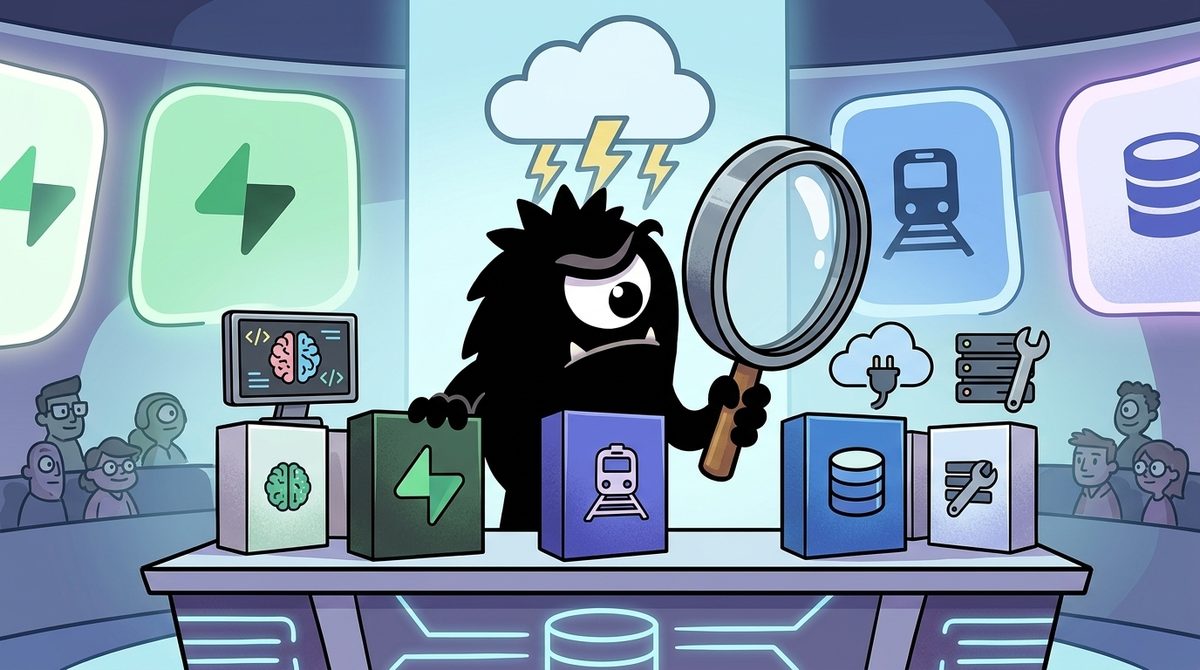
The real question is not simply which database is “best.” It is which backend architecture gives an AI-powered content app the right mix of retrieval performance, tenant isolation, developer velocity, reliability, and predictable cost as usage grows.
As of 2026, the practical answer is:
- Choose Supabase when you need the fastest path to an MVP with Postgres, authentication, row-level security, realtime updates, and mature tooling.
- Choose Railway when your application needs several independently deployable services—API, workers, Postgres, Redis, and an LLM gateway—and your team wants infrastructure flexibility more than a unified backend platform.
- Choose Turso when you expect many customer workspaces, want database-per-customer isolation, value lightweight local development, or need inexpensive replicated reads.
- Use a hybrid architecture when appropriate: Railway can run the application and AI workers while Supabase or Turso provides the data layer.
The biggest dividing line is your scaling curve. Supabase optimizes for building the whole backend quickly, Railway for deploying whatever architecture you choose, and Turso for operating many lightweight SQLite-compatible databases efficiently.
What Does an AI-Powered Content App Actually Demand From Its Backend?
An AI content product usually stores much more than generated text. It may hold prompts, revisions, source documents, transcripts, user preferences, collaboration state, usage records, and embeddings—numeric representations used to retrieve semantically relevant material for retrieval-augmented generation, or RAG.
That creates four important requirements:
- Fast retrieval: The app needs responsive reads for document search, prompt assembly, and content history.
- Vector support: Embeddings must be stored and searched somewhere, whether in the primary database or a separate vector system.
- Tenant isolation: One customer must not be able to access another customer’s drafts, source material, or brand data.
- Predictable unit economics: Database and infrastructure costs must remain sensible relative to each active user’s subscription revenue.
The economics are already visible in production apps:
I have received the bill for the services used by my app with:
📊 $6.5K MRR
👥 30K users
🔥 2K–3K daily active users
Here’s the breakdown:
- Supabase: $83
- Railway server: $47
- OpenAI API: $50
- Speech-to-text API: $5
- RevenueCat: $64
- Claude API & Llama: $3
Total: $252
I’m considering applying for AWS or GCP startup credits to save on costs 🧐
That example is a reminder that the database is only one line in an AI product’s bill. Model inference, transcription, object storage, background workers, and billing infrastructure all compete for margin. An $83 database bill may be perfectly healthy for a product earning $6,500 in monthly recurring revenue—but an infrastructure choice that scales with provisioned resources rather than paying customers can become painful before revenue catches up.
Supabase packages Postgres with application services. Railway provides infrastructure on which you can run Postgres, Redis, APIs, workers, and other components. Turso provides a distributed database platform built around SQLite and libSQL. Current 2026 comparisons similarly distinguish backend-as-a-service platforms from database-focused services and general deployment infrastructure.[2][3]
Supabase’s attraction is easy to understand:
Wow, Supabase is 🔥.
So far I'm enjoying:
Edge functions
Built-in user auth
Solid docs and SDKs
Granular row level security
Web-based DB Admin interface
Realtime updates via websockets
Auto-generated REST API with docs
Generate TS types from the DB schema
I'm impressed.
Those features can eliminate weeks of backend work. But if an app needs only SQL and a small authentication layer, that same breadth can become operational weight rather than leverage.
Why Are Supabase and Railway Bills Driving Developers to Migrate?
Pricing anxiety is the loudest theme in the current developer conversation because neither a free tier nor a low starting price tells you what production will cost.
Railway is great but costs are incredibly unpredictable. In my experience, when it comes to memory / egress. Still using it but it’s costing us 2.5x more than Vercel or Supabase at this point (which is hard to beat with a few micro-services).
View on XRailway’s strength—running arbitrary services—is also what makes its bill harder to reduce to a single database price. A content application might have a web service, generation worker, queue, Redis instance, Postgres database, cron process, and outbound model traffic. Memory, runtime, storage, and network consumption accumulate across that architecture.
Railway has documented deployment patterns for complete AI SaaS applications, asynchronous agent workers, and LiteLLM gateways.[13][14][15] That makes it more comparable to a compact cloud platform than to Turso alone. Evaluate the whole deployed topology, not just the advertised cost of Postgres.
Supabase is easier to adopt as one product, but costs can rise when an application moves beyond free allowances or becomes I/O-heavy. Serverless database pricing comparisons emphasize that storage, compute, transfer, and scaling behavior must be considered together rather than by comparing headline plan prices.[1][6]
Supabase was perfect but now it became too expensive for my needs. Railway (PG + Redis) and Cloudflare (R2) are the way to go for me now :)
View on XTurso changes the curve through small databases and SQLite’s resource efficiency. Its official pricing page should be the source of truth at purchase time; as of 2026, it advertises a free allowance supporting hundreds of databases and multiple gigabytes of storage, followed by usage-based paid capacity.[7] That is particularly relevant when each customer, project, or content workspace can have its own database.
How should you model backend cost per active user?
Use a workload model rather than monthly page views:
- Writes per generated asset: drafts, versions, jobs, citations, token records.
- Reads per session: document lists, editor state, retrieval queries, history.
- Embedding storage: vector dimensions multiplied by chunks and tenants.
- Worker footprint: memory and runtime while waiting for model APIs.
- Egress: source documents, generated media, API responses, and replication.
- Idle overhead: reserved databases and services when customers are inactive.
Then calculate cost per active workspace at today’s usage, 10 times usage, and 100 times tenant count. Supabase can be economical when its bundled features replace separate services. Railway can be economical with disciplined service sizing. Turso becomes compelling when tenant count grows faster than workload per tenant.
Can You Trust Supabase, Railway, or Turso With Production Reliability?
Reliability is not only uptime. It includes predictable query performance, safe upgrades, useful observability, and whether support can resolve an incident before your customers leave.
One developer’s experience captures the trust problem facing managed Supabase:
This was the final straw, I am quitting supabase entirely.
For the last 6 months I have used @supabase as my go to option for my mini-SaaS projects.
I experienced multiple hour-long downtimes in EU region, bad performance, terrible customer support, intransparent pricing and vendor lock-in.
Now, this broke me:
I cannot even sign in anymore.
Supabase is cool if you are new to building stuff and want to get going quickly, but from now on I will me moving all of my projects to @Railway
As easy to use, way cheaper, more flexibility and only one downtime so far.
New Backend Stack:
> Railway
> Convex
> BetterAuth
Do you continue to use supabase or have you moved off it too?
This is an individual report, not a platform-wide uptime measurement. Nevertheless, repeated complaints about regional downtime, support, lock-in, and opaque costs matter because a managed platform is purchased partly to remove operational burden. If the customer must still diagnose prolonged incidents without effective support, the value proposition weakens.
Supabase is also visibly investing in infrastructure maturity. Its CEO described moving build processes to Nix, reducing Postgres build times from 40 minutes to five, creating smaller service images, and making cross-version testing more reliable:
We're moving the @supabase build processes to @nixos_org :
1/ Reduces Postgres builds from 40 minutes to 5 minutes
2/ Smaller Docker images for all Supabase services
3/ Reliable upgrades: we can run tests between any two versions using a 1 liner
🧵details in thread
Those improvements do not prove application-level uptime, but they address the release and upgrade machinery behind a managed platform. They also matter to teams self-hosting Supabase, where image size and repeatable upgrades directly affect operations.
Railway positions its Postgres offering around developer experience, backups, monitoring, and simpler deployment, although its own hosting comparison is naturally a first-party account.[4] Moving from Supabase to Railway also changes responsibility: Railway may run the infrastructure, but your team must decide how authentication, authorization, migrations, connection management, and realtime behavior fit together.
Turso’s replicas can improve read availability and reduce the impact of distance, but replication is not a substitute for resilience planning. Teams still need to understand write authority, consistency behavior, backups, recovery procedures, and what happens when an application loses its preferred region.
For production selection, ask each vendor:
- What is replicated, and where?
- Are backups continuously tested for restoration?
- What consistency guarantees apply after a write?
- Which limits can throttle an embedding or ingestion job?
- What support response is included in the chosen plan?
- Can the application continue in a degraded read-only mode?
Is “The Edge” Dead, and Does Database Replication Still Matter?
The term edge database became muddled because it mixed two different ideas: restricted edge runtimes and the geographically useful act of placing data near users.
Turso CEO Glauber Costa has publicly explained why the company moved away from leading with the edge label:
Apparently Vercel now killed the edge.
And oh man, I am glad they did.
We initially positioned @tursodatabase as an edge database. If you are following us for a while, you may have noticed that we don't say that anymore for months. So in light of the recent announcements, I wanted to say a few words about it.
One of the many things that Turso does really well is data replication. We can replicate data for cheap, meaning you can add many replicas, give you a single URL with auto-routing, and provide read-your-writes semantics.
Not coming from the JS world, the edge for us was always a geographical-only concept. We have world class replication, and in our minds, exactly what the edge needed to be successful. So that's an edge db!
But in talking to prospects, we would hear weird (to us) things, like "Nah, I am not interested. I don't use the edge. I prefer node.js" (what? It's like saying you don't like Japan because you prefer chicken nuggets).
We also noted that 70% of people deploying on Turso at the time didn't activate replicas. That was even more puzzling for us, since you signed up at all for an edge database, supposedly is because you do use "the edge"? Yet, while talking to those users, we learned that what our appeal was in that case was that we were http-based, and that is the only thing that worked "from the edge".
We quickly learned why - the particular technology Vercel leaned on to bring "the edge" to life was not compatible with node.js, and was very restricted in what it could do. We wrote a couple of articles trying to clear the confusion, and point to the geographical nature of the edge, but we quickly realized this was pointless.
Vercel is the behemoth, and "the edge" would forever be associated with associated with restrictions and limitations. That meant that our thesis that all the talk about "the edge" would lead to applications being naturally more distributed, was, at least at this point in time, wrong.
We still do replication very well, and will continue getting better. Some applications wanted replication before, and will continue doing replication now.
But we have since leaded with, and invested into other benefits of Turso, in addition to replication, like;
* the simplicity, efficiency, and DX of SQLite, giving us a tremendous price advantage,
* our ability to replicate data not only "at the edge", but inside a server, and completely ditch caches,
* the absurd number of databases we can create.
I think the lesson here is that sometimes you can't fight the world, and have to adapt. I think we adapted well.
It's still a pity, though. Running your app closer to where it is served is conceptually a very good idea. Modern databases are perfectly capable of moving data around. Would we have had a different outcome if this technology was thought and positioned in a different way?
Guess we'll never know!
The important capability did not disappear with the branding. Turso can replicate databases, expose them through one auto-routed URL, and support read-your-writes behavior, according to Costa’s description. Its embedded-replica model can also place a local database copy inside an application server, allowing local reads rather than a network trip for every query. Turso’s documentation describes this SQLite/libSQL-oriented architecture and its local-development model.[8][9]
That can help an AI content application when users around the world repeatedly read:
- published articles and content libraries;
- brand guidelines and prompt templates;
- prior generations and revision history;
- document chunks used to construct model context.
Supabase’s standard model is easier to reason about: a primary Postgres deployment serving the application. The downside is geographic distance when users and application servers are far from that database. Railway lets developers choose deployment regions, but placing an API in several regions does not automatically make its Postgres data multi-region.
Still, replication is not automatically valuable. Model inference may take seconds, making a 100-millisecond database improvement irrelevant to the total generation time. Latency matters more in the editor: opening documents, autosaving, searching a library, switching projects, and retrieving context before an LLM request.
Optimize global reads when interaction latency affects the product. Do not adopt distributed data merely to make an architecture diagram look modern.
Is Database-Per-Customer Better for AI SaaS Multi-Tenancy?
Most SaaS products start with one shared database. Every row contains a tenant or organization identifier, and authorization rules determine which records a user may access. Supabase is well suited to this model because Postgres row-level security can enforce access policies in the database.
The alternative gaining attention is one database per customer:
Love to see sqlite getting attention as a hosted option too from Turso, especially now that they also have a Ruby driver. The multi-tenancy story, where each customer again has their own database, has a ton of benefits over the one-big-box model.
View on XTurso is designed around creating very large numbers of databases within one architecture.[8] For an AI content platform, a database can correspond to a customer, publication, agency client, or isolated knowledge base.
This offers meaningful benefits:
- Isolation: A missing tenant filter is less likely to expose another customer’s data.
- Lifecycle management: A customer database can be exported, deleted, or restored independently.
- Regional placement: Important customers can have replicas near their workloads.
- Noisy-neighbor control: One tenant’s content import need not dominate every customer’s tables.
- Customization: Enterprise tenants can evolve toward distinct schemas or retention rules.
But database-per-customer moves complexity into fleet operations. Every schema migration may need to run across hundreds or thousands of databases.
"Cons" (reaching to find):
* Migrations over time (if using per-tenant db esp) are on you to orchestrate, and i found myself leaving db columns i no longer needed around because migrating the already-live customers was more painful than just adding a new one -- leading to schema sprawl
* Syncs didn't always "just work" for me (though it's been a few years, this is likely better) -- if you want fine grain control, and use same db in multiple places, you may want something like rqlite or something you to control yourself (context -- i had a batch processing that once a day i wanted to copy the latest version of each users db to local disk and run, then sync back. Sync at the time was awkward for this -- wasn't using the product as intended. What i wanted was to use https://t.co/lN28i6IbeA tool on turso db but that was not an option).
___
these are not really turso problems, one is normal app problem, second is a distributed systems problem and no perfect solution comes to mind. Turso really is *great*. Just a couple minor points really, it can really work great for whole host of use cases
That is the central tradeoff. Shared Postgres concentrates migration work but makes authorization and performance isolation harder. Database-per-tenant improves boundaries but requires migration orchestration, version tracking, retry logic, and visibility into partially upgraded fleets.
Choose per-customer databases when isolation and tenant lifecycle are first-class product requirements. Choose shared Postgres when cross-tenant analytics, complex joins, and a single migration target matter more. A hybrid is also possible: keep global billing and account metadata in shared Postgres while storing each customer’s content corpus in a separate Turso database.
Which Platform Creates the Least Local-Development and CI/CD Friction?
Architecture cost includes developer time. A backend that requires multiple containers, significant CI memory, and careful service startup may be justified for a large application—but excessive for a small AI writing tool.
"What makes you think DOs are better than a D1 database in your case?"
Ah, well the fact that they're so light-weight. Supabase for example requires some heavy Docker infrastructure to run locally and in CI/CD. It also has tons of extra functionality that I just don't need. SQLite is a pleasure to work with because of its simplicity. I was just hoping to be able to use SQLite in production to replace Postgres, and I was wondering if DOs could essentially do that. Sounds like D1 is more like what I'm wanting, but unfortunately I think D1 gives up too much of what Supabase offers. Turso's SQLite solution is seeming pretty promising though especially with their recent claim of allowing concurrent SQLite writes.
Supabase’s local environment reflects the production platform: database, authentication, APIs, realtime capabilities, storage-related components, and functions. That fidelity is valuable when developers actively depend on those services. It is less appealing when tests need only a temporary SQL database.
SQLite’s advantage is that a database can be a local file. Turso and libSQL preserve much of that development model while adding hosted operation and replication. Recent work on Turso’s SQLite rewrite has focused on capabilities beyond traditional SQLite assumptions, including concurrent write development and change-data-capture-related foundations.[10]
Railway sits between the two philosophies. Locally, a team can use ordinary Postgres, Redis, and application processes through its preferred tools. In production, Railway deploys those components without requiring the team to operate virtual machines directly. This offers flexibility, but there is no single local Railway stack that automatically reproduces every application service.
The decision comes down to how much platform you genuinely need:
- Use Supabase if built-in auth, realtime, generated APIs, storage, and RLS replace code you would otherwise maintain.
- Use Railway if your team is comfortable composing services and wants production deployment without adopting one backend framework.
- Use Turso if fast tests, local files, disposable databases, and minimal CI setup are priorities.
Which Is Better for Vector Search and AI-Agent-Driven Database Work?
For AI content creation, the most relevant database feature is often vector search. Embeddings allow the application to find semantically related source passages before asking a model to write, summarize, or revise content.
Supabase uses the Postgres ecosystem, including pgvector, making it attractive when vectors must be joined with relational metadata, permissions, workflow state, and analytics. This is the mature, general-purpose route: one database model, standard SQL, and access to established Postgres tooling.[6]
Turso supports vector search within its libSQL direction and presents itself as a database for both application and AI-oriented workloads.[9] Its architectural advantage is not merely “SQLite with vectors.” It is the possibility of keeping each customer’s retrieval corpus isolated in a small database and moving reads closer to the application.
The newer workflow is agent-driven database administration:
Webサービス開発においてはSupabaseよりもTurso × Better Auth使う機会が増えました。無料枠で100個のDBを提供してるしデータベース容量も大きい。あとMCP経由でDB自体の作れちゃうからClaude Code上でデータベース作成からスキーマ定義とマイグレーション操作ができちゃう。
https://turso.tech/
In web service development, I've been using Turso × Better Auth more often than Supabase. It provides 100 DBs in the free tier and has large database capacity. Also, since you can create DBs via MCP, you can do database creation, schema definition, and migration operations on Claude Code.
https://turso.tech/
The post is from a Japanese developer who says, in translation, that Turso with Better Auth is increasingly replacing Supabase in their web projects, and that MCP allows database creation, schema definition, and migrations from Claude Code.
MCP—the Model Context Protocol—lets an AI coding agent interact with external tools through structured interfaces. Database provisioning from an agent can accelerate prototypes, test environments, and tenant setup. It also expands the security boundary. Production teams should require scoped credentials, migration review, audit logs, idempotent operations, and human approval for destructive changes.
Another builder’s Turso choice reinforces that the decision is increasingly being made at deployment time rather than as an abstract database comparison:
Wrote about building OptiQ on Tencent EdgeOne Makers, the deploy process, and why I picked Turso over Supabase and KV for the database.
Check it out 👇
https://dev.to/harryagustiana/i-almost-shipped-a-broken-database-on-tencent-edgeone-makers-heres-what-fixed-it-19h2
For the fastest complete AI MVP, Supabase still has the advantage when auth, permissions, file metadata, and realtime collaboration all matter. For custom AI pipelines with queues, workers, model gateways, and several services, Railway is the more flexible host. For isolated RAG stores and agent-created tenant databases, Turso has the most distinctive architecture.
Who Should Choose Supabase, Railway, or Turso in 2026?
Choose Supabase when:
- You are a solo developer or small team shipping an MVP.
- Postgres familiarity is important.
- Authentication, RLS, realtime updates, generated APIs, and administration UI remove substantial work.
- Your content product needs collaborative editing or live job status.
- You are prepared to monitor I/O and upgrade costs as usage grows.
Supabase is strongest when you use enough of the platform to justify its operational and pricing footprint. Solo-developer comparisons continue to frame it as the more complete backend, while Turso is the more focused database option.[5]
Choose Railway when:
- Your architecture includes APIs, background generation workers, queues, Redis, Postgres, or an LLM proxy.
- Your team wants standard services rather than a tightly integrated backend platform.
- You need control over service versions and deployment topology.
- You can actively monitor memory, egress, and idle resources.
Do not choose Railway solely because it appears cheaper in a simple migration estimate. The live conversation contains both developers calling it cheaper than Supabase and others reporting highly unpredictable costs.
Choose Turso when:
- You want one database per customer or content workspace.
- Most operations are reads, and global or local replica latency matters.
- Lightweight local development and CI are strategic priorities.
- You need strong tenant lifecycle isolation.
- You are willing to build migration orchestration and accept a smaller ecosystem than Postgres.
The concern about both Railway estimates and Supabase I/O can occur in the same application:
Weekend (serverless) stack update X @solana:
· Railway updated cost estimates looking like $600/mo 🙈
· Supabase hosted looks like it's struggling with I/O for Solana realtime data but i just upgraded off of the free tier, we'll see how that goes
The backend service is pretty small and load is stable, so we'll probably move it to a cheaper droplet and deal with the CI overhead
We'll keep trying to make Supabase hosted work but the product has a powerful realtime UX i don't want to compromise on, so might need to move to self-hosted Supabase or something lighter
That is why there is no universal migration direction. A team can leave Supabase for Railway and still face a larger bill. It can adopt Turso and later discover that fleet-wide migrations are its new operational bottleneck.
Before committing, make the application portable:
- Keep business logic outside vendor-specific database hooks where practical.
- Store migrations in version control.
- Separate authentication identity from content ownership in the data model.
- Benchmark a representative ingestion and retrieval workload.
- Test exports and restores before launch.
- Record cost per active tenant, not merely total monthly cost.
- Design workers so they can move independently of the primary database.
The concise verdict: Supabase is the best default for a feature-rich AI content MVP, Railway is the best application platform for teams composing their own AI infrastructure, and Turso is the strongest architectural choice for many isolated content tenants and lightweight replicated reads. The right answer depends less on database fashion than on whether your next scaling problem will be feature delivery, infrastructure composition, or tenant count.
Sources
[1] Serverless database pricing compared (2026) | Layerbase
[2] Cloud Database | Starter Docs
[3] Best Backend Platforms for Indie Hackers in 2026 | MindStudio
[4] The Best PostgreSQL Hosting for Developers in 2026 | Railway
[5] Supabase vs Turso for Solo Developers (2026) | SoloDevStack
[6] Serverless Databases: Neon vs Supabase vs Turso (2026) | Tech Bytes
[8] Turso — Millions of Databases. One Architecture.
[9] Welcome to Turso
[10] We Are a Year Into Rewriting SQLite. How Is That Going? | Turso
[13] Deploy an AI-Powered SaaS App on Railway
References (15 sources)
- Serverless database pricing compared (2026) | Layerbase - layerbase.com
- 🗄️ Cloud Database - starterdocs.js.org
- Best Backend Platforms for Indie Hackers in 2026 | MindStudio - mindstudio.ai
- The Best PostgreSQL Hosting for Developers in 2026 - blog.railway.com
- Supabase vs Turso for Solo Developers (2026) | SoloDevStack - solodevstack.com
- Serverless Databases: Neon vs Supabase vs Turso [2026] | Tech Bytes - techbytes.app
- Turso Database Pricing - turso.tech
- Turso - Millions of Databases. One Architecture. - turso.tech
- Welcome to Turso - docs.turso.tech
- We are a year into rewriting SQLite. How is that going? - turso.tech
- Turso Has a Free Edge SQLite Database That Puts Data Closer to Users - dev.to
- Turso vs Cloudflare D1 vs Neon: Edge SQL Databases for 2026 - kanopylabs.com
- Deploy an AI-Powered SaaS App on Railway | Railway Guides - docs.railway.com
- Deploy an AI Agent with Async Workers | Railway Guides - docs.railway.com
- Deploy an LLM Gateway with LiteLLM | Railway Guides - docs.railway.com
Related Guides
Netlify vs Asana: Which Is Best for AI Pair Programming in 2026?
15 min read
The Market Says 8%: What Polymarket's OpenAI AGI Odds Reveal About Where AI and SaaS Are Headed in 2026
15 min read
Together AI vs Azure OpenAI vs Replicate: Which Is Best for Marketing Automation in 2026?
21 min read
The Best AI Model of 2026: What Prediction Markets Reveal About the Frontier Race
19 min read